Introduction
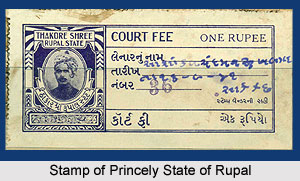
The Princely State of Rupal was one of the non-salute states of India, which existed during the rule of the British Empire in India. During the early 19th century, the region was assigned as one of the princely states of India under the indirect rule of the British administration. The region was scattered over a total area of 16 sq miles and comprised of a total population of 4,515 in the year 1931. Rupal state included almost 11 villages and was located around 15 miles towards the eastern region of Himatnagar, which was the capital of the princely state of Idar.
Location and Geography of Rupal State
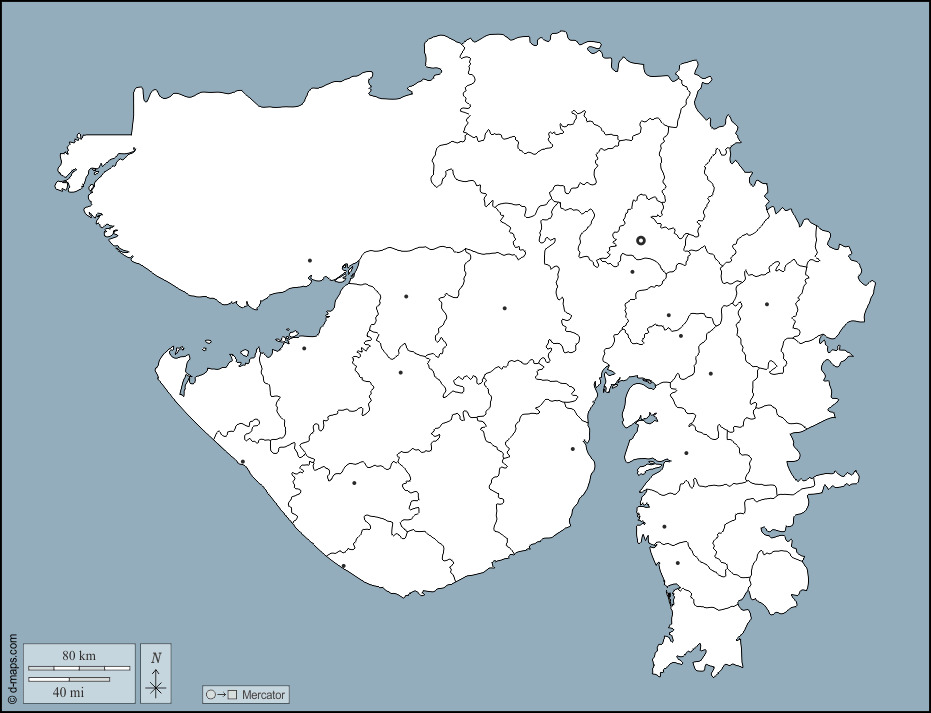
The taluka of Rupal comprised of 2 distinctive parts. The central block contained the village of Rupal. The region was bordered by the princely state of Idar in the north. The territories of Idar and Mohanpur bordered the east while Mohanpur was part of the western border. The other smaller block was located almost 5 miles towards the north.
Rupal State was characterized by semi-arid undulating plains interspersed with low hills, reflecting the typical geomorphology of the Sabarkantha region. The territory lies in the border of the foothills of the Aravalli Range. Its landscape supported dry deciduous scrub vegetation that had adapted to the region’s erratic monsoon rainfall patterns. The terrain lacked major topographical landmarks or significant mineral deposits.
The soils of the state mainly consisted of black cotton
varieties, along with sandy loams and clay loams. These medium-deep soils were
moderately fertile, though they were susceptible to erosion and problems
related to water retention under the area’s variable climatic conditions. Such
soil types supported the rain-fed cultivation of drought-resistant crops,
including millets and pulses. However, the absence of perennial rivers, apart
from a few seasonal local streams, limited irrigation facilities.
History of Princely State of Rupal
The Rehwar Parmar Rajputs of the Indra clan were the ruling family of the princely state of Rupal. The native rulers were descendants from the same ancestry as the Thakors of Mohanpur state and majority of other princely states in present-day Gujarat. The rule of male primogeniture, by which the first born or eldest child of the same parents had the right, by law or custom, to inherit the entire estate of one or both parents, to the exclusion of all others, was followed in the succession of the throne or gadi of the princely state of Rupal. The native ruler of the princely state held the title of Thakor.
The history of Rupal dates back the colonial period. Archaeological and epigraphic evidence from the wider region of Gujarat suggests that micro-polities such as Rupal State emerged from the political fragmentation that followed the decline of the Solanki dynasty during the 12th and 13th centuries. Subsequent incursions by the Vaghela dynasty and later sultanate powers dispersed authority among local lineages capable of mobilizing kinship networks and agrarian resources. Pre-18th-century suzerains under Mahi Kantha Agency generally exercised influence through irregular nazarana, or tribute payments.
Disputes in these minor princely states were commonly settled through panchayats, while security and authority were maintained by militias led by the Thakor. The decentralized political structure enabled such states to remain resilient and locally adaptive but also exposed them to recurring internal feuds and instability. These conditions eventually created circumstances in which British mediation could expand its influence.
Administration of Princely State of Rupal
The princely state of Rupal was incorporated as a part of the Baroda Agency, which was a sub division of Western India States Agency. The territory later became a part of the Indian state of Gujarat. Rupal state was also under the administrative control of the Mahi Kantha Agency and the Sadra Division as well.
The Thakor of the princely state of Rupal exercised limited civil and criminal jurisdiction. He took charge of the administration of the state and supervised the internal issues of the region. The Resident of British India, also known as Political Agents of the British East India Company, managed the associations of the state with the British authorities and other princely states of India. The native ruler of Rupal state was ranked in the Fifth Class of Mahi Kantha rulers before the abolition of the class system in the year 1928. The Princely State of Wasna paid annual tribute to the princely state of Baroda, the princely state of Idar and the British administration. According to the Attachment Scheme of 1943, the princely state of Rupal was attached to the princely state of Idar.
Society of Princely State of Rupal
The inhabitants of Rupal State were predominantly ethnic Gujaratis who practiced Hinduism and lived within a rural social order based on traditional jati and varna systems, common in the princely territories of Gujarat. At the top of this hierarchy stood the Thakors, who served as hereditary landowners and administrators. Beneath them were Brahmin priests, Vaishya merchants and traders, and Shudra cultivating communities such as the Patidars and Kanbis, who formed the backbone of agricultural production across the state’s eleven villages.
Tribal communities, particularly the Bhils and Kolis, also constituted
a significant segment of the population. These groups generally inhabited
peripheral or forested regions and relied on pastoralism or shifting
cultivation. Although they preserved many of their semi-autonomous customs and
traditions, they remained subject to the overlordship of the Thakor.
Economy of Princely State of Rupal
Rupal State derived the bulk of its revenue from land taxes collected at the village level, reflecting an economy rooted largely in subsistence agriculture. Additional income was generated through modest local trade and small levies imposed on artisans, traders, and professional services, although these sources contributed only marginally to the state’s overall finances. The absence of substantial manufacturing, mining, or export-oriented industries highlighted the economic limitations of the state.
Rupal also maintained tributary obligations to larger
regional powers. Baroda State, a prominent salute state that exercised
suzerainty over several smaller entities in the Mahi Kantha region, received an
annual tribute from Rupal. This payment served primarily as a symbolic
acknowledgment of fealty rather than a mechanism for direct political
intervention, allowing the ruler of Rupal to retain considerable internal
autonomy under British paramountcy. Similar tribute obligations were extended
to Idar State.
Accession of Princely State of Rupal
The last native ruler of the princely state of Rupal acceded the territory to the newly independent Union of India after the political withdrawal of the British Government of India from the country on 15th August 1947. After the country was divided between India and Pakistan, the native rulers of the states were given the choice of acceding to either the Union of India or the Dominion of Pakistan. The Thakor of Rupal state decided to merge with the Republic of India. At present, the region is incorporated as a part of the Indian state in Gujarat state.