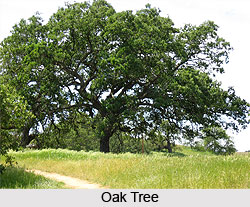
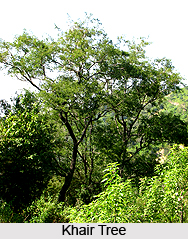
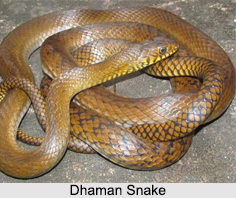
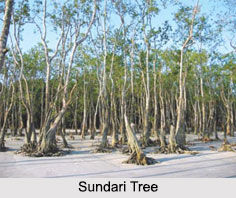
 Point Calimere Sanctuary is a low promontory on the Coromandel Coast. It is also known by the name Cape Calimere and Kodikkarai. It is located in the Nagapattinam District of Tamil Nadu. It also forms the apex of the Kaveri River delta. The only human habitations in the area are two villages namely Kodikkarai on the seashore and Kodiakkadu which is further inland. Extensive salt swamps, the winter resort of countless migratory waterfowl, lie to the west of the villages. The Point Calimere Sanctuary had been established on 13th of June 1967.
About three miles east of Kodikkarai and approximately at the head of the promontory, a lighthouse of the Chola dynasty was in existence since 1902 but has been destroyed in the tsunami of 2004.. The sanctuary has an area of about 2500 hectares or 25 square kilometers of dry thorn scrub jungle and open sea coast. The types of forests that are generally found in and around the sanctuary are dry evergreen forests, mangrove forests and wetlands. The flora of the Point Calimere Sanctuary is also known by the name Vedaranyam forests. This is because in the year 1988 the Great Vedaranyam Swamp and the Talaignayar Reserve Forest was included within the sanctuary. After this the sanctuary was renamed as Point Calimere Wildlife and Bird Sanctuary. The Kodiakkadu Reserve Forest forms the major part of the sanctuary, approximately 1800 hectares of scrub jungle with thorn and other xerophytic vegetation predominating. The forest is not continuous but is intersected by numerous tidal inlets and creeks of varying length and width which are bone-dry in May. Dense thorn-scrub forest of an average 10 to 12 ft height covers the raised land in between the creeks. The area gets most of its rain from the northeast monsoon, but is also within the range of the southwest monsoon. Most of the rainfall is between the months of October and December. The mean annual temperature is in the region of 27øC. Cyclonic storms of high intensity often occur during the northeast monsoon.
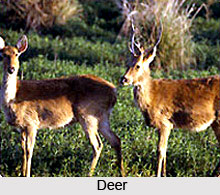
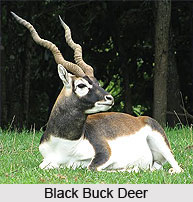
 The flora consists of evergreen thickets of species with wide geographical distribution and large ecological tolerance. The fauna of the sanctuary is equally diverse. The Sanctuary holds the largest population (about 1000) of Black buck (Antilope cervicapra) in South India. The forests also hold a few Chital (Axis axis) and Bonnet Macaques, both introduced. There is no predator larger than the Jackal and Mongoose; both are common. Pigs occurring in the Sanctuary are presumed to be feral. Black-naped hare, besides several other mammals including Dolphins and Dugong, or Sea cow, have been sighted and small numbers of Olive Ridley Turtles are also known to take shelter here.
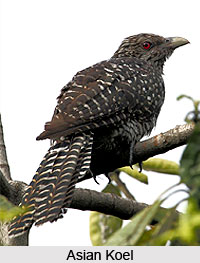
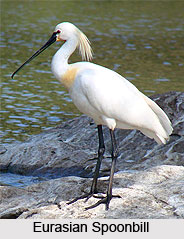
 Tourist can easily get a glimpse of the beautiful birds. In fact they are the main attraction of the Point Calimere Wildlife Sanctuary. There are supposedly more than two hundred and fifty bird species in this safe haven. For easy accessibility, the concerned authorities are providing amenities to the tourists. While striding through the elevated mounds, one can see swamps of birds, animals, thereby maintaining a safe distance from the birds. EgeleJolly boat rides aid in watching birds in some parts of the sanctuary. Woodland birds include Blue-faced Malkoha, Pied Cuckoo, Blue-tailed Bee-cater, Yellow-billed Babbler, Chestnut-tailed Starling, and Asian Paradise-flycatcher. Aquatic birds are found near the water bodies. These are namely Cheater Flamingo, Lesser Flamingo, Spot-billed Pelican, Great Cormorant, Grey Heron, Purple Heron, Western Reef Egret, Eurasian Spoonbill, Northern Shoveler, Red-crested Pochard, Eurasian Oystercatcher, Eurasian Curlew, Spoon-billed Sandpiper, Black-tailed Godwit, Asian Dowitcher, Pallas`s Gull, Caspian Tern, Great Crested Tern, Black-capped Kingfisher etc. The howling of the bird raptors juxtaposes with the other singing birds. White-bellied Sea Eagle, Montagu`s Harrier, White-eyed Buzzard, Peregrine Falcon, Common Kestrel, Osprey are noteworthy. Besides the plethora of varied flora and fauna remnants of famous medieval temple architecture add glory to the whole of the sanctuary.
Point Calimere Sanctuary is of particular significance in the movements of resident and migratory species of birds in the southern parts of the peninsula and from and to Sri Lanka, 30 miles from the sanctuary across the Palk Strait. The peak migration month is October when `waves` of several translimital and Indian species pass through the sanctuary forest. The surrounding salt flats and swamps support large numbers of flamingos, both Large and lesser, and migrant waders during the migratory season.
Point Calimere Sanctuary also has a mythological association. A stone slab in the region bears the impressions of two feet and it is believed that Lord Rama stood and reconnoitered Ravana`s kingdom from this particular place.
Hence it can be concluded saying that Point Calimere Sanctuary is a haven for tourists from various parts of the country as well as for several organisms which dwell in the region in absolute peace.