


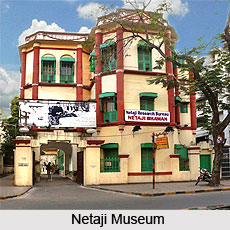
 Netaji Museum which is actually the ancestral home of Netaji Subhash Chandra Bose is also known as "Netaji Bhawan" is a building maintained as a memorial and research center to the life of the Indian Nationalist Subhash Chandra Bose in Kolkata. The museum is located at Lala Lajpat Rai Sarani, earlier known as Elgin Road. It was the residence of Netaji during his childhood. This memorial hall has been wonderfully restored and maintained by the Kolkata Municipal Corporation. The Bureau is run by Sugata Bose and his mother. Netaji Bhawan is the center of the Netaji Research Bureau. It also houses a museum, which showcases the life and time of Subhash Chandra Bose. The staircase, which Netaji used for his secret departure from this house and the car used by him at that time are also in display. Relics of Bose's footprints are exhibited in the museum. It was built in 1909 by his father Janakinath Bose. Netaji lived in this house during the Indian freedom movement and this house was the center of political activities for freedom fighters. Netaji’s study and bedroom is preserved inside this house in original conditions. The site has an immense historical importance and worth a visit. After the Second World War, Mohandas K.Gandhi and Jawaharlal Nehru visited Netaji Bhawan. Netaji Museum which is actually the ancestral home of Netaji Subhash Chandra Bose is also known as "Netaji Bhawan" is a building maintained as a memorial and research center to the life of the Indian Nationalist Subhash Chandra Bose in Kolkata. The museum is located at Lala Lajpat Rai Sarani, earlier known as Elgin Road. It was the residence of Netaji during his childhood. This memorial hall has been wonderfully restored and maintained by the Kolkata Municipal Corporation. The Bureau is run by Sugata Bose and his mother. Netaji Bhawan is the center of the Netaji Research Bureau. It also houses a museum, which showcases the life and time of Subhash Chandra Bose. The staircase, which Netaji used for his secret departure from this house and the car used by him at that time are also in display. Relics of Bose's footprints are exhibited in the museum. It was built in 1909 by his father Janakinath Bose. Netaji lived in this house during the Indian freedom movement and this house was the center of political activities for freedom fighters. Netaji’s study and bedroom is preserved inside this house in original conditions. The site has an immense historical importance and worth a visit. After the Second World War, Mohandas K.Gandhi and Jawaharlal Nehru visited Netaji Bhawan.
Detail and history of Netaji Bhawan Netaji Bhawan, the ancestral residence of Netaji Subhash Chandra Bose is a memorial hall, one of the star tourist attractions of Kolkata. Sarat Chandra Bose contributed this house for nation’s service on January 23, 1947. Netaji Bhawan includes museum, archives and a well-stocked library. Netaji Subhash Chandra Bose spent his childhood in this house and he was also put under house arrest here, till he escaped to Berlin in 1941. After that he relocate by submarine to Japan occupied Southeast Asia and organized the famous Indian National Army. From there with the Imperial Japanese Army, he announced his war against the British Empire. Netaji Bhawan is owned and managed by Netaji Research Bureau. The Netaji Research Bureau has immensely contributed to the life and history of Netaji and collected relevant materials from across the globe. Netaji Research Bureau established the Netaji Museum in 1961. The museum is a brilliantly organized biographical museum, dedicated to the life of Netaji with a huge quantity of materials related to him. The museum showcases stuffs collected from across the globe that are relevant with Netaji. The house of Netaji is typically like a Bengali household. It has traditional pillars and porticos, a marble plaque bearing the name of J.N.Bose, Netaji's father in the entrance of the house. There is a replica in the main portico, which has the motto "Ittefaq", "Itmad", "Korbani" inscribed on it. There is Netaji's bedroom on the first floor; where all his belonging to him and his family in order. Like his father's large bed, his own cot, clothes, clock, ayurvedic medicines, shoes and Gita. The room beside it stocks certain things and furniture that have been used by his elder brother, Sarat Chandra Bose. Numerous documents, photographs and articles relating to Netaji's life and work are arranged in systematic and chronological order in the top floor of the house. This floor has been modernized and given a special look with lightening and special effects. Here among the things exhibited, his original passports and some curios brought by him from Burma are among the most valuable exhibits, other than the ones like a page from Janakinath's diary recording Subhash's birth on 23 January 1897. The pictures and letters depict Subhash's gradual growing years from a child to a student at Cambridge, and then his life as a prisoner at Mandalay, and G.O.C. of the Volunteer Corps at Calcutta in 1928. The next section portrays the story of Subhash Chandra Bose's stay in Europe. There he visited several European capitals and also met with important personalities. This also tells the story how he set up Indian Associations. There is also display of his warm clothes that he wore in Europe in the showcase. The next room depicts his European ventures of Netaji. The pictures here show Bose’s training of Azad Hind Fauz and his meetings with European diplomats and statesman. There exists also a gallery depicting Azad Hind Movement in Europe and East Asia and it also showcase vital document related to the event. To an added advantage there is an auditorium called Sarat Bose hall, where seminars, lectures, symposia, etc. are held on Netaji, the Indian Independence movement and other current problems in the national and the international scenario. This auditorium has the accommodation of 115 people. The Netaji Museum is quite unique and splendid in its own way. It offers a good understanding to the visitors about the challenging life and career of an outstanding personality, like Netaji. Netaji has always been the curiosity of the people firstly due to his contributions to the freedom movement of India and secondly due to his mysterious disappearance, which has, many myths associated with him. Hence this house has been attracting large crowd of people since the day it was opened to the public as the house. The house is overwhelmed with visitors, during Netaji Birthday week, in January. A nice celebration also takes place during this time with a number of cultural activities. |
| |||



Home > Travel > Indian Cities > Capital Cities of India > Kolkata City > Tourism In Kolkata > Netaji Museum
Netaji Museum
| Netaji’s residence converted to Netaji Museum in Kolkata, stores a lot of memoirs of Netaji Subhash Chandra Bose, a great patriot of the freedom movement in India. |
| ||||||||||||||||||||||||||||

