 Maya is a mistake which creates for some the illusion that it is the only reality. Ego consciousness and karma are seen as part of binding forces of Maya. Maya is seen as the phenomenal universe, a lesser reality-lens superimposed on the one Brahman that leads us to think of the phenomenal cosmos as real. Through the force of illusion Maya spells a charm and keeps things under its sway. The word Maya originally referred to the wizardry with which a god can make human beings believe in what turns out to be an illusion and its philosophical sense is an extension of this meaning. The word Maya is derived from the Sanskrit roots ma and ya which mean "that". In Hinduism Maya is seen as epiphany, in order to achieve Moksha. As per Hindu mythology, Maya is said to be the daughter of Adharma, the vice and Anrita, the falsehood.
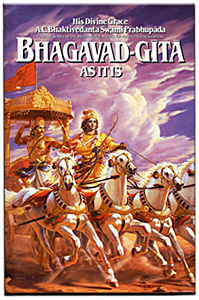
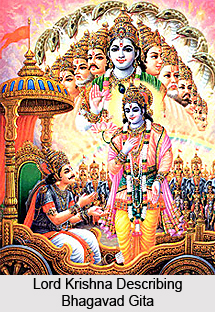
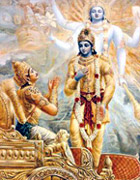
In Advaita Vedanta philosophy Maya is the limited ,purely physical and mental reality in which our everyday consciousness gets entangled .It is a veiling of the existent true unitary self -the Cosmic Spirit also known as Brahman. On the battlefield of Kurukshetra Lord Krishna had advised Arjuna about Maya. The concept of Maya was expounded in the Hindu scriptures known as the Upanishads. The Brahman is the only truth and therefore Maya is not the truth .The two principle functions of Maya are -to cover up the Brahman and hide it from our mind .The other is to present the material world instead of Brahman. Just as this illusion gets destroyed when true knowledge of the rope is perceived, similarly, Maya gets destroyed for a person when they perceive Brahman with transcendental knowledge.
Maya is the limited, purely physical and mental reality in Advaita Vedanta philosophy. The concept of Maya was introduced by Adi Sankaracharya. Maya is true but it is not the ultimate reality. Maya causes the material world to be visible; it is true in itself but not true when compared to the Brahman. Maya cannot be considered false. The two major functions of Maya - one is to veil Brahman and conceal it from one`s consciousness; the other is to present the material world and the veil of duality. Maya can get destroyed for a person when he perceives Brahman with transcendental information.