


 Quite a handful of national parks are being built in India, especially in the eastern region. Manas Tiger Reserve is highly acclaimed among these. It is located in the rugged province of Assam, thus becoming a premier ground for spotting wild flora and fauna. Also any enthusiast can behold the shy natured tiger, taking strides through the thick grasslands. A minimum of twenty species of animals is found in this park, which are very much scarce. Even they are enlisted in Schedule I of the International Union of Conservation of Nature Red Data Book. One of these is the renowned Golden Langur, revealed only in the mid twentieth century, within in the Manas Tiger Reserve. In the year 1947, C G Baron, a sportsman and naturalist, wrote the subsequent lines: "I saw snow white monkeys (langurs)... and so far as I know- they are an unidentified species. The whole body and tail is one color... somewhat like the hair of a blonde." The environmentalist E P Gee legitimated the invention in the year 1953 while keeping a record of number of the golden Langur in the dense forest, lying between the rivers of Sankosh and Manas. Quite a handful of national parks are being built in India, especially in the eastern region. Manas Tiger Reserve is highly acclaimed among these. It is located in the rugged province of Assam, thus becoming a premier ground for spotting wild flora and fauna. Also any enthusiast can behold the shy natured tiger, taking strides through the thick grasslands. A minimum of twenty species of animals is found in this park, which are very much scarce. Even they are enlisted in Schedule I of the International Union of Conservation of Nature Red Data Book. One of these is the renowned Golden Langur, revealed only in the mid twentieth century, within in the Manas Tiger Reserve. In the year 1947, C G Baron, a sportsman and naturalist, wrote the subsequent lines: "I saw snow white monkeys (langurs)... and so far as I know- they are an unidentified species. The whole body and tail is one color... somewhat like the hair of a blonde." The environmentalist E P Gee legitimated the invention in the year 1953 while keeping a record of number of the golden Langur in the dense forest, lying between the rivers of Sankosh and Manas.
Manas Tiger Reserve has a rich heritage. In the year 1928, a sanctuary was built, covering an area of 360 sq km sanctuary. Once it was the hunting conserve of the royal families of Cooch-Behar and Gauripur. In the year 1973, Project Tiger has been transformed in to a tiger reserve, covering an area of a 2,840 sq km. Almost 500 sq km of the Manas National Park is integrated in the Manas Tiger Reserve. Its ecology too is a mix of variegated landscapes and wide-ranging vegetation, including moist deciduous, evergreen, riverine forests and lush grasslands. It is a homeland of wide varieties of wide range of endangered species, which enabled it to grab the title of being one of the World Heritage Sites. 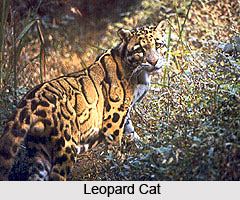 Manas Tiger Reserve is a land of rivers that frequently change their courses. The rivers Beki, Hel, Aio, Barnadi, Tanali, Sankosh and Manas flow through the reserve and then join with the Brahmaputra River. This mighty river is a source of life for life in Assam, for its people and its wildlife. The reserve, north of the Brahmaputra, pours forth into Bhutan where it is famous as the Royal Bhutan National Park constituting almost 1,000 sq km of dense forest and hilly regions.
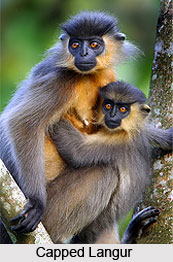
With in this reserve, Mothanguri, is a conflux of the river Manas entering India from Bhutan, and wild forests, hills copiously scattered with semul trees, beautiful pinkish-red flowers blossoming in the months of February and March. Tourists throng the reserve in great enthusiasm, enjoying the jolly rides on the backs of elephants, jeeps drives and boat trips leading the visitors through beautiful landscape full with natural and dense vegetation. One can even catch hold of quite a few endangered species within the park premises. There are more than fifty species of mammals including the Golden Langur, although very rare, is seen on a regular basis. According to the year 1997 census the total number of tiger is counted as eighty-nine. From the riverside, Asian Water Buffalo glares at trespassing visitors, their horns are longer and broader than any other places in Indian subcontinent. Gharials are a long-snorted crocodiles, basking nearby in the sun. Huge mammals can also be seen including Gaur, Hog-deer, otters, giant squirrels and various monkeys. The One-horned Rhinoceros is occasionally seen in Manas Tiger Reserve. Tiger, Leopard, Clouded Leopard, Golden Cat, Leopard-cat, Asian Elephant, Asian Water Buffalo, Gaur (Indian Bison), Swamp Deer (Barasingha), Hog-deer, Pygmy Hog, Capped Langur, Assamese Macaque, Slow Loris, Hispid Hare, Fishing Cat, Marbled Cat, Binturong, Spotted Linsang, Large Indian Civet, Wild Dog (Dhole), Malayan Giant Squirrel, Parti-coloured Flying Squirrel, Crab-eating Mongoose are also worth to mention. 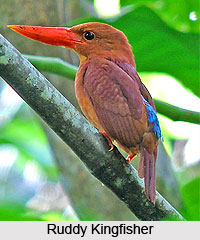 Multitudes of birds too are found in the Manas Tiger Reserve. Waterside and woodland birds is wide ranging including tiny magnificent sunbirds, huge hornbills and pelicans. Black Stork, Spot-billed Pelican, Lesser Adjutant, Ruddy Shelduck, Common Merganser, Black-bellied Tern, Black Bittern, Great Cormorant, Crested Kingfisher, Ruddy Kingfisher, Darter are also important.
Birds, namely Swamp Francolin, Red Junglefowl, Kahj Pheasant, Grey Peacock Pheasant, Great Hornbill, Wreathed Hornbill, Great Slaty Woodpecker, Red-headed Trogon, Long-tailed Broadbill, Dollarbird, Green Imperial Pigeon, Barred Cuckoo-dove, Crow-billed Drongo, Blue-bearded Bee-eater, Coral-billed Scimitar Babbler, Rufous-vented Laughing thrush, Streaked Spiderhunter, Ruby-cheeked Sunbird, throng in woodlands and also in the grassy fringes. Bird's raptors too are found and they are no less in numbers. Theses are namely Pallas's Fish Eagle, Bengal Florican (a type of bird bustard), Lesser Fish Eagle, Osprcy, Black Baza, Collared Falconet, Pied Harrier, Rufous-bellied Eagle, Crested Goshawk, and Brown Fish Owl etc. However, due to the rapid growth of various problems, such as expanding tea plantations, poaching, developmental projects etc, have actually exploited the wild resources, thus putting a threat to one of India's significant wildlife reserves. |
| |||



Manas Tiger Reserve
| Manas Tiger Reserve is enlisted among the World Heritage due to its preserve of wide varieties of rare species. |
| ||||||||||||||||||||||||||||

