


 Craft is a special artwork involving artistic skills and creative acumen. Broadly speaking it can be denoted as a profession, trade or pursuit that a group of professions, namely, craftsmen, undertake in great exuberance. Craft refers to the creation of original objects through an artist's disciplined manipulation of material. The prerequisite of producing crafts of high quality is manual dexterity nicely mingling with timely application, keeping its artistic fervor as it is. Thus a whole lot of perseverance, care, diligence and ingenuity is what makes a craft more embellished and luxuriant. Craft is a special artwork involving artistic skills and creative acumen. Broadly speaking it can be denoted as a profession, trade or pursuit that a group of professions, namely, craftsmen, undertake in great exuberance. Craft refers to the creation of original objects through an artist's disciplined manipulation of material. The prerequisite of producing crafts of high quality is manual dexterity nicely mingling with timely application, keeping its artistic fervor as it is. Thus a whole lot of perseverance, care, diligence and ingenuity is what makes a craft more embellished and luxuriant.
There are salient characteristic that would perfectly identity crafts. First, it must be made significantly by hand. Any skilled craftsman spends prolonged hours in producing and giving concrete shape to any craft piece. Craft is related to its past heritage and culture. Each of the craft disciplines embodies the trends and tradition of the multifaceted occurrences and events that were closely associated with them, rightly belonging to the past decades Craft is medium-specific and it is for all time identified with a material and the technologies used to make it. For example crafts prepared using manual labor and works of hands are popularly known as handicrafts. Various things like wood, clay, glass, textiles, and metal are used to make a craft item. Secondly Craft is defined by use. How and where it is to be utilized is what makes a craft distinguishable; some crafts are used as decorative items. The field includes ceramics, furniture, furnishings, interior design, and architecture. They are used as traditional ornamental works, usually made from ceramic, wood, glass, metal, or textile. Decorative arts, or furnishings, may be fixed (for example, wallpaper), or moveable (for example, lamps). Crafts practiced by independent artists working alone or in small groups are often referred to as studio craft. Studio craft includes studio pottery, metal work, weaving, woodturning and other forms of woodworking, glass blowing, and glass art. History Of Craft: The history of crafts has a long tradition to follow. It traces back to almost five thousand years ago. The craft tradition in India has centered on religious beliefs, local needs of the commoners. Also the special needs of the patrons and royalty with vivid eye on foreign and domestic trade became the foci of crafts of Indian subcontinent. These craft traditions have resisted the onslaughts of time and several foreign intrusions. Till date it is continuing to boom owing to the assimilating nature of Indian culture, highly accommodative nature of the craftsmen to accept and use new ideas also is responsible for this. What is to be noted is that references of Indian crafts were found in the remnants of Indus Valley Civilization (3000 B.C.-1700 B.C.). The Indus valley civilization had a rich craft tradition. It has also got a technical brilliance in the arena of pottery- making, jewelry, threading, various sculptures like metal, stone and terracotta etc. The craftsmen supplied basic needs of the locales and also excess items were exported to ancient Arabian countries mainly through voyages. 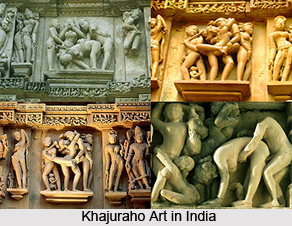 The rich heritage of Indus Valley Civilization was perfectly incorporated in the Vedic era, starting from 1500 B.C. There is no dearth of references in the Vedic literature where instances of artisans involved in pottery making, weaving, wood crafting etc, are being duly mentioned. Especially the Rig Veda refers to a variety of pottery made from clay, wood and metal. It also mentions about lot many weavers and weaving of the then period.
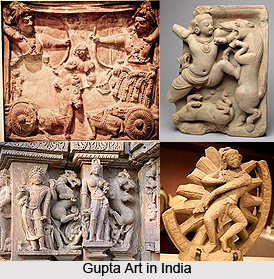
Artistic production of crafts, too, proliferated during Mauryan Empire, a landmark in Indian history, starting from 3rd century B.C. It is believed that during the time of Ashoka , 84,000 stupas were constructed in India. The "Sanchi stupa" is a part of it and has gained worldly fame for its beautiful stone carving and relief work. Wearing fashionable jewelries was in vogue. Several sculptures were found in Bharhut, Mathura, Amravati, Vaishali, Sanchi regions depicting female figures decked up in beautiful jewelries bear a proof of this. The iron pillars of Vaishali and Delhi, created during the time of Emperor Ashoka, are a spectacle of metallurgical works. The foreign invaders, leaving aside their tradition of cultural and traditional glories, ennoble the history of crafts of India. The time period was during 1st century B.C and 1st century A.D .The impact of these intrusions can be noticed in the Buddhist sculptures from Taxila, Begram, Bamiyan, Swat valley etc. A high degree of Greek influence is immensely found, especially in the statue of Buddha, having curly hair and wearing draperies. The same trend is maintained in the sculptures of the Kushan king Kanishka. These originated in the same period, depicting the influence of the central Asian Culture on Indian craftsmanship. In other exquisite craft pieces, namely, jewellery, textile making, leather products, metal working etc. inherited these influences and also absorbed them in accord to the Indian scenario. The Gupta (AD 320-647) age is not only regarded as the classical period in Indian history and that too of history of Indian crafts. The rock cut temples of Ellora and the Ajanta murals are perfect examples of it. These wall paintings throw us a realistic view of the lifestyle of that time. Another interesting feature is that it underwent evolution under the patronage of Gupta kings, excelling in jewelry making, woodcarving, sculpture, stone carving and weaving. The Medieval period of Indian history is significant in the context of development of crafts. It expanded its aura to Southern region after capturing the market of the whole of northern territories of India .The craftsmen under the Delhi Sultanate period prospered in the fields of pottery, weaving, wood carving, metal working, jewelry etc. The contribution of the Cholas and the Vijaynagar Empire in the field of bronze sculpture, silk weaving, jewelry, temple carving still remains invincible. The fine example of stone carving from central India can be seen in the form of the Khajuraho Temples, built by the Chandelas. Rich and ornate wood and stone carving can be found in medieval temple of Jagannath at Puri in Orissa. The Mughal era was the golden period in the history of craft. The Mughals brought with them a rich heritage, which they had adopted from Persian territories. They imparted new techniques like inlay work, glass engraving, carpet weaving, brocades, enameling etc. The Mughal miniature paintings also disposed influence of the traditions of many Indian schools of paintings like Rajasthani, the Kangra ,Pahari etc. The famous Peacock Throne of the Mughals is one of the premium examples of precious stone decorative work and metal craft. They also laid the foundation for a host of many craft traditions and also the famous Mughal miniature painting. Petra dura or inlay work is a unique example, perfectly beautified with jewelry. 
In present day scenario, growth and development of crafts in India is no less significant. Each and every Indian state has its own unique culture, their own designs, colors, materials in use and individual shapes and patterns, which is demonstrated in the handicrafts of that particular region. For instance, Kashmir is known for its Pashmina wool shawls as well as carpets, silverware, ivory works etc. Easter states like Assam and West Bengal are far-famed for their exquisite 'Sholapith' and 'Shital Patti' works. Others regions are acclaimed for crafts pieces, namely, Karnataka for its rosewood carving, sandalwood crafts etc. The engraved and enameled meenakari brassware found in Rajasthan, silk materials from Varanasi and Kanchipuram, colorful embroidery, mirror work, quilting and fabric painting from Gujarat etc are some of the exclusive crafts popularized not only in India and also abroad. Stone crafts are in thing and few regions are popular for crystals and semi precious stones. Crafts are an indispensable part of Indian culture and tradition, nicely epitomizing the rich heritage of different regal kings of Indian subcontinent and also those of the foreign invaders. |
| |||



Crafts of India
| Craft is unique art form, perfectly enmeshed various trends and nicely manifested in diverse objects. |
| ||||||||||||||||||||||||||||

