


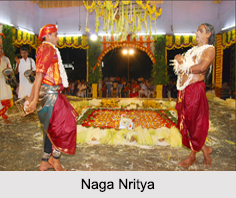
 Popular in the southern coastal tract of Karnataka, the Naga Nritya is known as the snake dance. It is a ritual dance performed to tranquilize the serpent spirit in an extravagant night long affair. The chief narrator of the Naga Nritya is known as the Vaidya or Patri. This dance form is mainly performed between the months of December and April. The dancers dance all night around a huge figure, drawn on the ground in natural colours, in a pandal in front of the shrine. Popular in the southern coastal tract of Karnataka, the Naga Nritya is known as the snake dance. It is a ritual dance performed to tranquilize the serpent spirit in an extravagant night long affair. The chief narrator of the Naga Nritya is known as the Vaidya or Patri. This dance form is mainly performed between the months of December and April. The dancers dance all night around a huge figure, drawn on the ground in natural colours, in a pandal in front of the shrine.
Performance of Naga Nritya During the folk festival of Nagaradhane, the ritualistic performance of the Nagamandala is done, of which the Naga Nritya is a primary aspect. The arena in which the dance is performed is traditionally decorated with rangoli. The dancer paints themselves and comes out in a well matching costume to create a perfect make belief. The first dancer to emerge is called the ‘Patri’ and the other worshippers start singing and dancing around the Patri to the wild accompaniment of drums. When the beating drum, the singing voice and the dancing steps work him up to a tension, he will be animated to show the miracle of his performance, all too stupefying to the spectator who lifts up his hands in devotion to God Cobra. Naga Nritya like the Bhuta Sthana is a ritual dance drama that is carried down from the past. The emphasis is not on entertainment in either case as the spectator is also the performer invariably. It is very likely that the Naga Nritya also has given to the other folk entertainments including Yakshagana, the motif of its dance, motion and also its indigenous musical instruments. Even the costumes of some of the Naga mela resemble the ones used in Yakshagana. Both Bhuta Sthana and Naga Nritya have remained the basic institutions of the folk theatre with their impersonations, dances, make up and costumes. With the full play of the rhythm and its fruitful results, they initiate their devotee-cum-spectators into a wild and curious experience, make them forget themselves, relieve them of their toil and move them over to a different world thus fulfilling one of the fundamental purposes of the theatre dance drama. |
| |||



Home > Movies & Entertainment > Indian Drama & Theatre > Forms of Indian theatre > Folk Theatre In India > Folk Theatre of Karnataka > Naga Nritya
Naga Nritya
| The dance form of Naga Nritya is basically the serpent dance that is performed as a symbol of fertility and life. |
| ||||||||||||||||||||||||||||

