


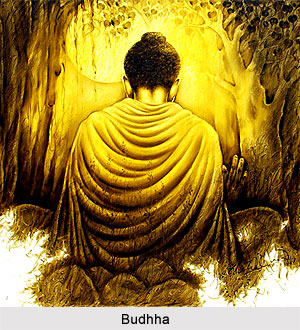
 Contemporary Indian paintings cover a wide array of genres. Artists are now trying out various topics and are experimenting with numerous projects. In India the modern painting starts from coming together of Bengal School of Arts. In order to keep with the time, the art is named according to style, sculptor and graphics. Graphics is of course a latest development in the painting circuit. Speaking on a broader perspective, the main characteristics of contemporary art are; freedom from invention, the recognition of diverse innovation. Contemporary Indian paintings cover a wide array of genres. Artists are now trying out various topics and are experimenting with numerous projects. In India the modern painting starts from coming together of Bengal School of Arts. In order to keep with the time, the art is named according to style, sculptor and graphics. Graphics is of course a latest development in the painting circuit. Speaking on a broader perspective, the main characteristics of contemporary art are; freedom from invention, the recognition of diverse innovation.
Many critics have commented that contemporary Indian painting as forbidding territory, if not forbidden. One of the best possible ways to deal with the entire thing is however is to deal with the entire thing squarely. All that is necessary is will, perseverance and reasonable constant exposure or confrontation. 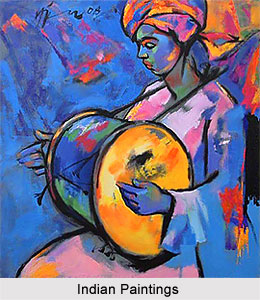 Main feature of contemporary Indian painting is that the method and technique used in the art have acquired a new role altogether. In the contemporary painting "form" became very important, and it began to be treated as a separate entity. Form was not treated as a vehicle as a medium for content. As a matter of fact the position was reserved. And the means, inspired and developed on extraneous elements, rendered technique very complex and brought in its train a new aesthetic. A painting was accepted or rejected in terms of compositional contrivance, colour or sheer texture. On the whole, art acquired autonomy of its own and the artist an individual name, fame and status as never before. Main feature of contemporary Indian painting is that the method and technique used in the art have acquired a new role altogether. In the contemporary painting "form" became very important, and it began to be treated as a separate entity. Form was not treated as a vehicle as a medium for content. As a matter of fact the position was reserved. And the means, inspired and developed on extraneous elements, rendered technique very complex and brought in its train a new aesthetic. A painting was accepted or rejected in terms of compositional contrivance, colour or sheer texture. On the whole, art acquired autonomy of its own and the artist an individual name, fame and status as never before.
Contemporary Indian painting has certainly travelled a long way since the days of Abanindranath Tagore, Raja Ravi Verma and his followers and even Amrita Shergil. Largely, the pattern followed by every artist of note began with one kind of representational or figurative art or the other tinged with impressionism, expressionism or post-expressionism. The interesting relationship of content and form was normally kept at a harmonizing level. Then through a variety of stages of simplification and elimination, through abstraction, cubism and several expressionistic drifts, the artists reached near non-figurative and totally non-figurative levels. Except for minor aberrations, the 'pop' and the 'op', the minimal and anti-art have really not caught the fancy of our artists. The copy-book pattern of art has been followed by number of artists, including senior and popular ones. As a reaction to this journey into nothing, there are three new major trends: projection of the disturbed social unrest and instability with the predicament of man as the main theme; an interest in Indian thought and metaphysics, manifested in the so called 'tantric' paintings and in paintings with symbolical import: and more than these two trends is the new interest in vague surrealist approaches and in fantasy. More important than all this, is the fact that nobody now talks of the conflict between form and content or technique and expression. |
| |||



Home > Art & Culture > Indian Paintings > Indian Painting > History of Indian Paintings > Contemporary Indian Paintings
Contemporary Indian Paintings
| Contemporary Indian paintings have come a long way since the days of Abanindranath Tagore, Ravi Verma. Artists are now trying out various topics and are experimenting with numerous projects. |
| ||||||||||||||||||||||||||||

