Pitta dosha is characterized by the elements like hot, sharp, light, sticky and oily. People with a pitta dosha are of medium build, with greater muscular development. They have soft and warm skin and also have a lot of body heat. They often perspire excessively. These kinds of people may experience
premature graying of hair,
baldness or excessive
hair fall. Their skin has a tendency of developing
acne, rashes, bruises or sunburn easily.
Thus,
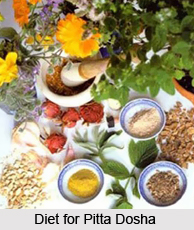
Ayurveda recommends that a person in whom the pitta dosha is dominant should consume those foods, which aggravates pitta. Such a person should take cool, dry, heavy, bitter or astringent food and also mildly natural sweet food is known to pacify pitta.
Foods to Include in Diet : There are various foods that can be included in the diet like
milk, beans, and boiled
vegetables. Mild
spices like
cumin,
coriander and cilantro are also advantageous.
Ghee,
coconut oil, olive oil, cardamom, sprouts, coriander seeds and raw foods are very good for such person.
Such a person can eat most of the vegetables like asparagus, bell pepper, broccoli, brussel sprouts, cabbage, cauliflower, celery, corn, cucumber, lettuce, mushroom, peas, parsnip, potato, squash, and zucchini.
Fruits like apples, banana, dates, coconut, grapes, lychee,
mango, melons, and pomegranate can be eaten.
Beverages like cool drinks, milk, water, coconut milk, fruit and vegetable juice can be consumed.
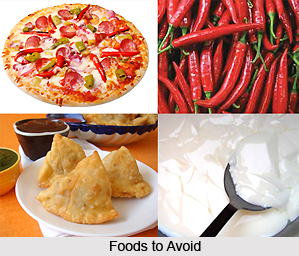
Foods to Avoid : Spices, pungent and oily foods, mainly aggravate pitta dosha. Curry, fried foods and foods having strong odour like
garlic and
ginger also worsens the condition. Chillies are also known for increasing
vata - pitta.
Snacks,
pickles and fermented food are also known for increasing pitta dosha. Grains like brown
rice,
millets, rye and corn also increases pitta dosha.
Such persons should not consume vegetables like beets, carrots, tomatoes, garlic, eggplant,
onions and olives. Unripe and sour fruits should not be consumed by such person and mainly fruits like grapefruits,
papayas,
bananas, apricots berries, cherries, citrus fruits, cranberries, pineapple, plums rhubarb and peaches.
Junk food like pizza, burger, hot dog, roll,
samosa, pastry and deep-fried snacks generally elevates pitta dosha. Smoking, drinking alcohol, tobacco and food items like vinegar, wafers,
curds, corn,
mustard and til oil are also known to aggravate pitta dosha.

 Pitta Dosha is one of the Tridoshas which is made up of the elements fire and water. It is responsible for thirst, digestion, hunger, heat regulation, vision, softness and lustre, intellect, cheerfulness and sexual vigour. In short, this dosha governs all changes taking place in the physiology, from the digestion of food to the regulation of feelings, emotions and sensory perceptions.
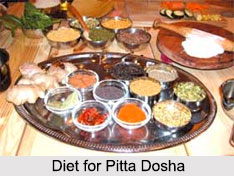 The
The 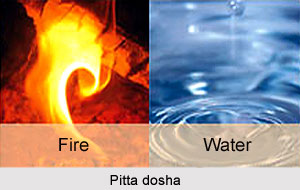 Types of Pitta dosha are formed from the element of water. The five types of Pitta dosha are: pachaka, ranjaka, sadhaka, alochaka and bhrajaka. Pachaka is considered in
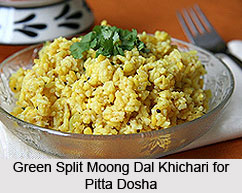
 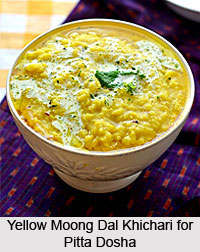 Khichari is a very simple dish which is beneficial for young and old alike, and is also considered to be the best option for introduction of solid food to babies. It is very nourishing and relatively easy to digest, generally not creating abdominal gas or bloating.