Jayatirtha, Indian Saint - Informative & researched article on Jayatirtha, Indian Saint
 Indianetzone: Largest Free Encyclopedia of India with thousand of articlesIndian Religion


in  
 Art & Culture|Entertainment|Health|Reference|Sports|Society|Travel
Forum  | Free E-magazine  | RSS Feeds  
Indian Religion : Vastu Shastra |Indian Religions |Indian Myths |Indian Mythology |Gods of India |Goddesses Of India |Religious Thinkers of India |Types of Religion in India |History of Indian Religion |Indian Yogis |Ajivikas |Sacred Scriptures in Indian Religion |Tantrism |Shaivism |Indian Communities |Sacred Animals in India |Roman Impact on South Indian Art and Society |Bhattacharyas |Indian Classical Terms
Home > Society > Indian Religion > Indian Religions > Indian Saints > Jayatirtha
Jayatirtha, Indian Saint
Jayatirtha was the sixth head of Sri Madhvacharya Peetha. He is considered as one of the most important seers of the Dvaita philosophy.

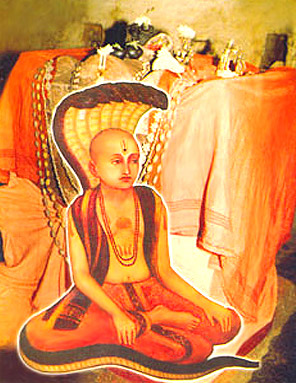
 Jayatirtha, Indian SaintJayatirtha had elucidated Sri Madhvacharya`s philosophy simply so that it is understood by the common man. This helped in spreading the philosophy of Madhvacharya. He was born as Dhondupant to Raghunath and Sakubai Deshpande. He was born in Mangalavedhe near Pandharapur in present Maharashtra.

There are legends associated with him. It is believed that he was born as a bull in his previous life, a bull that travelled with Sri Ananda Teertha carrying his philosophical works. The bull would stand closely and listen to Sri Ananda Teertha`s teachings. When Sri Ananda Teertha was approached by disciples to seek the privilege of writing commentaries on his works, they were told that it would be the bull that would get the privilege. This made them jealous and the bull was cursed by them to die of snakebite. Sri Anand Teertha came to know of this and changed the wordings of the curse so that the snake that would bite the bull would die, and not the bull.

There is also another legend attached to him. A young Dhondupant was crossing the river Bheema on horseback. He was chasing a group of bandits. As he was tired he bent down without stopping the horse and drank some water. Sri Akshobhya Teertha who was a direct disciple of Sri Ananda Teertha witnessed the event. This activated the memory of the previous birth within young Dhondupant and reminded him of his duties to Sri Ananda Teertha. He renounced material life and devoted his life to the services of his master. Sri Akshobhya Teertha initiated him in to Sanyasa. Dhondupant`s father was angry when he came to know this and he forcibly took his son back home in order to get him married. Dhondupant took the form of a snake on the first night which made the wife scary and run away from the room. His father realized that his son was no ordinary being. He agreed to Dhondupant`s sainthood. He attained sainthood and became Sri Jayateertha.

Sri Jayateertha`s Nyayasudha is a masterpiece. It is the detailed commentary of Sri Madhvacharya`s Anuvyakhyana which is a commentary on Brahma Sutras by Veda Vyasa. In this he has captured the brief statements of his master in a simple language. Sri Jayatirtha presents and defends all important philosophical and epistemic issues. It also criticizes other philosophical systems of India such as the Bauddha, Jaina, Nyaya-Vaisheshika Philosophy, Bhatta-Prabhakara Mimamsa, Advaita and Visistadvaita. Sri Jayateertha`s Brindavana or the place where he is buried is at Gajagavhara in the north of modern Karnataka.

Around eighteen works have been composed by him. Most of them are direct commentaries on Sri Madhvacharya`s work. Some of the prominent works are Nyaya sudha, Tattva prakashika, Prameya deepika, Nyaya deepika. He is also credited with commentaries on Sri Madhvacharya`s Dasaprakaranas and two out of ten Upanishad Bhashyas. Other works are Vadavali, Pramana Paddati and Padyamala.
(Last Updated on : 05/08/2011)
 
 
Mata Amritanandamayi Swami Dayanand Saraswati Maharshi Yogi
Sri Ravi Shankar A.C. Bhaktivedanta Swami Ramdev
Sahajananda Swami Swami Sahajanand Saraswati Ramanujacharya
Madhvacharya Swami Raghavendra Sri Ramana Maharshi
Baba Lokenath Brahmachari Swami Parijnanashram H H Shankarashram- I Swamiji
Swami H H Parijnanashram II H H Shankarashram- II Swamiji His Holiness Swami Keshavashram
Swami Vamanashram Swami Krishnashram His Holiness Swami Pandurangashram
Swami Anandashram Swami Parijnanashram III Shrimat Sadyojat Shankarashram
Swami Chidananda Saraswati Swami Nigamananda Ramana Maharishi
Swami Sivananda Saraswati Swamiji A. Parthasarathy Abhinavagupta
Acharya Koshoreji Vyas Annada Thakur Baba Sheikh Farid Shakarganj
Basaveshwara Bhagat Sain Bhagwan Das
Eknath Guru Har Krishan Ji Guru Hargobind Ji
Guru Ramdas Ji Hazrat Inayat Khan J. Krishnamurthi
Khwaja Ghulam Farid Laleshwari Mahamandaleshwar
Maharajashri Meher Baba Nachiketa
Namdev Neem Karoli Baba Nimbarka
Pandit Satlal Siboo Parsava Pujyapada Ayodhya Dasji
Ram Singh Baba Sri Morari Bapu Sri Prahlad Chandra Brahmachari
Sri Swami Brahmanand Maharaj Swami Krishnanda Saraswati Sri Yukteshwar
Swami Agnivesh Swami Anand Ji Maharaja Swami Chinmayananda
Swami Divayanand Ji Teerth Swami Jinendra Swami Jitatmananda Maharaj
Swami Kral Babji Swami Lakshman Joo Swami Mast Ram Jee
Swami Nand Lal Ji Swami Ram Tirth Ramlinga Swamigal
Swami Ramanand Swami Shraddhanandaji Swami Tapovan Maharaj
Vaishnavacharya Goswami Vamakhepa Vashishta
Ved Vyas Yajnavalkya Guru Nanak
Ramakrishna Paramahansa Swami Sri Bharati Krisna Tirthaji Osho
Pandit Shraddha Ram Phillauri Baba Ram Singh Baba Dayal Das
Mirabai Vallabhacharya Kabir
Tukaram Sathya Sai Baba Srila Prabhupada
Sri Chinmoy Swami Jyotirmayananda Swami Muktananda
Swami Rama Swami Rama Tirtha Amar Das
Chaitanya Ramananda Tayumanavar
Ramalinga Swami The Pandharpur Pilgrimage and the Pandharpur Saints Adi Shankaracharya
Swami Ramakrishnananda Alvars Nayanmars
Sankaradeva Nayanaar Swami Akhandananda
Swami Shivananda Swaminarayan Madhavendra Puri Goswami
Jayatirtha Vyasatirtha Kanaka Dasa
Vadirajatirtha Advaita Acharya Nityananda
Gadadhara Pandit Srivasa Thakura Svarupa Damodara Goswami
Pundarika Vidyanidhi Jiva Goswami Raghunatha Bhatta Goswami
Swami Vivekananda Kanappa Nayanar  
Recently Updated Articles in Indian Religion
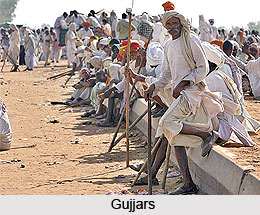
Gujjar Community
Gujjar Community belongs to the North-Western part of India. They are an ethnic caste and are known in different other names.
Lord Subrahmanya
Lord Subrahmanya Swamy is considered to be the universal lord who blesses human beings and helps them get rid of their sins.
Gods of India
Gods of India form an inseparable part of the life of the people. Indian Gods are considered to be mysterious superhuman beings who are worshipped in this country in various forms.
Folk Gods of Kumaon
Folk gods of Kumaon have a rich history and they provide expression to the famous and popular ideas of the people.
Seven Sisters
Seven Sisters are the most famous among Dravidian deities in Southern India. The seven sisters also have a younger brother Potu Eazu.
E-mail this Article | Post a Comment
Forum
Forum on Indian Religion
Free E-magazine
Subscribe to Free E-Magazine on Society
 
 
Jayatirtha, Indian Saint - Informative & researched article on Jayatirtha, Indian Saint
Sitemap
Contact Us   |   RSS Feeds
Copyright © 2008 Jupiter Infomedia Ltd. All rights reserved including the right to reproduce the contents in whole or in part in any form or medium without the express written permission of
Jupiter Infomedia Ltd.