 In south India one can trace the earliest Iron Age sites. It includes places like Hallur, Karnataka and Adichanallur of Tirunelveli district, Tamil Nadu around 1000 BC. The kingdoms that flourished in the Iron Age are: Maha Janapadas (700-300 BC), Magadha Empire (684-424 BC), Nanda Empire (424-321 BC) and Maurya Empire (321-272 BC)
It has been observed that most of the Vedic falls within the early part of the Indian Iron Age which spans from the 12th to 6th centuries BC. Again the Iron Age of North India can be taken to end with the rise of the Maurya Dynasty. South India enters history with the Sangam period that starts in the 3rd century BC.
From about 800 B.C. to about 550, the Aryans expanded towards the east. However by about 550, their lands were divided. On the other hand invaders from the west occupied large parts of Punjab. During this period Hinduism took formal shape and that Buddhism also spread widely. In about 320 B.C. Chandragupta Maurya managed to unite the Ganges River Valley and establish the Mauryan Empire.
During the Iron Age several powerful kingdoms came up in the Gangetic Plains of North India. These include Kasi, Kosala, Amga, Magadha, Vajji, Malla, Chhedi, Valsa, Kuru, Panchaala, Matsya, Surasenam, Achhakam, Avanti, Gandhara and Kamboj. These cover a chunk of north India. Magadha, Kosala, kuru and Gnadhara were the biggest kingdoms. The Upanishads and other Buddhist and Jain religious texts had appeared during this period. This period follows the late Harappan Culture. Both Painted Grey and Northern Black polished culture are considered as cultures that belong to this age. Some historians have dated Kurukshetra war to Iron Age India of the 10th century BCE.
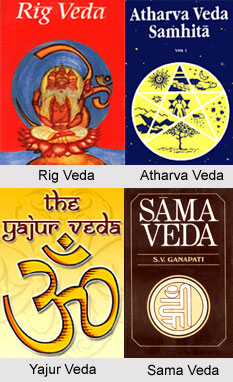
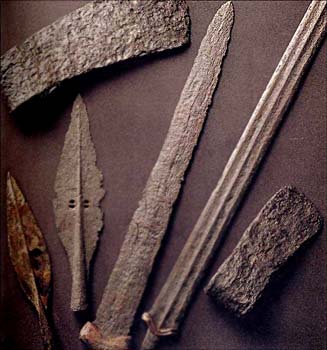
It is believed that the Iron Age started from early 1000 BC. Aryans knew the usage of iron well. It is believed that the Iron Age started from the period when Rig Veda was composed. Men had started using iron in making weapons and other implements that indicated high culture and civilization in this age. Around 600 B.C.E., in the classical period of Iron Age Ancient India, the Sanskrit language began to change from a first language to a second language of religion and learning. This marked the start of the Classical period.