


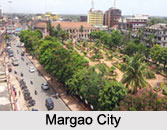
 Margao, also known as Madgaon in Konkani language, is an ancient city of the West Indian state of Goa. Margao is known as the cultural capital city of Goa. It is a fastest growing city with Aquem, Fatorda, Gogol, Borda, Comba and Davorlim. Margao, also known as Madgaon in Konkani language, is an ancient city of the West Indian state of Goa. Margao is known as the cultural capital city of Goa. It is a fastest growing city with Aquem, Fatorda, Gogol, Borda, Comba and Davorlim.
Naming of Margao The name Margao is derived from "Matha Gram", which means 'matha' or a religious establishment. Location of Margao Margao is situated on the banks of Sal River. Margao is the administrative capital of Salcete taluka and South Goa District of Goa. Margao is positioned at the junction of the Konkan Railway and the South Central Railway. It is also well connected from Dabolim Airport and Panaji. History of Margao In the pre-Portuguese era, Margao was amongst the major communities in Salcette. There present many monasteries, because of the concentration of Brahmins. In 1543 AD, during the Portuguese conquest, many Hindu temples were demolished and Catholic churches were constructed with the aid of Portuguese Trading Company. Damodar Temple is an oldest temple in this region. 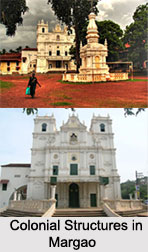
Geography of Margao Margao is geographically positioned at 15 degree18 minutes North to 73degree 57 minutes East and 15.3 degree North to 73.95 degree East on the southern region of Goa. The average elevation is 31 meters (102 feet). The total land surface area is 3,702 square kilometres. Climate of Margao Margao as it is located very near to the Arabian Sea; it enjoys a tropical monsoon climate. The summer temperature ranges from 28 degree Celsius to 32 degree Celsius and the winter temperature is about 20 degree Celsius. Demography of Margao According to the population census in the year 2011, Margao has a population of about 78,393. Out of which 51 percent of the population comprises of males and females 49 percent. Margao has an average literacy rate of 90 percent. The male literacy rate is 91 percent, and female literacy rate is 83 percent. Now the Hindus, Muslims and Christians reside in Margao. Education of Margao Margao is well known in education system. As this present city is developed by the Portuguese, the schools and colleges even today follow Portuguese culture. Loyola High School, Bhatikar Model English High School, Parvatibai Chowgule College and Govind Ramnath Kare College of Law are the popular educational institutions here. Culture of Margao Margao celebrates the festivals like Diwali, Dindi Festival and “Purumetache Fest”. Margao is also popular for the traditional sports. Here football is widely played. Economy of Margao The economy of Margao is structured on agriculture and pisciculture. Here the fish industry is popular in the Southern part of Goa. Tourism of Margao Margoa is dotted with many Hindu temples, colonial sculptures and colonial architectures. Anna Fonte, Mercado Velho, Holy Spirit Church, Seven Gables House and the Chapel at Monte Hill are the popular tourism attractions in Margao. |
| |||



Margao
| Margao is considered as the second largest city and commercial hub of Goa and this city is filled up with the Portuguese architectures. |
| ||||||||||||||||||||||||||||

