 District administration in India is the management of affairs within a basic territorial unit called district. It also refers to management of the activities of the government within an area called district. It is important to note that district administration is a field work. It is different from the functions of a staff or secretariat. It is at district level that the common man comes into direct contact with the administration. At the district level, there are multiple officers or functionaries responsible for administering the affairs of the Government. These functionaries are mentioned below.
Functionaries of District Administration in India
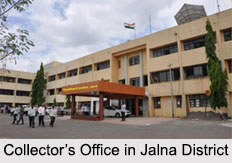
District Collector is recognized as the head of district administration in India. A district falls under his charge. In 1772, Warren Hastings established the first office for the Collector in order to collect revenue and provide justice. The function of District Collector is not restricted to collection of land revenue. He performs various other functions like maintaining law and order in the district, executing rural development programmes and conducting census operations, once in 10 years. District Collector acts as a representative of the state government. Many other state functionaries like the Superintendent of Police, Assistant Registrar of Cooperative Societies, District Agricultural Officer and District Medical Officer also handle district administration in India.
District Administration at Revenue Division/ Sub-Division Level
A district is geographically divided into a number of units known as sub-divisions in Uttar Pradesh and Madhya Pradesh, revenue divisions in Tamil Nadu and Prants in Maharashtra. The officials-in-charge of these units have different names in different states. In Uttar Pradesh, the official-in-charge is called the Sub-Divisional Officer (SDO) or Sub-Divisional Magistrate (SDM). He is called Revenue Divisional Officer or Sub-Collector in Tamil Nadu and Prant Officer (Deputy Collector or Assistant Collector) in Maharashtra. The SDO is either a newly recruited member of the Indian Administrative Service (IAS) and young in age or a member of the State Civil Service. Like the District Collector, the SDO is a generalist area administrator.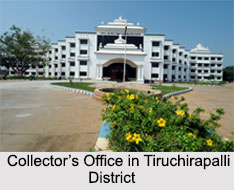 He is a link between the District Collector and the Tahsildar in revenue matters, and the District Magistrate and the Station Officer (police) in matters relating to law and order.
The sub-divisions may be classified into two broad types- an `office` type sub-division and a `touring` type sub-division. In the former, the SDO maintains the office just as a Collector or a Tahsildar does. Here, the headquarters of the sub-division is usually located within the sub-division itself. States namely, West Bengal, Bihar, Odisha, Tamil Nadu, Maharashtra, Gujarat, Andhra Pradesh, Karnataka, Assam and Rajasthan have `office` type sub-division. In "touring" type sub-division, the SDO does not maintain an office. He is a touring officer, who gathers information, transmits it to his district chief, contacts people, supervises subordinate officials and looks after the execution of governmental activities in his sub-division.
The SDO is a valuable field aid to the District Collector and an integral part of district administration. As a matter of policy, the SDO and other sub-divisional level officers must reside at the sub-divisional headquarters. But in many states, Sub-Divisional Officers do not live within their sub-divisions. They reside at the district headquarters.
District Administration at Tahsil Level
The sub-division comprises of one or two tahsils. A tahsil is called taluk in Tamil Nadu and taluka in Maharashtra. It is the basic unit for general administration, treasury, land revenue, land records and other items of work. It has the closest and widest contact with the rural population. The officer-in-charge of a tahsil is the Tahsildar, who belongs to the State Civil Service. He is the principal official in district administration responsible for actual revenue collection. His performance is judged by his efficiency. He is a sub-treasury officer, who recommends remissions or other concessions to the District Collector in times of distress. He is assisted by a Naib or Deputy Tahsildar, Quanungos and Patwaris. District administration at tahsil level is the farthest unit of administration for revenue.
District Administration at Pargana Level
The next lower unit in revenue administration is known as pargana in Uttar Pradesh, circle in Maharashtra and firka in Tamil Nadu. The head of this unit is called Supervisor Quanungo in Uttar Pradesh, Circle Inspector in Maharashtra and the Revenue Inspector in Tamil Nadu. He is in charge of revenue administration and land records of every village within his area. He is the first line supervisor in the chain of revenue administration in the states.
District Administration at Village Level
The lowest unit for all administrative and fiscal purposes in all the states of India is the village, which is administered by a village establishment. The Village Headman is the most powerful government functionary at the village level. He has both police and revenue functions to perform. He is the head of the village police. He also collects revenue and deposits it in the treasury. He is the custodian of all government property in the village.