





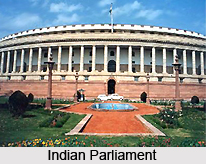
 Distribution of power between the Centre and states has been provided for in the Constitution of Indiafor the smooth running of the Government. According to the Administrative divisions, India has 28 states and 7 union territories. Each of these regional administrative divisions has an elected government headed by a chief minister. A Governor is appointed by the Indian President, as the representative head of the federal authority in each state. The form of government in India is the quasi-federal form, with federal structure and strong unitary spirit. In the federal form of government, Divisions in Indian Administration occurs; the power is divided between a central authority and constitutional political units such as the states and the provinces. The two levels of government are interdependent and share sovereignty. The federal system also provides that the constitution is the supreme power of the land. Distribution of power between the Centre and states has been provided for in the Constitution of Indiafor the smooth running of the Government. According to the Administrative divisions, India has 28 states and 7 union territories. Each of these regional administrative divisions has an elected government headed by a chief minister. A Governor is appointed by the Indian President, as the representative head of the federal authority in each state. The form of government in India is the quasi-federal form, with federal structure and strong unitary spirit. In the federal form of government, Divisions in Indian Administration occurs; the power is divided between a central authority and constitutional political units such as the states and the provinces. The two levels of government are interdependent and share sovereignty. The federal system also provides that the constitution is the supreme power of the land.
Based on the distribution of powers between the Central Government and the State Government there are three lists - Union list, State list and Concurrent list (powers entertained by both centre and state). Union List The Union list consists of subjects on which the central government or the Indian Parliament can make laws. These subjects included in the list are of national importance. These include subjects such as defence, foreign affairs, atomic energy, banking, post and telegraph. The central government has the power of making laws on these subjects at all times also during emergencies. There are 97 subjects on which the central government can make law. 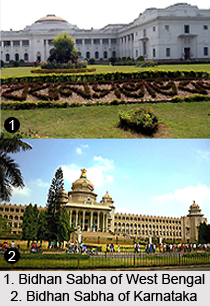 State List
The State list contains 66 subjects of local or state importance. The state governments have the authority to make laws on these subjects. These subjects include police, local governments, trade, commerce and agriculture. However, during national and state emergency, the power to make laws on these subjects is transferred to the Parliament. Concurrent list The Concurrent list has 47 subjects on which both the Parliament and the state legislatures can make laws. These subjects include criminal and civil procedure, marriage and divorce, education, economic planning and trade unions. Yet, in case of conflict between a law made by the central government and a law made by the state legislatures, the law made by the central government will prevail. There are certain changes regarding the authority of making laws. Education was shifted from the state list to the concurrent list by the 42nd Amendment Act of 1976. Apart from the powers mentioned in these lists, there is also a list of miscellaneous functions called residuary powers. These are not mentioned in any of the three lists and the right to make laws on these subjects is called residuary power. The central government has been given rights to legislate on these subjects. It needs to be mentioned here that though there is the presence of a federal structure and a clear division of powers along with an independent judiciary, yet there is a strong bias towards making the Central Government more powerful than the state governments. The polity of India can turn into a complete unitary character during emergency on the ground of failure of the constitutional machinery and during such a situation the Union Government becomes all powerful. |
| ||||||||||||||||||||||||||||

