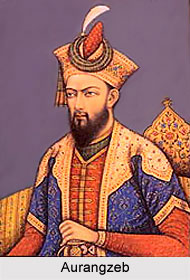
 Coronation of Aurangzeb was a rather grand affair. After a long and bloody battle with his brothers for the throne, the victorious Aurangzeb ascended the throne on 23 May 1658. Aurangzeb had a somewhat hasty coronation on 27 Shaban (21 July) 1658, which was almost the last day before the holy month of fasting, Ramzan, but was chosen by his astrologers. However, due to the circumstances of his acquisition, and the fact that the actual Emperor Shah Jahan was still alive, Aurangzeb initially had some difficulties establishing the formal legality of his reign. The Supreme Censor, the Qazi of Delhi, refused to read the Khutba (sermon) in his name as he maintained that the legal sovereign was still alive, so the court Qazi, who was not the recognized authority, read the Khutba at the coronation. Furthermore, Dara Shikoh was still at large and Shuja as yet controlled Bengal. So it was not until a few months later, when he had secured himself more firmly on the throne that he sent for his family. Afterwards he managed to solve his problem regarding the Qazi of Delhi as well.
The family made their journey from Daulatabad in short day trips, and their progress was announced in official reports at court. Though still a toddler, Akbar was the senior-most prince in the retinue, so he led the procession with a sword and his nanny. They reached Delhi in March 1659, after which the emperor held a second coronation with great pomp and show and elaborate ceremony, which fittingly commemorated the victory of the new emperor. Abdul Muzaffar Mohiuddin Muhammad Aurangzeb Bahadur Ghazi took the name of Alamgir and proclaimed himself to be as brilliant as the sun, a reference to the mythical origins of the Timurids. During the coronation celebrations, he awarded endowments to the princesses and the princes. The order of priority can be measured according to these gifts. Shahzadi Jahanara Begum Sahib, whom he wished to accommodate so she could influence the deposed monarch, received five lakh rupees, Zebunissa, his daughter, received four lakh rupees, Zinatunissa, his other daughter, got two lakh rupees, Badrunissa one lakh sixty thousand rupees, Zubdatunissa one lakh fifty rupees, and Prince Azam two lakh rupees. The prince also received a ceremonial garment, a sword, and a Mansab in order to solemnly mark his promotion. Mohammad Sultan, who at that time was away in pursuit of Shah Shuja in Bengal, was given three lakh rupees as well as diamonds and emeralds. Moazzam, who had stayed behind to look after the Deccan, got two lakh rupees, and Akbar, aged three, one lakh rupees. Zebunissa was made the new Padisha Begum, the first lady of the realm.
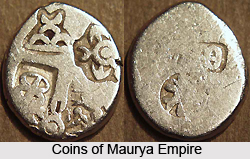
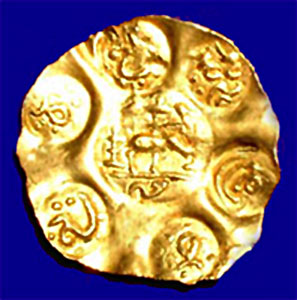
The festivities lasted two and a half months. Coins were struck in commemoration of the day, and the Khutba was officially read in his name. Boats decorated with flowers and lit with torches travelled across the Yamuna River for the pleasure of all, and it is said that the brilliance of the nightly firework displays overshadowed the stars. Poets exhausted their metaphors describing these dazzling exhibitions, claiming the nights were transformed into daylight. The Emperor appeared in the Daulat Khana (royal pavilion) to accept the homage of his subjects. The chamber`s walls were covered with silk carpets and gold brocades woven in Ahmedabad, and the courtiers were impressed by the textiles from Europe with strange mythical characters. Each of the audiences opened with a concert of musicians. In the evenings, the festivities were followed by dances.
The Emperor was not ungrateful to his faithful people. He lavished awards on 30,000 of his subjects, distributing various monetary gifts, ceremonial garments, swords, and promotions in Mansabs. Mir Jumla presented gifts to the new Emperor which fully measured up to his lavish reputation- an enormous diamond, two rubies, nine emeralds, ten Arabian pearls, one sapphire, five male and female elephants, and five horses saddled in gold and silver.
Probably the greatest present, though, was the Peacock Throne, which his father Shah Jahan had spent half his life building and perfecting but, when it was completed, was not the one to sit on it. Thus was carried out the grand coronation of the Emperor Aurangzeb.