


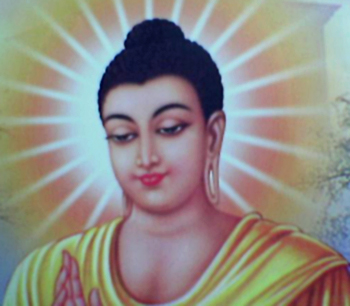
 Concept of God in Buddhism
Buddhism, originating 2,500 years ago in India, has emerged as one of the world's largest religions. With its core teachings revolving around the understanding of suffering and the pursuit of enlightenment, Buddhism offers a unique perspective on the concept of God. Unlike many other religions, Buddhism does not revolve around the relationship between humanity and a personal deity. Instead, it focuses on meditation, spiritual and physical labor, and moral conduct as the means to achieve enlightenment or nirvana. The concept of God in Buddhism is unique and can be understood through the principles it encompasses, various Buddhist philosophies, and the beliefs of Lord Buddha and his followers. Buddha's Perspective on God Buddhism, often considered a spiritual philosophy, places great emphasis on the complete alleviation of suffering, known as nirvana. The founder of Buddhism, Siddhartha Gautama, commonly known as the Buddha, did not support the existence of a personal God. He refrained from presenting any specific view on creation, stating that questions concerning the origin of the world were essentially valueless. Although Lord Buddha did not explicitly deny the existence of God, he advocated that individuals could attain enlightenment through personal effort, adherence to a code of conduct, and mental discipline. Context of Gods in Ancient India During the time of Lord Buddha, the prevailing religious beliefs in India were centered on a transactional relationship between Gods and humans. The vivid imagination of the era deified various objects and creatures, including fantastical beings and symbols. While the Upanishads had challenged the authority of these Gods in the realm of thought, they had not disrupted their influence in practical life. People believed that Gods, as creators of the world and governors of the universe, could influence the destiny of human beings. However, Buddha realized that the only way to dispel the fear and uncertainty associated with Gods was to eliminate their existence altogether. Buddha's philosophy replaced the concept of God with the notion of ‘Dhamma’, an impersonal law. Buddha's Teachings and Rejection of Religious Delusion Lord Buddha rejected prevalent views on God and declared that virtue and happiness, as well as vice and suffering, were intrinsically connected. The uncertain nature of philosophical assumptions, combined with practical convictions that led individuals to rely on Gods rather than their own efforts, prompted Lord Buddha to confine his teachings to the realm of this world. Buddhism adopted a scientific approach that saw no God in thunderbolts or angels in heaven. By dissolving religious delusion through a natural interpretation of things, Buddhism deemed the hypothesis of a personal God inconsistent. Instead, it emphasized the law of karma and its role in explaining the suffering in the world. Perspective of Buddhism on Karma and God Buddhist philosophy asserts that the suffering experienced in the world is intelligible only through the hypothesis of karma. It provides an explanation for the experiences of all living beings, including those in hell, animals, ghosts, humans, and Gods. Karma, as the governing principle, rejects notions of favoritism, caprice, and arbitrariness typically associated with God. Buddhist thinkers disputed traditional arguments in support of the existence of God, highlighting the majesty of karma as a superior principle. Different Buddhist Schools and Perspectives Buddhism encompasses a variety of traditions and practices based on the teachings of Lord Buddha, resulting in different schools of thought. Three major schools of Buddhism include Mahayana, Theravada, and Vajrayana. Mahayana Buddhism, prevalent in China, Taiwan, Japan, and South Korea, emphasizes the role models of bodhisattvas who have achieved enlightenment and returned to teach others. Theravada Buddhism, often referred to as the "Way of the Elders," is common in Sri Lanka, Cambodia, Thailand, and Myanmar. It is considered the oldest surviving school and emphasizes the original teachings of the Buddha focusing on individual liberation through mindfulness and meditation. Mahayana Buddhism, on the other hand is characterized by its emphasis on compassion and the pursuit of enlightenment for the benefit of all beings. It is prominent in Tibet, Nepal, Bhutan, and Mongolia. This school includes various sub-schools, such as Zen, Pure Land, and Tibetan Buddhism, each with its own practices and beliefs. Zen Buddhism emphasizes direct experience and meditation, aiming to achieve sudden enlightenment through intuitive insight. Pure Land Buddhism revolves around devotion to Amitabha Buddha and the aspiration to be reborn in his Pure Land. The Rejection of a Personal God Buddhism diverges from many religious traditions by not centering its belief system on the relationship between humanity and a personal God. Buddhists do not worship or rely on a divine being for salvation. Instead, they emphasize the impermanence of all things and the potential for change. The path to enlightenment in Buddhism lies in the development of moral conduct, meditation, and wisdom. The Buddhist chant "Om Mani Padme Hum" exemplifies this focus on internal transformation and devotion to the Mystic Law of the Lotus Sutra. The Four Noble Truths Lord Buddha taught the Four Noble Truths, which serve as the foundational principles of Buddhism. The first truth acknowledges that suffering (dukkha) is an inherent part of human existence. The second truth identifies desire (tanha) as the root cause of suffering. The third truth states that suffering can be ceased, leading to enlightenment. The fourth truth outlines the Middle Way, a balanced path of morality, meditation, and wisdom that leads to the cessation of suffering. The Transformation of Beliefs Throughout its history, Buddhism has encountered various cultural influences and adapted to different societies. As it spread to countries like China, Japan, Tibet, and others, it incorporated local beliefs and deities into its practices. This led to the emergence of syncretic forms of Buddhism, where Buddhist concepts intertwined with existing religious traditions. The Philosophical Interpretations Within Buddhist philosophy, different interpretations of the concept of God have emerged. Some Buddhist philosophers argue that the idea of a personal God contradicts the core teachings of Buddhism, as it implies a permanent and unchanging entity, which goes against the principle of impermanence. Others take a more nuanced approach, suggesting that the concept of God can be understood as an impersonal ultimate reality or as a metaphorical representation of the enlightened mind. In these interpretations, God is not seen as a separate entity but as a symbolic expression of the highest wisdom and compassion within each individual. Ultimately, the diversity of philosophical perspectives within Buddhism allows for a wide range of interpretations regarding the concept of God, with no single definitive stance. In Buddhism, the concept of God differs significantly from that found in many other religions. Rather than focusing on a personal deity or creator, Buddhism places emphasis on individual transformation, the cessation of suffering, and the attainment of enlightenment. The Buddha himself did not explicitly affirm or deny the existence of God, redirecting his teachings towards practical methods for liberation. Buddhism's unique approach to spirituality, with its emphasis on self-reliance, ethics, meditation, and wisdom, continues to attract millions of followers around the world. Its adaptability and openness to various cultural and philosophical influences have allowed Buddhism to evolve and thrive in different societies while maintaining its core principles. Overall, the concept of God in Buddhism remains a subject of interpretation and personal exploration, inviting individuals to delve into their own spiritual journeys and discover the truth for themselves. |
| |||



Concept of God in Buddhism
| Concept of God in Buddhism has a different perception. Buddhism refuses the Concept of God rather they believe in the existence or reality of an enlightened being, who is believed to save human beings from all kinds of sufferings. Lord Buddha almost remained silent regarding the Concept of God. |
| ||||||||||||||||||||||||||||

