Classical age in the Indian context refers to that period in Indian history, which saw the emergence of the Gupta Empire into a giant stature nurturing most of the northern India under it. It was also known as the Golden Age due to the preponderance of law and order situation, peace and security and socio-cultural achievements.
Overview of the classical age:
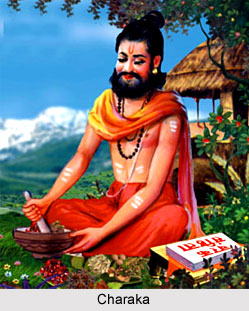
The classical age was acknowledged for the development of the artistic, educational, military and scientific exploits which after its beginning continued to leave its mark over the preceding generations. Significant achievements in these fields marked the importance and enhanced its reputation in the whole history of the Classical age. Religion underwent a synthesis and major sectarian deities, image worshipping and devotionalism and temples gained grounds. Religious life became more enriched with music, classical dances, religious literary works and so on. Subjects like grammer, astronomy and other scientific fields were dealt in an advanced manner with specialization being done on them. Classical age in India is also revered for its contributions in the field of mathematics and astronomy, as being the first to replace the roman system with the Indian numeral system. `Decimal` system is again one such invention of this era. Charaka and Sushruta were the two exponents who excelled in the medical field. Indians also excelled in pharmacopoeia, bone setting, caesarean section and skin grafting procedures.
Gupta and Vardhan Empires
Gupta and Vardhan empires are both the pioneers and the nurturers of the Indian tradition under whom the classical age gained prominence and it excelled in various major fields.
The Gupta rulers were versatile monarchs who built a large empire and even ruled it efficiently. They also consolidated the large northern India under one political banner, which was remarkable. They encouraged the development of trade and commerce, which multiplied the wealth of the country. Internal security was of high standard which allowed the smooth functioning of trade relations, maintenance of law and order and groth in the religious, cultural and economic prosperity of the people. They were the patrons of Gandhara School, which was in an indianised form, and aristocrats reserved a room as picture galleries known as `Chitrashala`.
The Vardhan dynasty reached its zenith during the rule of Harshavardhana who was a great patron of art and also a scholar. He united different parts of India like Punjab, Bengal, Haryana and Orissa under his domain. Though a very young monarch in the beginning he very soon after his ascension transferred his capital from Thanesar to Kannauj and united both of them.
Development and decline
The classical age of India is often compared to the Elizabethan and Stuart period in England. Classical age as it was known as means the period that is adorned with socio-cultural developments at its peak. These developments had been a part of the Gupta and the preceding Vardhana dynasty. Chandragupta, Samudragupta, Chandragupta II, Kumaragupta, Skandagupta were the notable rulers of the Gupta famiPrabhakarvardhan, Rajyavardhan and Harshavardhan belonged to the Vardhan dynasty with significant contributions to the Classical age. Decline creeped into the Gupta empire during Skandagupta`s rule when vast resources were drained in the military success against the Pushyamitra and the Huns. Finally the empire was disintegrated and also faced the invasions of the Vakatakas of the Deccan region. Vardhan dynasty also faced similar fate after his death in 646 AD. The empire was left without any heir which precipitated its disintegration into smaller states and finally the glorious rule came to an end.
The Classical age is considered with highest esteem as the age of Renaissance. It was an age when there were developments in every field from political life to cultural life of the common people. This age saw the existence of able and just rulers who progressed considering the wellbeing of the people. Not only the rulers were benefited but the common lot too enjoyed the fruits of the development. Significant rise in artistic and literary life along with religion has been the most remarkable feature of this age, which can be the bearer of wisdom for the present generation as well.