Seven Dhatus are the foundation structure of our body and the basis of growth and survival. The food that we consume is assimilated in our body in the form of "Ahar Rasa" which helps in survival, growth and fortification. From this Ahar Rasa originates the life sap or "Jeevan Rasa" which is the preliminary source of the Dhatus. There are seven dhatus in all which forms the different organs and different body systems. These are:
1. Rasa,
2. Rakta,
3. Mansa,
4. Meda,
5. Asthi,
6. Majja and
7. Shukra Dhatu.
One unique feature of Ayurvedic physiology is that each human tissue is derived from the previous tissue in ascending order of complexity. From Rasa (life sap) the body builds up Rakta (blood), from Rakta it develops Mansa (muscles), from Mansa originates Meda (fat), from Meda is developed Asthi (bones), from Asthi the body generates Majja (nervous system) and from Majja is produced Shukra (semen).These dhatus are composed of the Panch Mahabhutas or supreme powers - Earth (Prithvi), Water (Aap), Fire (Tej), Air (Vayu) and Universal Space (Akash).
Pitta, one of the three doshas, is the successor of the divine fire and is the source of Agni or body fire. Agni plays the crucial role of a catalyst in the creation and maintenance of the seven dhatus. These dhatus remain within the human body in the right proportion so that the body can function properly but any disturbance in their equilibrium causes disease.
Function of the Seven Dhatus in Ayurveda
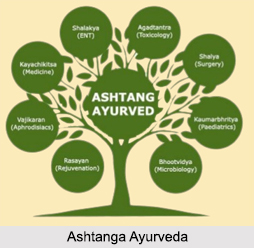
According to Asthanga Ayurveda, the seven dhatus constitute the anatomy and physiology of the human body. They play a major role in the chain of bodily activities, eventually ensuring a healthy body and a healthy mind. Disorders in the dhatus should be immediately taken care of to prevent further degeneration of the body.
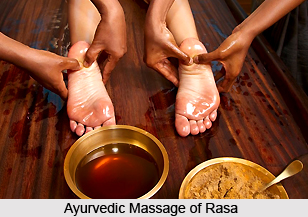
Rasa: Rasa Dhatu, the preliminary of the seven dhatus is derived from digested food. It nourishes each and every cell and tissue of the body. Increased rasa leads to loss of appetite and other related complaints while its deficiency causes fatigue, loss of weight, dry skin and retarded perceptibility of the senses.
Rakta: The Rakta Dhatu, considered to be the basis of life, provides vigour and glow to the body by nourishing the muscles and intellect. Disorders in the Rakta Dhatu may cause a wide range of disorders like boils, tumours, high blood pressure, tiredness, anaemia, etc.
Mansa: Mansa, a derivative of blood, is concerned with providing physical strength and stamina to the body. Abnormalities in mansa are manifested in the form of tumours around the face, neck, abdomen, thigh or genitalia.
Meda: The Meda Dhatu is actually the adipose tissue that provides energy and lubricates the body. In a diseased person, meda is responsible for conditions like dyspnoea.
Asthi: Bony tissues and cartilages comprise the Asthi Dhatu. Asthi acts as a backbone to the muscular tissues. Abnormalities include weaker and bigger bones and brittle nails. Asthi or bony tissue, which constitutes the skeleton, is the hardest of all connective tissues.
Majja: Majja or bone marrow tissue, present within the bony cavities, serves the vital function of producing blood cells. Increase of majja leads to swollen eyes or fingers, heaviness, oliguria and non-healing ulcers while a deficiency may cause osteoporosis and sunken eye.
Shukra: The Shukra Dhatu originates from the core of majja. According to Asthanga Ayurveda, Shukra is the most important of the seven dhatus because it has the potential to produce new life. Shukra Dhatu is related with male and female reproductive systems, and is concerned with the production of offspring.