Indianetzone.com - Web Portal on Indian Culture & LifestyleArt & Culture  •  Health  •  Movies & Entertainment  •   Society  •  Reference  •   Sports  •  Travel  

  Home >> Reference >> Indian Museums >> Indian Museums
Forum
Forum on Indian Museums
Discuss Now
Free E-magazine
Subscribe to Free E-Magazine on Indian Culture & Lifestyle.
Learn More
Interesting Readings
  - Indian Museums
  - Sanchi Archaeological Museum
  - Museums
  - Sarnath Museum , Bihar
  - Government Museum, Chennai
  - Indian Museum, Kolkata
  - National Museum, New Delhi
Jimtrade.com : India Business to Business Directory
Business Directory of Indian Suppliers Manufacturers and Products from India.
India`s leading Yellow pages directory.
Indian Museums

Museums are spread all over India. There are museums ranging from historical museums, which cover each and every aspect of primitive India to the period of the British and India`s freedom struggle to museums on art, science, nature and natural resources, literature, dolls, people, tribes etc. Every region in India has at least 50 museums; almost every small town in India has its own small collection to exhibit in a museum. India is a diverse land and even all museums in India would not be able to collect all the facts related to this culturally rich country.

Museums in India have a rich heritage in conserving and exhibiting valuable materials, closely related to culture and tradition. Museums are built in every nook of the country, displaying the antiquities and excavates, that were digged up during various archeological excavations. The first museum to be recognized was the Indian Museum in Kolkata. It has a wonderful collection of Hindu sculpture and also Buddhist art forms. Another significant one, Asutosh Museum of Indian Art is also located in main campus of University of Calcutta. It is a museum of art. Founded in the year 1937, it is the first public museum in any university in India and is indeed one of the important museums in India.

National Museums:
National MuseumsThe collection of items from various museums across India, in Delhi at Rashtrapati Bhavan in 1949 was the event responsible for the creation of the National Museum that would house artifacts. The exhibition continued at the Rashtrapati Bhavan till the museum building was ready in 1960. Its space now holds a collection that spans an era of over 5,000 years. Today, this museum has in its possession over 2,00,000 works of exquisite art, both of Indian and Foreign origin covering more than 5,000 years of our cultural heritage. Its rich holdings of various creative traditions and disciplines which represents a unity amidst diversity, an unmatched blend of the past with the present and strong perspective for the future, brings history to life. They have displays, films, guided tours, lectures and training programmes, reserve collection, library and the conservation laboratory. The collection has pre-historic archaeology, jewellery, paintings, arts, manuscripts, and antiquities from Central Asia, arms, Armour, clothes etc. A well equipped conservation laboratory not only provides restoration to all the organic and inorganic art objects but also training facilities to students and deserving professionals, including restoration of oil-paintings in India.

National MuseumIndian sculptural art is the backbone of the National Museum. It has 9,000 objects representing all the schools and periods. It has carved stone works, terracotta, bronzes, stucco figures, gold, silver, bone and ivory images dating from 3 century BCE to the 19th century. There are 10,000 objects of anthropology in this museum, and rare items that have come from various states and cities in the 1950s - 60s (collected from tribal and rural areas). The armory section has weapons ranging from daggers to swords. The antiquities from Central Asia have over 11,000 objects from the Sianking region of China. Paintings, miniatures, manuscripts, art of calligraphy and drawings form a vast treasure. There is also a collection of miniatures on palm-leaf from Eastern India in the 10th and the 12th century. The coin and currency section is remarkable with rare and antique coins from India starting from the 6th century BCE. This entire collection has 1,18,000 coins in gold, silver, copper, alloy, potin and lead.

There is a room with a built-in vault which displays gold objects like a statue of Buddha weighing 20 kg in pure gold, an Ivory screen with four folds having pictures of Mumtaz Mahal and Shah Jahan, and other gold objects, precious stones, Tanjore paintings studded with almost two inch large stones of rubies, diamonds, emeralds and gold foil. This is the room that literally glitters.

Indian Rail Museum - DelhiThe National Rail museum, also located at Delhi, is an open museum displaying the history of railway of the Nation. It is a fun and educative place for children. The museum preserves "the long and glorious heritage of the Railways in India."

The Indian Museum, located in Kolkata, is "a multipurpose and multi-disciplinary institution of national importance." It was established at the Asiatic Society on 2nd February 1814. The museum now has over sixty galleries of Art, Archaeology, Anthropology, Geology, Zoology and Botany spreading over ten thousand square feet area. The Art collection comprises of miniature paintings, textiles, and decorative art objects from Asian countries -- China, Japan, Nepal, Tibet, Myanmar, Sri Lanka, Thailand, Java and Kampuchea. There is also Muslin and Jamdani from Dhaka, Baluchari textile of Murshidabad, Phulkari of Punjab, Chamba rumal, Persian carpets, Kanthas of Bengal, ritual robes, wood carving, metal images, ivory, lacquerware, bronze, ornaments; Persian, Mughal, Rajasthani, Pahari, Deccani miniature paintings, manuscript illustrations of Western and Eastern India, Bengal school paintings, Nepalese and Tibetan temple banners.

Regional Museums:
Regional museums are those, which are found in every region or part of the country. They generally specialize in displaying their collection on specific objects, pertaining to their region. Most parts of India have their own regional museums, be it small or big. India, being a huge nation with a long history and various stories to tell on diverse topics, there are numerous museums found in every nook and corner. Some of the famous regional museums are:
Regional Museum of National History at Mysore:
This museum exhibits plants, animals and geology of the southern region of India. It was inaugurated on 20th May 1995. The museum is located on the banks of Karanji Lake, with the Chamundi Hills visible in the background. It is now a landmark in the city. The museum exhibits plants, animals and geology of the southern region of India. The galleries emphasize the conservation of nature and natural resources while depicting ecological interrelationship among plants and animals.

The Regional Science Centre in Bhubaneswar:
Popularly known as Science Park, this is children`s favorite houses several science models and is aimed at making science popular among the students and the general public. The Centre houses Galleries on Mathematics, Motion and Fun Science, a Taramandal (inflatable dome planetarium), a 3D Film Theatre, a Science Park and a Prehistoric Life Park with animated Dinosaurs.

Bubaneshwar also has the Orissa State Museum, which has a varied collection ranging from Archeology, Epigraphy and Numismatics, Armoury, Mining and Geology, Natural History, Contemporary art, and a well equipped Library which is a destination point for researchers and scholars.

The other Regional Science centres are found in Itanagar in Arunachal Pradesh, Shillong in Meghalaya, Lucknow in Uttar Pradesh and also a Science city in Kolkata, West Bengal.

A Regional Rail Museum has been opened recently in Chennai. It is located within the campus of the Integral Coach Factory`s (ICF) Furnishing Division at Perambur. A railway heritage museum (named the `Regional Rail Museum`) was set up at Howrah to highlight the history and heritage of railways in the eastern part of the country. It has some collections of documents, photographs, manuscripts, and preserved locomotives and coaches.

Various museums are found in the culturally rich state of Madhya Pradesh. Ramvan Museum in Satna, State Museum in Vidisha, State Archaological Museum in Indore, Birla Museum in Bhopal are to name a few. The Museums of Madhya Pradesh contain many of the choicest and earliest specimens of Indian Art and Civilization, and as such, they offer a glimpse of the surpassing treasures of human culture lying unknown and unsung in its roadside and interior villages, which are nothing less than living site museums. The Karnataka Government Museum and the Venkatappa art gallery houses sculpture from the Hoysala, Nolamba and Gandhara periods. Also on view are antiquities from Mohenjodaro and terracotta from Mathura. The painting section includes miniature paintings from the Rajasthani and Pahari schools, traditional paintings and the miscellaneous items are ivory carvings and inlay work, sandalwood caskets and arms and armory. There is also a Tipu Sultan Museum, which was once the summer palace of the Sultan. The walls of this palace, including the ceilings are elaborately painted, depicted scenes from the wars fought by Tipu.

The National War museum located in Pune, Maharashtra, was first put forth in 1996. There is also one Tribal museum museum incorporates in itself some excellent documentation on the Maharastra`s tribal communities. It mostly documents the cultures of the communities from the Sahyadri and Gondhavana regions. The Prince of Wales Museum in Mumbai is famous for its outstanding architecture and an imposing dome following the architectural styles of Western India of the 15th and 16th centuries. The museum has many important collections on art, natural history, and on archeology. The state museum of Meghalaya has a habitat section showing the living places of tribes, instruments used for hunting, fishing appliances, weapons, agricultural implements, transport equipment, domestic articles like pots, spoons, water jug, tobacco box, baskets. Meghalaya is home to numerous varieties of butterflies, in exotic colors and patterns and therefore there is a beautiful museum specially displaying the collection of butterflies.

Government Museum, Chennai
The Museum was started in the first floor of the college with the 1100 geological specimens of the Madras Literary Society. It gradually developed and expanded under the guidance and administration of a series of directors.

Hill Palace Museum, Kerala
Opened to the public in 1986, this was first a palace in Kerela, which was later converted into a museum by the Department Of Archaeology. It displays 14 categories of exhibits including paintings, murals, sculpture in stone and plaster of paris, manuscripts, inscriptions, carvings etc.

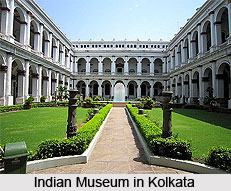
Indian Museum, Kolkata
The Museum has now over sixty galleries of Art, Archaeology, Anthropology, Geology, Zoology and Botany sections, spreading over ten thousand square feet area. Thus, this place is a versatile and multi disciplinary institution of national importance.

National Museum, Delhi
located on Janpath, south of Rajpath, this museum covers an excellent collection of bronzes, terracotta sculptures, paintings and costumes, which give a complete insight into Indian history and way of life.

Sanchi Archaeological Museum
Established atop a hill, this museum displays various objects in the gallery, which are the representative member of six cultural periods i.e. Maurya, Sunga, Satvahana, Kushana, Gupta and post Gupta period.

Sarnath Museum
Archaeological museum Sarnath is the oldest site museum of Archaeological Survey of India. The stone sculptures from the site of Sarnath are divided in several museums, the major chunk being in the local museum.

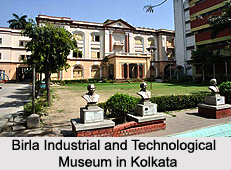
Birla Industrial & Technological Museum
The Birla Birla Industrial and Technological Museum is situated in Kolkata, Gursaday road and came into being due to the initiative of B.C. Roy, the then Chief Minister of West Bengal, in the 1956. The House of the Birlas donated the building accompanied by a plot of land for setting it up.

Recently updated articles in Indian Museums
Home | Sitemap | Contact Us