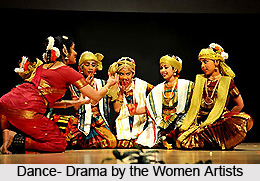
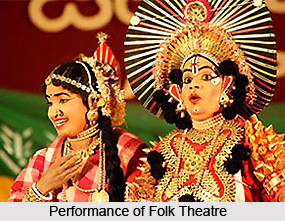
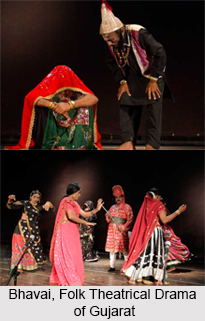
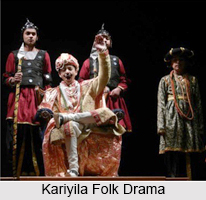
 Indian People`s Theatre Association or the IPTA was established in the year 1942. It was founded by a group of people who thought on the similar line that theatre has more roles to play than just being a medium of entertainment. The people from the Indian People`s Theatre Association conceived theatre as an applied art that has the prowess to build up social consciousness and national integration. The birthplace of Indian People`s Theatre Association or the IPTA was Kolkata.
A short peep into the history of Indian People`s Theatre Association will lead one to a group of people who actually took the lead to form this theatre association. The list of such eminent personalities includes Utpal Dutt, Prithviraj Kapoor, Jagdish Faryadi, S. Tera Singh Chan, Bijon Bhattacharya, Salil Chowdhury, Khalili Faryadi, Niranjan Singh Maan, Ritwik Ghatak and others. As far as the political and social scenario is concerned, India was facing repression from the British.
IPTA is considered one of the oldest associations of performing art in India. in fact, over the last five to six decades notable artists, musicians, writers, dancers, singers and directors have been a part of the Indian People`s Theatre Association. Personalities like Amar Shaikh, Majrooh Sultanpuri, Homi Bhabha, Sombhu Mitra, Kaifi Azmi, Shanti Bardhan, Krishanchander, Sahir Ludhianvi, Balraj Sahni, Mohan Segal, Harindranath Chattopadhyay were all a part of this IPTA. This made IPTA to be at the forefront of the Indian Theatre movement.
As far as its performances are concerned, IPTA has staged dramas in various languages: Hindi, Bengali, Gujarati, Kannada, Marathi, Telugu and English. With changing times, the elements of drama have definitely changed but the spirit is still the same. The primary objective of Indian People`s Theatre Association was to mirror the contemporary issues of British India. This thought influenced not only the theatre but Indian film industry as well. A number of personalities associated with films were also a part of the Indian People`s Theatre Association.
One of the most significant dramas staged by Indian People`s Theatre Association was Nabanna, a Bengali drama. The word literally refers to harvest and is a Bengali folk festival thet celebrated good yield of crops. The drama was penned down by Bijon Bhattacharya and directed by Sombhu Mitra. The Bengal of 1943 was bogged down by infamous famine. The play portrayed the predicament of the masses and indifference of the British government to the plight of the people. Other dramas that were staged by the IPTA include Nava Jiboner Gaan (Bengali) by Jyotirindra Moitra, Desha Sathi in Marathi, Prarambham in Telugu and Zubeida directed by Balraj Sahni. All these plays, in one way or the other, mirrored the sufferance of the common people due to the then economic and socio-political conditions.
After duration of around 5 years, Indian People`s Theatre Association dispersed in 1947. Though the main group broke, several offshoots came into existence which were largely influenced by the dogmas of the Indian People`s Theatre Association. One such theatre group was by the Late Utpal Dutta. The other was the IPTA, Mumbai. The latter is till going strong and produces plays. Other offshoots of the Indian People`s Theatre Association also exist in various regions of India. Contemporary Bengali theatre groups like Spandan and Nandikar at times stage dramas that reflect the ideologies of the IPTA.
In both Kolkata and Mumbai, the Indian People`s Theatre Association has been revived by the theatre lovers. In West Bengal, IPTA includes several personalities, like, Sisir Sen, Ashim Bandyopadhay, Hiren Bhattacharya, Sankar Mukherjee, Pijus Sarkar, Basudeb Dasgupta, Subhendu Maity, Ratna Bhattacharjee and others. This organisation has been in existence since 1967 and several plays have been written and staged.
 As far as Mumbai IPTA is concerned, the year 1984 saw the formation of IPTA Balmanch, a children`s theatre wing, which staged plays with young artistes from different socio-economic backgrounds. In 1972 Indian People`s Theatre Association started its Inter Collegiate Drama Competition in memory of Prithviraj Kapoor. This competition that recognises budding talent on stage is regarded as one of the most prestigious drama competitions in Mumbai. It has given many artistes not only to the Hindi stage, but also to Marathi and Gujarati theatre.
In recognition of IPTA`s contribution to Indian culture, the postal department released a commemorative philatelic stamp on 25th May 1994 in Mumbai. Arjun Singh graced the occasion as the chief guest.
Apart from staging Hindi plays in India and abroad, IPTA also organises an Annual Theatre Festival annually in the month of May. They are also engaged in activities like performing music choirs, arranging workshops and seminars on performing arts, theatre activities for children and others. All activities of the Indian People`s Theatre Association in Mumbai are conducted on a non-profit basis and the members participate in such activities voluntarily.