
 Bikaner is a medieval city of palaces and the temples, rich in Rajasthani art and architecture. This city is located in the north west of the state of Rajasthan. Bikaner is popular for the Laxmi Niwas Palace and many other west India architectural heritages of medieval India and British India.
Bikaner
Bikaner is known as the desert city of Rajasthan. This medieval city of palaces is famous for its picturesque golden sand dunes and striking red sandstone forts.
Introduction
Bikaner is a medieval city of palaces and the temples, rich in Rajasthani art and architecture. This city is located in the north west of the state of Rajasthan. Bikaner is popular for the Laxmi Niwas Palace and many other west India architectural heritages of medieval India and British India.Location of Bikaner
Bikaner is situated at about 330 kilometers northwestern part of Jaipur. Bikaner is also the administrative headquarters of Bikaner District and Bikaner division.
History of Bikaner
 The history of Bikaner dates back to the 15th century. Bikaner was founded by Rao Bikaji. He was the son of Rathore raja of Marwar, Jodhpur. Due to differences with his father he left Jodhpur with a small band of kinsmen and set up his own kingdom in the Bikaner. It is said that he seeked the blessings of Karni Mata, a renowned female mystic before setting up his empire in Bikaner. Ascension to the throne of Bikaner was not at all easy for him. He had to face several local desert tribes to stabilize his own kingdom. This desert region was the main route for trading. Bikaji conquered it ultimately in 1486 A.D. and renamed it as Bikaner.
The descendants of Bikaji were fortunate as their kingdom was situated in the midst of the vast desert. As a result the enemies could not survive for a longer time in the harsh conditions. As a result the kingdom predominantly witnessed peace. The medieval settings, traditions, beliefs and customs prevailed in Bikaner. Anything contemporary was shunned. Till date the aura of antiquity prevails in Bikaner. This, in a way, adds to the charm and beauty of this particular tourist destination in Rajasthan.
However in the 16th century the kingdom came into conflict with the Mughals. At this point of time the Mughal Sultanate were consolidating their empire in India. Amongst the Rajputana states Bikaner lay closest to Delhi. As a result several wars followed with the Mughal Empire. However the harsh desert conditions worked a boon for the kingdom and the Mughals were easily defeated by the army of Bikaner. Finally it was Akbar who broke down the wall between the parties through his sharp diplomatic skills.
Due to this reason it is seen a number of Bikaner rulers were part of the Mughal army. They commanded respected posts and had many battles for the Mughal Empire. They had fought almost all over India-from Deccan in the south to Gujarat in the west. One of the rulers of Bikaner held special place in the court of Akbar, as one of his "Nine Gems." It was Raja Prithviraj Singh who was a poet and a warrior. During this time Bikaner flourished rapidly as the trade center. Gold and silver smiths, weavers and perfumeries and leather craftsmen from Middle East and China visited India on business. Bikaner`s hey days had just started. It also became famed for its music and arts. Till date Bikaner is popular for its performing arts.
In the 18th century Bikaner witnessed a descending graph as it started to decline mainly due to the attacks of the Marathas. This situation continued till the advent of the British. Initially an age of harmony prevailed but again by the middle of the 19th century the financial constraints, military problems and internal tensions started hovering over the kingdom. This situation was mainly due to the new allies of Bikaner. The British had put the kingdom into debt. However in true Rajputana spirit Bikaner fought back. The Ship of the Desert came to the state`s rescue as they helped it economically and eventually politically.
Maharaja Ganga Singh in the 20th century put Bikaner back into the Indian map with its due respect and glory. The history of Bikaner, thus, quite interesting to follow.
Princes/ Maharajas of Bikaner
 During British rule in India (which covers both the British East India Company rule and later the British Raj), the princely state of Bikaner was ruled by many people. They had served the state as Maharajas. Given below are the rulers of the princely state of Bikaner.
Gaj Singh
Gaj Singh was the Maharaja of Bikaner from 1746 to 1787. During his reign, Jodhpur attacked Bikaner. Heavy casualty was inflicted by the Bikaner army on that of Jodhpur. Gaj Singh was given the privilege to mint his own coins by Emperor, Alamgir Second and this privilege continued until the death of Maharaja Dungar Singh.
Raj Singh
Raj Singh became the Maharaja of Bikaner in 1787. His rule is known to continue for 21 days after which his son, Pratap Singh was entitled the Maharaja.
Pratap Singh
Pratap Singh became the Maharaja of Bikaner in 1787.
Surat Singh
Surat Singh occupied the throne of Bikaner as a Maharaja in 1787 and continued to reign till 1828. His reign coincided with the reconciliation between Bikaner and Jodhpur and peace with the Jeypore Chief. The Bikaner Chief had defeated Bhatis of Bhatner at Dabli. Here, a fort was constructed namely, Fatehgarh. Bhatis of Bhatner later took control of the fort, but the Maharaja again captured it.
Ratan Singh
 Ratan Singh was the Maharaja of Bikaner from 1828 to 1851. His reign coincided with the reconciliation between Jaisalmer and Bikaner. Maharaja Ratan Singh is known to take oath against female infanticide.
Sardar Singh
Sardar Singh was the Maharaja of Bikaner from 1851 to 1872. During his reign, Bikaner Darbar was granted Tibbi llaka. One lakh rupees was subscribed to the Mayo College at Ajmer by Sardar Singh. Even setting up of the civil, criminal and revenue courts took place during his rule.
Dungar Singh
Dungar Singh was the Maharaja of Bikaner from 1872 to 1887. During the Maharaja`s rule, some of the developments which took place were the introduction of budget system, reorganization of the police department, establishment of nizamats, reformation of the Karkhanajat Department, establishment of New Angio Vernacular Schools, etc.
Ganga Singh
Ganga Singh was the Maharaja of Bikaner from 1887 to 1943. He is credited with the establishment of a Chief Court in Bikaner, a High Court with a Chief Justice and two sub-judges, etc. He became the first prince in Rajputana to have granted full charter of powers to a High Court.
Sadul Singh
Sadul Singh was the Maharaja of Bikaner from 1943 to 1947. He had joined the constituent assembly and played an important role in the unification of the country.
Geography of Bikaner
Bikaner is situated in Thar Desert area of north Rajasthan sharing the boundaries with Jodhpur, Nagpur and Pakistan. Bikaner enjoys a hot semi-arid climate with very little precipitation and tremendous hot temperatures.
Climate in Bikaner
 Climate in Bikaner is characterized with the hot and cold climate and weather changes. In the summer season, Bikaner enjoys the heat of 28 degree Celsius to 50.5 degree Celsius. The winter is intense cold with 5 degree Celsius to 23.2 degree Celsius. The annual rainfall is about 260 to 440 millimeters.
Demography of Bikaner
According to the Population census in the year 2011, Bikaner has the total estimated population of 644,406. The males and females in this fortified city are 338,442 and 305,964 respectively.
Culture of Bikaner
The people of Bikaner celebrate the foundation day of the city on Akshaya Tritiya by flying kites and Rajasthani food. The Rajasthani foods include Bajre Ka Khichda and Imli ka Paani and other snacks. The festival lasts for two days. It is known as Chhoti Akha Teej and Badi Akha Teej.
Temples of Bikaner
 Temples of Bikaner represent the ancient glory of this Indian city located in the north-western portion of Rajasthan, which involve Vaishnavite, Jain and Hindu temples. Bikaner is dotted with numerable temples, which make it an ideal tourist destination including the concept of pilgrimage tourism. Versatile architectural styles and popular motifs enhance the aesthetic value of these religious centres, which are existent since centuries. Laxmi Nath Temple, Bhandasar Jain Temple, Karni Mata Temple, Shiv Bari Temple and Maru Nayak ji Temple are some of the renowned temples present in the city of Bikaner.
Laxmi Nath Temple
Believed to be amongst the oldest temples of Bikaner, Laxmi Nath Temple had been established by Rao Bikaji in the year 1488, during the regime of Rao Lunkaran. Maharaja Ganga Singh had added further modifications to this temple whose presiding deities are Lord Vishnu and Goddess Lakshmi. One would be amazed by the magnificent architectural grandeur of this temple.
Karni Mata Temple
The globally acclaimed Karni Mata Temple is situated at a distance of nearly 30 kms away from the southern portion of Deshnoke town which is based on the road which leads to Jodhpur. Devotees worship Karni Mata as a divine avatar of Goddess Durga. One of the interesting aspect of this temple is the presence of about 20, 000 rats in the temple premises, as well as white rats or `kabba` which are considered more sacred, and revered as manifestations of Karni Mata and her four sons. It was built by king Ganga Singh of Bikaner during the 20th century.
 Shiv Bari Temple
Shiv Bari Temple is a beautiful temple fortified with walls, built during the latter part of the 19th century with the aide of red sandstone, by Dungar Singh. The chief attractions are the bronze statue of Nandi and also the four-faced marble statue belonging to Lord Shiva. The Nandi statue is placed in a manner such that it faces towards the Shiva Lingam. `Bawaris` or two giant reservoirs exist in the temple which attract the maximum pilgrims in the month of `Shravana` or August, particularly during Mondays.
Nagnechiji Temple is a royal family temple of the Rajputs belonging to the Rathore Dynasty, and is historically significant. The presiding deity of Nagnechiji Temple is a Goddess equipped with 18 arms, each holding weapons, and the idol is believed to have been introduced in the temple by Rao Bikaji from Jodhpur, following his victory over the then ruler of the area.
Maru Nayak Ji Temple
Erected during 1486, Maru Nayak Ji Temple was the oldest Vaishnava temple of Bikaner and is believed to have been the principal seat of the Vaishnavas. The idol of Lord Moolnayak Krishna is present in the temple grounds. It was in Maru Nayak Ji Temple that the ideals of Bhagavad Gita had been preached to the Maharaja of Bikaner by Bhagvad Katha Vachakas belonging to the clan of Shri Rattoji Vyas.
 Nagnechiji Temple
Shri Kolayatji Temple
Nagnechiji Temple
Shri Kolayatji Temple
Shri Kolayatji Temple is located in a famous holy spot called `Kolayat` dedicated to Goddess Kapila who is said to have been engaged in meditation near the lake. The temple draws a vast quantity of devotees one week prior to the Pushkar Festival, who continues to assemble at the temple grounds even till a week later. Some `sadhus` or Indian saints can be observed wandering around the temple during this time.
Bhandasar Jain Temple
Amongst the 27 Jain temple of Bikaner, the Bhandasar Jain Temple is dedicated to Sumatinath, the fifth Jain Tirthankara and is believed to be one of the most spectacular temples of the region. A merchant known as Bhanda Shah had constructed the temple with red sandstone and dry coconuts and pure ghee laid the foundations of Bhandasar Jain Temple. `Usta` art and beautiful wall paintings embellish the interiors of this pilgrimage spot. The temple consists of three floors and the distant horizons of Bikaner can be admired if one climbs onto the highest floor of the temple. It was built during 1540 AD.
Mukam Temple
Mukti Dham Mukam is a revered sacred place for the Bishnois who are respected for their benevolence towards Mother Nature and wildlife. Bishnois are concentrated in a large quantity in the city of Bikaner and Mukam Temple is situated in Mukam village which falls under the jurisdiction of Nokha tehsil, Bikaner District which is about 80 km away from Bikaner city. Lord Vishnu is the presiding deity of Mukam Temple who is said to be the founder of the sect of Bishnois.
Monuments of Bikaner
 The monuments in Bikaner prominently make up the rich cultural heritage for which the city is one of the prime go to destinations for tourists. These monuments include majestic forts, arresting palaces, stunning temples and magnificent havelis (mansions), showcasing the finesse of Rajput architecture to the hilt. The city of Bikaner in Rajasthan, once upon a time, was the capital of an old Rajput state of the same name. The fourth largest city of Rajasthan today, it was established in 1488 AD by Rajput prince Rao Bika Ji, the most enterprising son of Maharaja Rao Jodha Ji, the founder of Jodhpur from one of the leading Rajput families of the Rathore clan. The city is bounded by Jaipur to the southeast, Jodhpur and Jaisalmer to the south and south-west respectively. Situated on a risen ground, the city is encircled by a 7 kilometre long crenellated stone wall of rich pink sandstone, with five gates and three sally ports, its height varying from 15 feet to 30 feet.
Junagarh Fort
One of the principal monuments of Bikaner is the Junagarh Fort. Constructed in 1593 AD by Raja Rai Singh, it is surrounded by a deep moat, where is believed crocodiles were bred. There are 37 bastions that defend the fort and two entrance gates, the main being known as the "Suraj Pol" or the Sun Gate. Within the premises of this majestic and impenetrable fortress, one will come across numerous palaces, temples and pavilions. Made of red sandstone and marble, these palaces strikingly feature intricately carved towers, alongside their picturesque amalgamation of courtyards, kiosks, windows and balconies. These palaces include "Karan Mahal", "Phool Mahal", "Ganga Niwas", "Anup Mahal", "Dungar Mahal", "Chandra Mahal" and "Rang Mahal". These display spellbinding paintings, mirrors and glass artefacts. The "Har Mandir" is the majestic chapel where the royal family worships their gods and goddesses. Museums in the fort spectacularly provide a peep into the grandeur of past Maharanas" lifestyle.
 Lalgarh Palace
The Lalgarh Palace is one of the most popular and most visited monuments in Bikaner. It was built by Maharaja Ganga Singh as his residential palace "Laxmi Niwas" originally, the first and most impressive wing of this exquisite masterwork in red sandstone. Designed in Indo-Saracenic style in 1896, by Sir Samuel Swinton Jacob, one of the most accomplished British architects ever to work in India; he later enlarged it in the beginning of the 20th century.
With the finest of materials and carved stonework employed in its construction, this gigantic palace houses the Shri Sadul Museum containing the fourth largest private library in the world, the Lallgarh Palace Hotel, a heritage hotel and the Laxmi Niwas Palace, a luxury hotel. The entire three-storey complex is established in a deluxe fashion, featuring drawing rooms, smoking rooms, cards rooms, billiards rooms, guest suites, grand halls, lounges, pavilions, cupolas, Italian colonnades, magnificent pillars and fireplaces. It also has an indoor swimming pool and a dining room with the capacity of accommodating 400 diners to boast of. Notwithstanding his scholarly approach, Jacob`s masterwork is clearly influenced by European ideas of form and composition, particularly the interiors. The entire architecture is a conglomeration of Rajput, Mughal and European styles, with fine latticework and filigree work involved. It stands amidst lush sprawling lawns with dancing peacocks and blooming bougainvilleas filling its visual delight. The Lalgarh Palace is an eloquent testimony of the relationship between the princely states and the British Raj.
 Gajner Palace
The Gajner Palace constructed on the banks of Gajner Lake by Maharaja Ganga Singh, was the hunting lodge for the royal family. The palace is a heritage hotel today, in the thick of forests of the Gajner Wildlife Sanctuary. The "jharokhas" and carved pillars of the palace boast of the brilliant craftsmanship of traditional artisans. Migratory birds in huge numbers can be seen flocking around. It is the perfect place to spend a quiet evening beside the silent and stunning lake underneath the skies.
The well-known temples of Bikaner include the world famous shrine of Karni Mata in Deshnoke town and the Bhandeswari Jain Temple intricately decorated with rich mirror work, sculpted pillars, gold leaf works and frescoes. The Ganga Golden Jubilee Museum has a fine collection of pottery, paintings and weapons used by Rajputs.
Devi Kund, about 8 kilometres from the Bikaner city, is the royal crematorium place of the royal family of Bikaner, with a range of eye-catchy cenotaphs. These are finely domed and intricately carved pavilions in red sandstone and white marble. The chhatri of Maharaja Suraj Singh is the most attractive of all, with striking Rajput paintings beautifying the ceiling.
Tourism in Bikaner
Junagarh Fort, Laxmi Niwas Palace, Karni Mata Temple and Bhandasar Jain Temple are the popular tourist destinations in Bikaner.
Visiting Information
Bikaner is easily connected with all the major cities through the roadways and railways. The major cities like Sriganganagar, Kolkata, Chennai, Delhi, Mumbai, Alwar, Bhubaneswar, Sambalpur, Bilaspur, Kanpur, Agra, Jalandhar, Vadodara, Hyderabad, Guwahati, Jaipur, Surat, Gurgaon, Puri, Coimbatore, Thiruvananthapuram, Chandigarh, Kota, Kollam, Jammu, Jodhpur and Ahmedabad, Pune, Indore and Vijayawada are connected with Bikaner through roadways. Bikaner is also connected directly through railways with Delhi, Jaipur, Agra, Alwar, Ludhiana, Sri Ganganagar, Bhatinda, Ambala, Ahmedabad, Haridwar and Jodhpur. The nearest airport in Bikaner is Domestic Civil Airport.
Recently updated articles in Cities of India
Queen’s Bath in Hampi
The Queen’s Bath in Hampi is a magnificent 15th-century structure believed to have served as a private bathing complex for the Vijayanagara royal fami...
Hampi
Hampi, located in Karnataka, is a historic destination renowned for its magnificent ruins, ancient temples, and remarkable Vijayanagara architecture....
Places of Interest in Deogarh Uttar Pradesh
A place of historical and archaeological significance, Deogarh is a site with few popular places of interest.
Deoghar in Jharkhand
Deoghar is the divisional headquarters of Santhal Parganas located in Jharkhand and is popular for the famous Baidyanath temple and Shiva Temples.
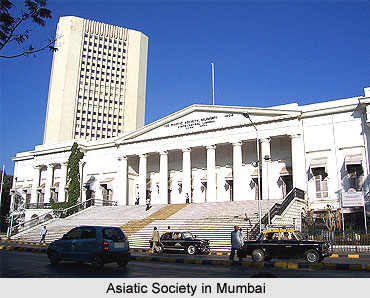
The Asiatic Society of Mumbai
Asiatic Society in Mumbai is the temple of Asian Studies from the time of British rule in India.
Related articles in Cities of India
Holy Cities of North India
Holy Cities of North India are having the rich history of Hinduism and the entire civilization was grown up with the hands of beliefs, rituals and the...
Holy Cities of South India
Holy Cities of South India gives the detailed cultural formation of Dravidians from the early era, which later developed to the world by the Pallavas...
Holy Cities of West India
Holy Cities in West India were established by the rulers of Rajputs and the Satvahana Dynasty and the medieval rulers of Junagadh.
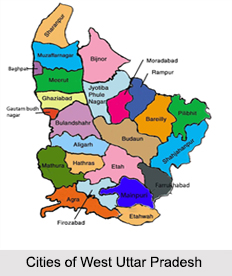
Cities of West Uttar Pradesh
Cities of West Uttar Pradesh include Meerut, Bulandshahr, Ghaziabad, Saharanpur, Muzaffarnagar, Bijnor, Bareilly, Rampur, Agra, Aligarh, Mathura and m...
Port Cities of South India
Port Cities of South India are developed from the early phase of colonial era when the Portuguese and the French traders came to India