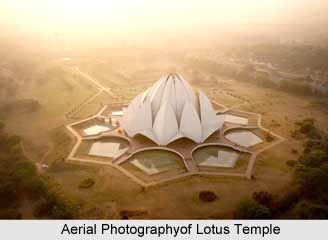
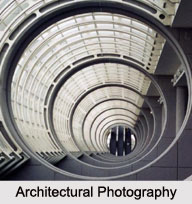
 Architectural Photography is the photography of buildings and similar constitutions that are both aesthetically pleasant and precise depictions of their subjects. Architectural photographers are generally skilled in the use of specialized techniques and kit.
History of Architectural Photography
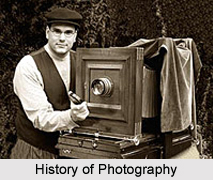
Historical facts of Indian architectural photography goes back a long way. In India, the traditional and archaic way of documenting the imagery of exotic architectures by commissioned painters had come to an end in 1851. A resident British artist was officially assigned by the East India Company to make studies of the sculptures at Elephanta and to prepare drawings and measurements of the caves. In 1855 the East India Company directed the government in Bombay (Mumbai) to discontinue employing any draftsmen in the delineation of antiquities and to utilise photographers instead. They expressed their desire that this method be generally substituted throughout India. Further support for photography was offered in the same year by the introduction of classes in architectural and other kinds of photography at various educational institutions and photographic societies, with both British and Indian enthusiasts, which had been established in Bombay, Calcutta and Madras.
During the Paris Exhibition of 1867, the photographic display consisted of approximately 500 representations of Indian buildings. This in turn encouraged the Indian government once more to assume responsibility in the matter. In August 1867, instructions were issued regarding the desirability of conserving ancient architectural structures or their remains and other works of art in India, and of organising a system for photographing them. Attentive about the cost of past projects, the government was of the opinion that competent amateurs, who might in some circumstances be reimbursed for basic expenses, would be sufficient to carry through such a plan. A substantial impetus was given to the further development of architectural photography in India. By the early 1870s, the influx of uneven amateur material led to assert that in the long run, hiring professional architectural photographers might be a more economical way of compiling such records. But even before this decision was made, several professions had been employed during the late 1860s as a result of the renewed importance accorded to photographic documentation. This led to a fresh burst of activity in the field of architectural photography and preservation.
 Working from 1855 to 1857, Captain Thomas Biggs and Dr. William Pigou were the first designated `architectural photographers` of sites in western India. Dr John Murray (1809-1898) of the Bengal Medical Establishment, specialised in Mughal architecture of Agra, Fatehpur Sikri and Delhi and mastered the difficult process of mammoth plate paper negatives. Two of his dense but mezzotint-like prints, including one from his 1858 portfolio Agra and its vicinity are proudly displayed in several art galleries across the world.
Role of an Architectural Photographer
Traditional or modern; architectural photography is as demanding as it is rewarding. An Architectural Photographer is sensitive to the path of light as this can boost contrast, shadows, textures and reflections. A professional architectural photographer needs to be cautious not to over light a part. A professional architectural photographer will be capable to apply a series of different techniques to accurate any blemishes in the original shots, while keeping them looking totally natural.
An architectural photographer uses his or her artistic capacity and work skills to capture images of structures. Creativity and photography skills are necessary for becoming an architectural photographer.
Career in Architectural Photography
Architectural Photography can be an extremely profitable and fulfilling career option. It is one of the most exclusive careers in photography and presents its own position of very precise challenges. With the rising number of clients wanting photos taken of buildings and other work, the demand has increased for the pictures of architecture. A professional architectural photographer may be talented to start with newer real estate agents, contractors or even building materials suppliers. Suppliers need before and after shots and these can be great experience and often provide a good range of structures.
Real Estate and architectural photography is still a growing industry, people now days love the thought of it. Architectural Photographers may work for a company along with freelance. They find assignments by marketing or networking. They can team up with interior designers, homeowners, art directors, stylists and editors. They can also focus on interior and exterior photography for residential homes, condominiums and bungalow complexes. Real estate agents, property owners, small business owners, interior designers, architects and business owners generally hire Architectural Photographers for this work.
Educational Qualifications and Skills for Architectural Photography
Architectural Photography is one of the most technically demanding fields in photography, but it is also one of its maximum-paying functions. Knowledge of natural, glowing and other types of interior and exterior lighting systems with how to correct for them is necessary.
A career in architecture photography needs an awareness of technical elements of photography, as well as lighting, sharpness and composition, and knowledge of architectural and photographic developments.
Educational Institutes of Architectural Photography
Some of the best colleges offering photography courses are mentioned below:
•Delhi College of Photography.
•Light and Life Academy.
•Jawaharlal Nehru Architecture and Fine Arts University.
•AJ Kidwai Mass Communication Research Centre.
•Asian Academy of Film and Television.
•Osmania University.
•National Institute of Design.
•National Institute of Photography.
•The Indian Institute of Digital Art and Animation.
Popular Architectural Photographers
Architectural photography is by far the most direct and widely-used methods for communicating the proper form of the built background. Capturing the wonderful architectural photograph can be far more complicated than one might expect. Some of the popular Architectural Photographers are as follows:
Andre Fanthome: Andre Jeanpierre Fanthome has been travelling the world and capturing it in camera since 1999. He is a National Academy Award winning photographer. He was also awarded with the "National Academy Award for Visual Art" by the National Lalitkala Academy.
Asif Khan: He pays interest not just into light, but fetches a focus to the lack of light as well. In conveying out form, shape and scale, he does not attempt to eliminate the immediate environment of a structure. He is one of the recognised Architectural Photographer in India.
Deepshikha Jain: Deepshikha Jain is an Architectural, Industrial and Travel Photographer from Mumbai. She has worked with a number of magazines including, Domus, Vogue, GQ, Platform, Architectural Digest and Indian Architect and Builders.
Bharath Ramamrutham: He is an Architectural, Landscape and Travel photographer based in Goa. Bharath"s work in equally the built and natural environment covers landscapes, architecture and interiors and the documentation of people, places and traditions all over India.
Badari Duddupudi: He has been shooting Architecture for the real estate market, hospitality Industry and infrastructure mega projects.