
Jivas are said to be infinite in number, and they are classified into three main types of jiva. These three categories of jives are baddha, mukta and nitya. These are briefly discussed below.
Baddha
Baddha means one who is bound. These are the souls which are caught up in bondage in the form of a continuous cycle of births and deaths from a beginning-less time due to the influence of karma. Karma means merit and sin (punya-papa) caused by the good and bad deeds respectively of an individual in the past lives. As karma is varied in character, the lives that the individual souls assume with physical bodies are of various types ranging from the highest celestial being such as Chaturmukha Brahma to the lowest living organism such as a germ. As long as a soul is bound, it continues to pass through the numerous births and deaths until it is finally liberated from it by means of spiritual discipline (sadhana) as laid down by the scriptural texts.
Mukta
Mukta means one who has become free from bondage. These are the individuals who, as a result of some extraordinary merit, become the object of God`s grace and who consequently aspire to be liberated from bondage. For this purpose they pursue the path of spiritual discipline as enjoined by the scriptures and by the grace of God, they are released totally from the shackles of karma and attain liberation (moksha) leading to the enjoyment of the bliss of God forever without a return to the mundane existence.
Nityas
The nityas are the blessed souls who have never had bondage at any time. They exist eternally as free souls in the transcendental realm and are engaged in divine service solely for the pleasure of God. The divine serpent, Adisesa, the divine bird, Garuda and the divine angel, Visvaksena are the examples of nityas. The basis for admission of such a category of souls in Vaishnavism is the scriptural text. Thus Purusa sukta says, "There (in the realm of God) deities in the name of sadhyas exist from time immemorial."
All the three types of jives are intrinsically of the same nature and share similar characteristics. They are of the essence of knowledge (jnana), purity (amala) and bliss (ananda). They are also eternal, that is, they do not have any origin in the form of birth and destruction in the form of death. In respect of their intrinsic nature (svarupa) the souls are neither celestial beings (devas), nor human beings, nor animals nor trees; but the distinction between one individual and the other is, however, made on the basis of the type of the physical bodies they assume on account of the karma. What is common to all of them, besides the essential nature of jnana, ananda and amalatva is that they are subordinate to Paramatman (paramda minah sesah). The Vaishnava theology has given added emphasis to this characteristic feature of jiva and developed the concept of sesatva with all its theological implications.
In fact the term jiva is defined as that which is a spiritual entity, while dependent on God. On the basis of this definition, jiva is distinguished from Isvara who, though a sentient being (cetana) is all-pervasive (vibhu) and also the Supreme Lord (sesi); it is also differentiated from material entities as the latter, though dependent on God for their existence (sesa), are not sentient in character.
Types of Jiva
Types of Jiva in Vaishnavism have been classified into three categories. These are the Baddha, Mukta and the Nitya, and they are mainly classified according to the level of their bondage due to the influence of their karma.
Recently updated articles in Religion in India
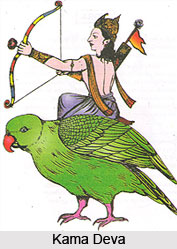
Kusumayudha
Kusumayudha is a name of Kamadeva, the Hindu God of Love. Depicted with a sugarcane bow and flower-tipped arrows, he represents attraction and longing...
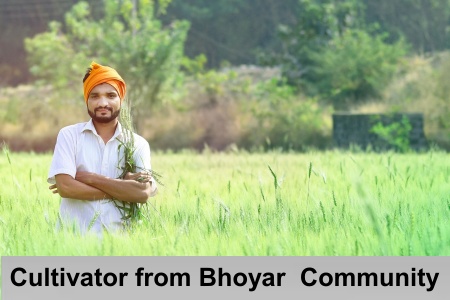
Bhoyar Caste
Bhoyar Caste is largely found in the Central Provinces of the country. Traditional occupation of Bhoyars is agriculture. They are good cultivators and...
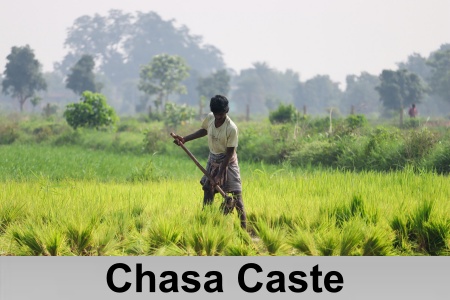
Chasa Caste
Chasa caste is a prominent agrarian community native to Odisha. Traditionally associated with cultivation and farming, Chasas have historically played...
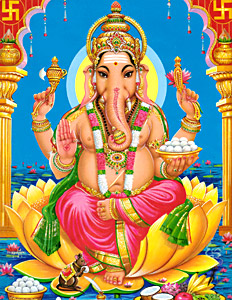
Vigneswara, A Form of Lord Ganesha
Lord Vigneswara is another form of Lord Ganesha or Vinayaka, prominently worshipped as the God of intelligence and good luck in the Indian subcontinen...
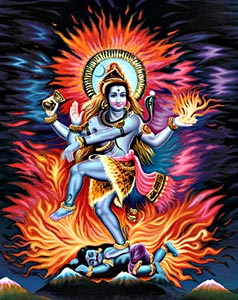
Maheswara
Maheswara, meaning “the Great Lord,” is a revered name of Lord Shiva in Hindu tradition. It represents Shiva’s supreme authority over creation, preser...
Related articles in Religion in India
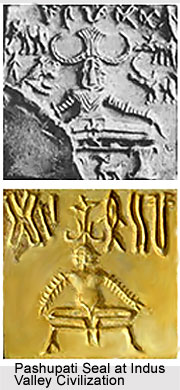
Religion in Indus Valley Civilization
Religion in Indus Valley Civilisation included Hinduism, Buddhism and Jainism. Details about the religion in Indus Valley Civilization have been gathe...
Iyer Brahmin
Iyer Brahmins are originally from Tamil Nadu of South India. They are known for their adherence to Advaita philosophy and Smarta traditions. Tradition...
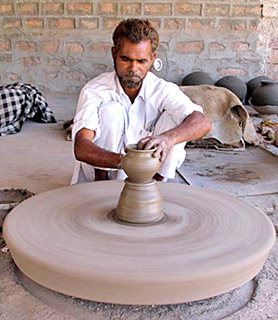
Kumbhakar / Kumhar Caste
Kumbhakar or Kumhar caste is a traditional artisan community in India known for pottery making. Derived from Sanskrit word Kumbhakar, meaning potter,...

Gujjars in Mughal Era
Gujjars in the Mughal era enjoyed great power. Further their power increased with the decline of Aurangzeb, Mughal emperor.
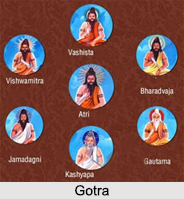
Gotra in Hinduism
In Hinduism, gotra refers to a lineage system tracing descent from ancient sages, primarily through the paternal line. Originating from Vedic traditio...