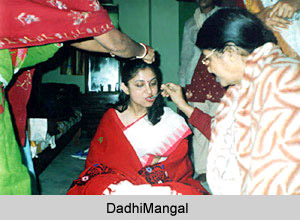
 Dadhimangal is one of the many rituals that form part of a Bengali wedding. This event takes place on the day of the wedding in the bride`s house. It is essentially a breakfast function where the bride has her first meal of the day. This meal is expected to stand her throughout the course of the entire wedding ceremony and the various rituals which are to follow.
At the crack of dawn on her wedding day, the bride visits a nearby pond with about eight to ten married women in tow. This is done as a gesture to invite Goddess Ganga to the wedding. Following this, they take in a pitcher of water from the pond with which the bride will bathe. After her bath, the bride is ushered by her female relatives to the space that has been cleaned and made ready for the first of several significant meals that will mark the different stages of the three-day wedding ceremony. It is not a rich, elaborate, multi-course repast, the kind that will be served to wedding guests at the banquet later in the day. Instead, in most families, it is a simple breakfast, consisting of yoghurt, fruits and rice flakes, with perhaps the addition of a few sweets. But it is loaded with symbolism, as even the name dadhimangal, unchanged from the original term in the Sanskrit language, implies, dadhi meaning yoghurt and mangal meaning auspiciousness. As she eats, with her aunts, sisters and cousins blowing conch shells and ululating (both sounds intended to frighten away evil influences), the bride knows that this meal will have to sustain her through the long day until the evening`s wedding ceremony is over. Her relatives during this time, advise her to eat the meal heartily. In the eyes of an observer, however, this ritual meal extends beyond the literal nourishment of food. It stands as the first milepost in the transformative journey the woman has now undertaken.
Coincidentally, this same combination of rice flakes, yoghurt, fruits and sweets is also offered to many deities of the Hindu pantheon that Bengalis worship throughout the year. These foodstuffs are considered pure items, unlike fish, flesh, eggs, onion or garlic. It is therefore likely that the supposed purity of these food items lends weight to the idea that they will be enough to sustain a young woman through the hours of a day that may be apparently joyful, but is bound to create many internal anxieties and apprehensions. By consuming them at a sanctioned hour, with the accompanying prayers and rituals performed by her relatives, an ordinary human being is lifted out of her daily life and may come close to the plane inhabited by a deity. On this most significant day of her life, the woman thus verges on becoming a goddess.