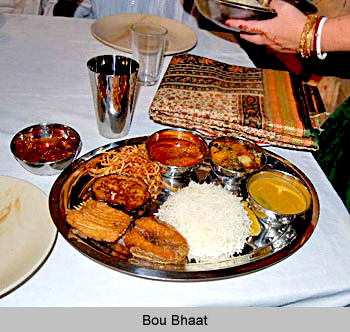
 Bou Bhaat refers to the first time that a newly-wedded bride serves food to the family. It is symbolic of a kind of ceremonial meal which paves the way for the bride to become an accepted member of her husband`s family. In the afternoon, when the day`s main meal is usually eaten in Bengal, she is expected to cook and serve her in-laws a traditional meal consisting of rice, vegetables, dal and fish. If etymology is a determinant, then this meal, called bou bhaat, may be considered to be the product of a rural or agricultural folk ethos.
Unlike the dadhimangal or the hours of fasting that follow, the two words making up bou bhaat, literally translatable as bride-rice, are not indicative of deprivation or appeasement.
On the contrary, this is a time when the young bride is viewed a mature, nurturing woman who can take care of her family`s needs. During this time, the husband offers a full plate of food along with a new sari. This is like a kind of symbolic affirmation on part of the husband that he is now responsible for and will take care of all her needs- food, clothing and shelter.
Only after she has served her in-laws, can the bride sit down to eat. In homes that still strictly adhere to custom, this will be the first time that she eats food provided by her new family. From the previous day (when she had left her parental home with her husband and arrived at her in-laws` house) until now, she has only eaten food supplied by neighbours or friends. The midday meal completed, the bride rises, accepted and blessed, ready to begin her new life. Usually, this ceremony is followed by a reception in the evening, hosted by the groom`s father.
This article is a stub. You can enrich by adding more information to it. Send your Write Up to content@indianetzone.com