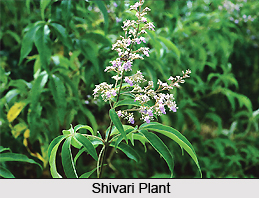
 Shivari is an Indian medicinal plant that is hugely used in the country. Its scientific name is Vitex Negundo. This medicinal plant is also known by several other names in different languages. Like for instance, in Bengali language, Shivari is known as Nirgundi, Nishinda, Samalu; in English, it is called as Chaste Tree, Five-Leaved Chaste Tree. In Gujarati language, this species is known as Nagaol, Nagoda; in Hindi language its other names are Nasinda, Nirgandi, Sambhalu and Shambalu. In Kannada language, this medicinal plant is called as Lakki Gida, Nakkilu, Nekki, nira-gundi; in Malayalam language it is known as Indrani, Karinocchi, Nocchi, Vellanocchi and Vennochi. In Marathi language it is known as Nirgudi, Nirgundi, Nisind; in Oriya language it is called Begna, Begundia, Beyguna, Nirgundi and in Punjabi language this plant is called as Banna, Marwan and Shwari. In Sanskrit language, it is known as Sindhubara.
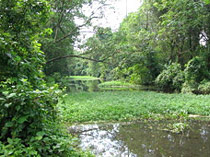
In India Shivari is found almost everywhere to an altitude of about 1500 metres in the outer Himalayas. It often grows gregariously and is abundant on sandy soils in moist habitats such as river and stream banks and in open, degraded sites. It is occasionally planted as a hedge.
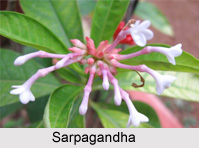
Shivari is basically large, deciduous, aromatic shrub or small tree up to 4.5 metres tall with quadrangular, densely whitish branchlets and its bark is thin and grey. Leaves of this tree is generally three to five foliate, with common petioles 2.5 to 3.8 cm long; leaflets are lanceolate, apex and of acute base. Flowers of Shivari plant are pale blue or bluish-purple in colour, borne in greyish cymes forming large, pyramidal terminal panicles; with bracts 1.5 to 2.5 mm long; calyx 3 mm long in flower, teeth triangular, hairy inside at the insertion of the stamens, upper lip 2 mm long, divided at the base into 2 lobes, lower lip 5 mm long with 2 short oblong lateral lobes 1.5 mm deep and a large, broadly obovate crenulated terminal lobe 4 mm long. Fruits are ovoid, around 1 cm long, become black when ripe. In central India flowering occurs between June and December and fruiting from September to February.
Shivari is one of the most commonly used plants in traditional Indian medicine. All its parts are used, although the leaves and roots, which have tranquillizing effects, are more highly valued as constituents of Ayurvedic preparations such as Vishagarblm thaila, widely used to treat rheumatism. The juice obtained from the stem is taken orally with honey to relieve indigestion among the tribal inhabitants of northern Orissa. The fresh, aromatic leaves are reportedly useful for reducing swelling of joints due to acute rheumatism and to relieve sprains: their decoction is used as a bath to relieve body pains in Tamil Nadu. The leaf paste is applied on the body to relieve body-ache among the tribal inhabitants of southern Bihar and north-eastern Madhya Pradesh. The Kondhs of south-western Orissa prepare a decoction of the leaves, which is used internally to relieve body-aches. The dried leaves are considered tonic; they are sometimes smoked for relief of headache. A decoction of the leaves, to which long-pepper is added, is used to treat catarrhal fever associated with dullness of hearing and heaviness of the head; the leaf decoction and its vapours are also used in baths to treat fevers and rheumatism. The leaf juice is used to clean infected ulcers and an ointment made from the leaf juice is used as a hair tonic. The roots possess tonic, febrifugal, expectorant, anodyne and diuretic properties and are used to treat dyspepsia, colic, rheumatism and boils. The powdered root is prescribed as a demulcent for dysentery; it is also used to treat piles. Among tribal women in Udaipur District, Rajasthan, the powdered young roots are taken with milk to restore fertility.
Moreover, a tincture prepared from the root bark is considered useful for rheumatism and irritable bladder. In Surguja District, Chhattisgarh a decoction of the stem bark is reportedly used to treat paralysis and tuberculosis. The flowers are astringent; they are prescribed for fever, cholera, diarrhoea and liver ailments. The fruits, considered cephalic, and a nervine tonic, are prescribed to relieve watery eyes, headache and catarrh; when dried they are considered vermifuge. The fruits are also highly valued in traditional Chinese medicine. The seeds are considered cooling and are used to treat skin diseases and leprosy. The leaves are also used as a mosquito repellent.