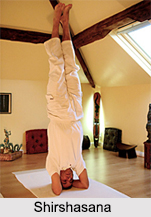
 Shirshasana is an important cultural asana. In this asana, one stands on one`s head, kneel on the ground, interlocking the fingers of both hands. The asana is highly useful for almost all the human body systems, and helps ease varicose veins, arteriosclerosis, high blood pressure and a host of other illnesses. Shirshasana when done correctly under the guidance of an expert is very beneficial.
Etymology of Shirshasana
The word Shirsha translates to `head` in Sanskrit, and the asana is termed such because the practitioner essentially balances his outstretched body on his head using a hand lock.
Yoga Texts and Shirshasana
The Hatha Yoga Pradipika does describe a posture that it does not classify as an asana, but as a Mudra, named Viparita Karani, and the steps for execution, and the final pose, is strongly similar to that of the contemporary Shirshasana. It asserts that he who practices the posture for at least 2 hours a day for 6 months `conquers death.`
Other classical yoga texts do not mention the Shirshasana by name. However, the Shri Tattva Nidhi, an iconographic encyclopaedia on Hindu subjects compiled in Karnataka during the 19th century does list the Shirshasana.
 Practice of Shirshasana
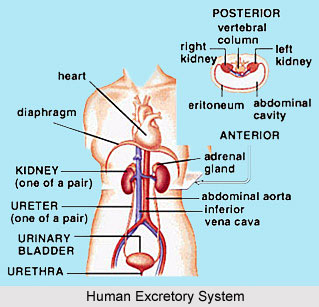
Regular practice of Shirshasana will benefit the circulatory, respiratory, nervous, digestive, excretory and endocrine systems. This asana helps in cases of varicose veins, arteriosclerosis, jaundice, dyspepsia, seminal weakness, renal colic and congested liver. Those suffering from oozing from the ears, high blood pressure or a weak heart, glaucoma, hiatus hernia and during menstruation, one should refrain from practicing this asana. As Shirshasana comprises of balancing the body on the head, it helps in strengthening the neck muscles, improves one"s ability to balance their body, along with improving blood circulation to their head which in turn results in many other benefits.
A step by step process for performing Shirshasana follows.
1. Sit on soles. Place knees on the ground.
2. Frame finger lock with both hands.
3. Making a triangle from finger-lock and elbows, place it on ground.
4. Bending forward, place middle of the head on the ground near finger-lock.
5. Now, one must straighten their legs.
6. Slowly bring the legs neck near the body.
7. Soles will automatically leave the ground by practice and thighs knees will touch the abdomen.
8. Now keeping the balance, one must straighten their legs from thigh-joint while the knees will remain folded.
9. Now one must straighten the knees and completely balance their body on head.
10. While returning to the original position, one must fold their knee first. Then fold the legs from thigh and let the thigh and knee touch one"s abdomen.
11. Now slowly place the soles on the ground and raise one"s head while sitting on soles.
Effects of Shirshasana
There are plenty beneficial effects for Shirshasana, like it increases the blood circulation in head thus improving the memory power. Shirshasana strengthens the nervous-centres of the whole body and maintains the health of endocrine glands. The digestive system is also benefited through this asana. It is also believed that Shirshasana can be beneficial against congested throat, diseases of liver and spleen and in Visceroptosis. Shirshasana calms the mind and improves balance while strengthening the arms, legs and spine.
Variations of Shirshasana
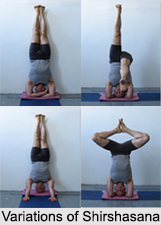
There are about 11 known variations of Shirshasana starting with the Salamba Shirshasana 2 and 3, which are just simple headstands. Then there is the Baddha Hasta or Bound Hand Shirshasana and the Baddha Konasana Shirshasana, which refers to the bound angle, pose in Shirshasana. After that is the Single Leg or Eka Pada Shirshasana and the Free Hands or Mukta Hasta Shirshasana. The Parivrttaikapada Shirshasana or the Single Leg Revolved Headstand is a difficult one, where the person has to turn the legs, hips, waist and ribs to the right, while taking the left leg behind and the right leg forward. Then there are the Parshva Shirshasana or the Side Headstand, Parshvaikapada Shirshasana or Single Leg Headstand, Upavistha Konasana Shirshasana or Seated Angle Pose in Headstand and lastly the Urdhva Padmasana in Sirsasana or the Upward Lotus in Headstand.
Precautions for the practice of Shirshasana
1. While practicing Shirshasana, place that part of head on the ground on which the spine can remain erect.
2. Do not raise legs with jerk. Slow and gradual practice will raise legs up automatically.
3. In the beginning, practice Shirshasana under the guidance of a teacher because there is a fear of falling down and gravely injuring oneself.
4. While returning, do not raise the head soon after completing asana. One might get dizzy, therefore, it is advised to keep the head near finger-lock for some time and then raise it up.
5. Those suffering from cough or chronic cold, high blood pressure, running ear or heart disease should not practice Shirshasana. And the people suffering from constipation should practice it carefully.