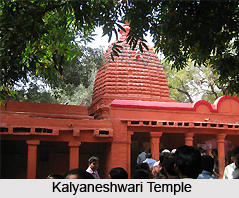
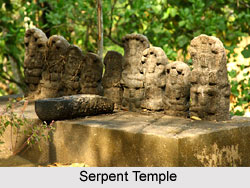
 The serpent temple of Kerala is situated in the midst of a magnificent grove covering an area of 16 acres. There are thousands of snakes of granite in this area covered with dense thickets. In the main temple there are two idols. One is of the Nagaraja or the snake king and the other of the snake queen. On the northern side is the temple there is temple or a house whose heir is the oldest female member. She is called Nambiathy who performs puja in the temple.
Origin of the Serpent Temple
The origin of snake worship goes back to remote antiquity. But in no part of the world is snake worship still such a live tradition as in Kerala. In almost every house the south-west corner of the compound is set apart for a snake shrine called sarpakavu. The propitiation of the serpent god is considered essential to the well-being and prosperity of the family.
According to tradition, the first Aryan colonists settled by Parasurama found Kerala uninhabitable. So they left. Then the Naga Tribe of the lower world came and occupied the land. When the Aryans came again they found the land occupied and waged war against the Nagas. Parasurama decided in favour of the early colonists and ordered that they should set apart a comer of their compound as an abode for the serpent gods.
It is said that the word` Nayar` is derived from `Naga`, because of the special adoration they paid to snakes and possibly they belonged to the Naga race who settled in the heart of the Dravidian country. As evidence of connection between the Naga and the Dravidians is the grove found in every house for snake worship.
It was estimated that even over a century ago there were 15,000 serpent groves in the former Travancore and Cochin states alone. Of course there have been many additional ones erected since. One such grove is at Mannarsala, the abode of the snake king and queen, the important serpent worship centre in Kerala.
Legends of Serpent Temple
The Serpent Temple is associated with many legends. As per a legend when Arjuna had set fire to the forest of Khandava Forest the serpents fled in confusion to Mannarsala and prayed to God for protection. Then the earth miraculously cooled down. After the serpents found refuge, an ancestress of the Nambiathy had a vision to dedicate the groves and the land to Nagaraja, and to build a temple thereon. These commands were promptly obeyed and thenceforward the Nagaraja became the family deity of Nambiathy.
The local tradition has it that a member of the Mannarsala family married a girl from the Vettikad and there the serpents were held in great veneration, The girl`s parents, being poor, had nothing to give by way of dowry except one stone idol of a serpent of which there were plenty in the house. The girl took care of the idol and worshipped it daily. Soon she became pregnant and gave birth to a male child and a snake. The snake child grew up and gave rise to numerous progeny. These were all removed to a spot where the present grove is.
According to an estimate there are some 4,000 stone idols or nagakals in the grove. They have every imaginable shape crowned with one, five or seven cobra heads. Within the cloister are, however, human figures of Nagaraja and Naga Lakshmi or Sarpayakshi. Those who are not able to maintain sarpakavus in their house can bring them here and install in the compound. Living serpents are also found in the grove but they do not injure anyone.
Customs of the Serpent Temple
The priestess, Valiamma, the eldest female member is considered to be the bride of Nagaraja from the day she assumes office. She is vowed to chastity and must cease relations with her husband, a Brahmin who bears the name of Vasuki, the mythical serpent king. She compulsorily has to stay in the house in the grove. She hardly goes out and when occasionally she has to visit nearby relatives she must return to the temple before sunset.
There are, however, certain days and occasions when the pujas are performed by male priests. On other days it is Valiamma who performs it. She alone can carry the image of serpents in procession. Again she alone has the right to the cellar in the temple where the guardian serpent dwells. The cellar itself is considered a temple and should under no circumstances be polluted.
A unique offering here is an offering of uruli in a small metal vessel, by childless couple. In this manner many couples are believed to have been blessed with children. The vessel offered is kept prayerfully by the couple before the sanctum, which is later removed by Valiamma to her cellar and kept in a room. Hundreds of metal vessels have piled up here, kept over the years.
There is a story about the origin of this offering. Once an elderly woman who had no child had come to the temple. She had no hope of getting a child at her age but miraculously after offering uruli she received a child.
Sarpam Thullal is also performed in snake shrines known as `Kavu` in Kerala. This is done to please snakes. This is an offering in order to secure family wealth and happiness. Sarpam Thullal is performed by members of a community known as Pulluvar. A traditional lamp and a nirapara are placed in front of the kalam. Thereafter the snake idol is brought out from the Kavu in the form of thalapoli that is accompanied by panchavadyam.
Festivals of the Serpent Temple
The annual utsavam at the Serpent temple is celebrated on Ayilytim of Thulam (October-November). During this time a large number of people visit the temple and make offerings of gold, silver, salt, etc. On this day the serpent gods are taken in procession and offerings of milk and water, flour, turmeric and boiled rice are made.
Another place in Kerala famous for serpent worship is the residence of Pambumekkat Nambudiri near Irinjalakuda. This Nambudiri is the high priest of serpent worship and according to Gopala Panikkar, author of Malabar and its Folk, his household is "full of cobras" which find their abode in every corner of it. The inmates cannot move about without placing their feet upon one of the serpents. Owing to the magic influence of the family, the serpents do not injure the members of the family. It is believed that the snakes are always at the service of the family.