
Jiva as Anu is one of the most distinctive characteristics of the jiva according to the Visistadvaita Vedanta. Anu means that it is monadic in substance. This is held to be the popularly held view, and the main justification for accepting this view is that the Upanishads describe the Jiva as infinitesimal. Thus says the Mundaka Upanishad, "This atman is anu and to be known by mind." The Svetasvatara Upanishad describes the self as infinitely smaller than the hundredth part of the point of a hair divided a hundred times and yet it is infinite in range.
The Brhadaranyaka Upanishad speaks of the exit of jiva from the body after death. The Kausitaki Brahmana Upanishad refers to its movement to the realm of the moon. The Brhadaranyaka Upanishad also speaks of its return to the earth to experience the effect of karma. If the jiva were vibhu or all-pervasive as the Naiyayikas believe, such a movement is inconceivable. If something is Vibhu, it cannot have any movement. If it were of the size of the body of the individual which it occupies, as the Jainas believe, it would be subject to mutation corresponding to the sizes of the bodies it occupies. To overcome all these difficulties, the Visistadvaita Vedanta upholds the theory of jiva as anu on the strength of the Upanishadic authority.
Even though the jiva is infinitesimal, its attributive knowledge (jnana) possesses the intrinsic capacity of becoming infinite or Vibhu in the state of moksha. This is possible after it becomes completely free from karma as has been stated in the Chandogya Upanishad. In the Visistadvaita, the jivas are classified into three types: baddhas or those in bondage, muktas or those which are free from bondage and nityas or those which are eternally free. The baddha-jivas are not omniscient as their knowledge is subject to contraction and expansion due to the influence of karma, whereas the other two types of jivas are omniscient being totally free from obstructive factors.
Thus the concept of Jiva as anu is strongly upheld by the Upanishadic texts.
This article is a stub. You can enrich by adding more information to it. Send your Write Up to content@indianetzone.com
Concept of Jiva as Anu
Concept of Jiva as Anu means that it is infinitesimal as described by the Vedas. The jiva is said to exit from the body after death and move in the realm of the moon, and all this will only be possible if the Jiva is anu.
Recently updated articles in Religion in India
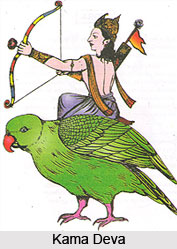
Kusumayudha
Kusumayudha is a name of Kamadeva, the Hindu God of Love. Depicted with a sugarcane bow and flower-tipped arrows, he represents attraction and longing...

Bhoyar Caste
Bhoyar Caste is largely found in the Central Provinces of the country. Traditional occupation of Bhoyars is agriculture. They are good cultivators and...
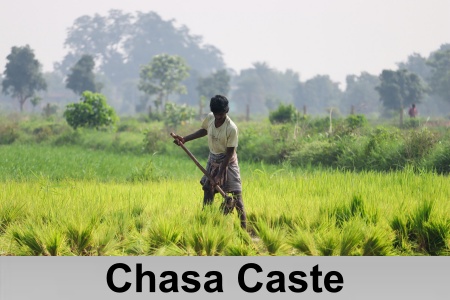
Chasa Caste
Chasa caste is a prominent agrarian community native to Odisha. Traditionally associated with cultivation and farming, Chasas have historically played...
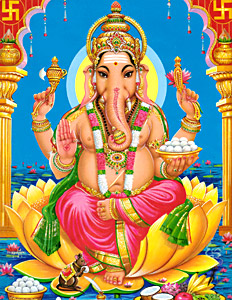
Vigneswara, A Form of Lord Ganesha
Lord Vigneswara is another form of Lord Ganesha or Vinayaka, prominently worshipped as the God of intelligence and good luck in the Indian subcontinen...
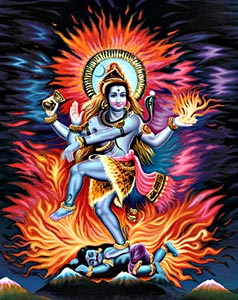
Maheswara
Maheswara, meaning “the Great Lord,” is a revered name of Lord Shiva in Hindu tradition. It represents Shiva’s supreme authority over creation, preser...
Related articles in Religion in India
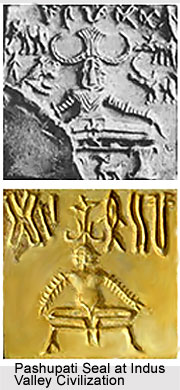
Religion in Indus Valley Civilization
Religion in Indus Valley Civilisation included Hinduism, Buddhism and Jainism. Details about the religion in Indus Valley Civilization have been gathe...
Iyer Brahmin
Iyer Brahmins are originally from Tamil Nadu of South India. They are known for their adherence to Advaita philosophy and Smarta traditions. Tradition...
Kumbhakar / Kumhar Caste
Kumbhakar or Kumhar caste is a traditional artisan community in India known for pottery making. Derived from Sanskrit word Kumbhakar, meaning potter,...

Gujjars in Mughal Era
Gujjars in the Mughal era enjoyed great power. Further their power increased with the decline of Aurangzeb, Mughal emperor.
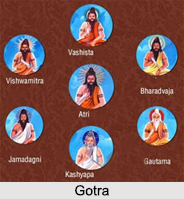
Gotra in Hinduism
In Hinduism, gotra refers to a lineage system tracing descent from ancient sages, primarily through the paternal line. Originating from Vedic traditio...