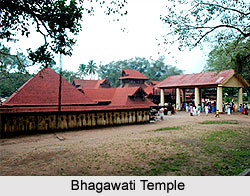
 In Kodungallur border is the abode of Goddess Kali because legends believe that Kannagi was the incarnation of Kali. But initially the temple housed Lord Shiva which is evident from its architectural features.
Bhagawati Temple is also referred to as the abode of Kannagi is located in Kodungallur in Kerala. Kannagi is believed to be an incarnation of Goddess Kali. The temple was thus erected in her memory in Kodungallur. Certain features of the structure of the Kodungallur temple point to the fact that, originally, it was a Shiva shrine and that the image of Kali was installed later. The idol of Shiva faces the east direction and the idol of Kali is in the north direction. The temple follows a ritual of first offering pooja and naivedyam to Lord Shiva and then to the Devi.
Legend of Bhagawati Temple
The temple is associated with many legends. As per a legend Lord Shiva was once insulted by Daksha, Sati`s father. Resenting the insult of her husband she immolated herself by jumping into the sacrificial fire. Out of rage Lord Shiva carried the body of Sati and began the dance of destruction. To avert the situation Lord Vishnu with the help of the Sudarsana chakra cut Sati`s body into pieces. Wherever her limbs fell the place developed into a pilgrimage site. It is believed that in Chengannur, the reproductive parts of Sati had fallen.
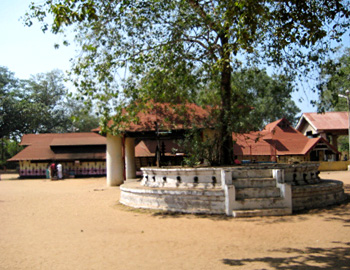 Architecture of Bhagawati Temple
The Bhagawati Temple dates back to the ancient times. To the east of Goddess Kali image there is a small chamber with no doors or windows nor any other opening over ground. It has no entrance and is covered on all sides with granite though there is a roof above. It is, therefore, called the secret chamber. There is however an underground passage from this room eastward which opens to over ground about hundred yards away in the temple courtyard. The mouth of this passage is closed at the ground level and an enclosure has been erected around it. The western wall of the secret chamber, against which a crimson cloth is hung, is held sacred. Lamps are lit and regular rituals are organized here. However only certain privileged persons like the members of the family of the local chief visiting this temple can view this cloth and worship it. This can be done only through the western door of the sanctum of Kali which is opened only on such rare occasions. There are seven images known as Saptamatrukas or Seven Mothers installed in the hall adjoining the sanctum of Kali on its western side. They represent the six Goddesses whom the Gods created to kill Daruka and Chamundi. The images, each with four arms, are in the sitting posture facing north. There are three doors to the hall through which they can be seen.
Deity of Bhagawati Temple
The Bhagawati Temple houses the majestic idol of Goddess Kali which is about six feet high. It is made of wood and has been carved out of the trunk of a jack fruit tree. The idol is in a seated idol. It is fully decked with gold ornaments, a kirita (crown) like the one used by actors in Kathakali and a mask. The goddess has eight arms which carry various weapons and symbols some of which are difficult to identify. All the parts except the hands are covered by golden raiment. She wears ornaments like addhika (necklace) and pavan mala, chain woven of gold discs around her neck. Below the waist of the idol she wears a crimson cloth. The next important deity is Kshetrapala, which literally means the guard of the square. It, therefore, stands outside in the courtyard on the north-east side in the position of guarding the temple. The image in made of stone that is twelve feet high and is a rare feature in the Devi temple.
Festivals of Bhagawati Temple
Many festivals are celebrated in the temple among which the two major festivals are Talappoli and Bharani. Talappoli is a colourful celebration full of merriment while Bharani festival is purely devotional and ritualistic.