 The Vasas or Vatsas were one of the peoples of Vedic Aryandom from the earliest period. Vasa have been mentioned as the name of a people in the Aitareya Brahmana. The Vasas or the Vatsas are spoken of as one of the Vedic tribes living in the Dhruva-madhyama dik or the Madhyadesa of Manu, along with the Kurus, Panchalas and Usinaras. In the Kausitaki Upanishad, too there is a mention of the Vatsas together with the Usinaras, Matsyas, Kurus and Panchalas. The Janavasabha-Suttanta associates the Vatsas rather with the Cedis than with the Usinaras, and mentions the powerful ruling peoples of the time in such groups as Kasi-Kosala, Vajji-Malla, Cedi-Vamsa., Kuru-Panchala and Maccha-Surasena.
The country of the Vamsas or Vatsas must therefore have been located round about Kausambi, the position of which has been identified with Kosam, not very far from Allahabad. According to the Brhatsamhita, the land of the Vatsas was in the middle region. It probably lay to the north-east of Avanti along the bank of the Yamuna River, southwards from Kosala and to the west of Allahabad.
In the Mahabharata it has been said that prior to the Rajasuya sacrifice performed by Yudhisthir, Bhima had led an expedition towards the east and had conquered the Vatsa-bhumi; while in the Vana Parva, it has been stated that Vatsa was conquered by Kama. In other historical accounts it has been stated that the Haihayas of the Cedi country had seized the capital of the Vatsas after killing Haryasva who must have been a king of Vatsa. In the Bhisma Parva, it has been said that in the Kurukshetra war, the Vatsa army took the side of the Pandavas. Nakula and Sahadeva along with the Vatsas and others had guarded the left side of the Pandava army.
According to the tradition in the Harivamsa, the Vatsa-bhumi was founded by a royal prince of Kasi, while, according to the Mahabharata proper, its capital Kausambi was founded by the Cedi prince Kusamba. The Pali tradition suggests that fourteen pre-Iksvaku kings of the solar dynasty, headed by Baladatta, ruled the Vatsa kingdom with their capital at Kausambi.
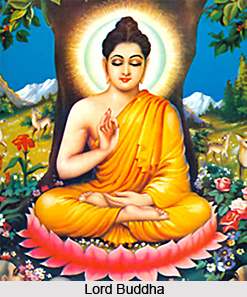
It has been referred in history that Avanti, Kosala and Vatsa had retained their independence for about a century after Lord Buddha`s death, and had lost it only during the period of the Nandas. History says that when King Ashoka of Maurya Empire had ascended the throne of Magadha, the three ancient kingdoms of Kosala, Vatsa and Avanti were already included in the Maurya Empire. Ujjain or Avanti was placed under a Viceroy of Ashoka, while Kausambi or Vatsa was governed by a Mahamatra.
Lalitavistara records that Udayana, a Vatsa king was born on the same day as that of Lord Buddha. He had strengthened his political position by matrimonial alliances with the neighbouring kings, particularly with King Chanda Pradyota of Avanti.
The kingdom of Vatsa was was finally absorbed into the Magadhan Empire, probably during the reign of Sisunaga. Vatsa (Kausambi) and Panchala (Ahicchatra) were governed by branches of the same royal family, and both the kingdoms had acknowledged the suzerainty of the Sungas.
The Anguttara Nikaya speaks of the land of the Vamsas as a country which abounded in seven kinds of gems and was consequently regarded as very rich and prosperous. Kautilya`s Arthasashtra has mentioned Vatsa as one of the countries of which the cotton fabrics were of the very best quality. In the Aitareya Brahmana it has been said that the Vatsas had monarchical form of government in their land. They formally anointed their kings in accordance with the prescribed Vedic rites, and they are not known to have deviated from this practice at any period of their history. Ordeal by walking through fire was applied as a test of purity of the descent of the kings. In the land of Vatsas even for a little offence criminal punishment was imposed on the offender.
When it comes to the religion of the Vatsas it can be said that before the influence of Buddhism and Jainism the Vatsas were pre-occupied with worldly thoughts but hermits had considerable influence on the people of Vatsas. And the main supporters of such hermits in the kingdom of the Vatsas were the Vaishya caste. In fact it can be said that the introduction of Buddhism among the Vatsas was due to the religious tendencies of the people belonging to the Vaishya caste.