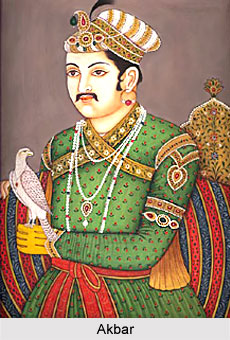
 Mansabdari system was the novelty of army organisation of the Mughals. It was introduced by Akbar and was kept as it was with minor changes up to the reign of Aurangzeb. The system was not an innovation of Akbar. He took it from the system introduced by Khalifa Abba Said and accepted by Genghiz Khan and Timur. The rulers of the Delhi Sultanate too had adopted it to a certain extent. Balban organised his army more or less on this system. The Mansabdari system which primarily meant the ranking of officers on decimal system was perfected by Akbar.
The mansab meant rank. Different numbers which could be divided by ten were used for ranking officers. It was also meant for fixing the salaries and allowances of officers. During the reign of Akbar, the lowest rank was that of number ten and the highest was that of twelve thousand. The mansab above five thousand and later on that of seven thousand was given only to princes of royal blood. Abul Fazl has mentioned only thirty-three categories of officers but they were, in fact, divided into sixty-six categories. Jahangir and Shah Jahan awarded mansab to their officers up to the number of only three thousand while royal princes were given mansabs up to the number of forty thousand.
The later Mughuls gave mansabs up to number of fifty thousand. All officers below the rank of the mansab of five hundred were called mansabdars; the officers enjoying the mansab from five hundred to two thousand five hundred were called amirs, and those who were ranked over two thousand and five hundred were called amir-i-azam. The officer called khan-i-jahan was still higher in rank while the highest rank in the army was that of khan-i-khana. Some historians described, that the mansabdars were required to maintain soldiers equivalent to the number of rank awarded to them. But the majority of the historians do not accept it. The number of soldiers of mansabdars was certainly less than the number of their ranks.
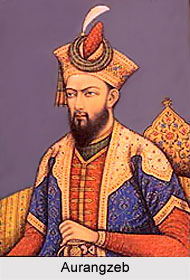 The duties of mansabdars were in no way connected with the number of his rank. It was also not necessary that an officer enjoying a higher mansab should also enjoy a higher post in the state. Raja Man Singh enjoyed higher mansab than Abul Fazl during the reign of Akbar, yet Abul Fazl was a minister while Raja Man Singh was not. The emperor decided the duties of a mansabdars. There were also no fixed rules regarding appointment and promotion of the mansabdars. It all depended on the sweet-will of the emperor. The mansabdars were paid their salary in cash and, whenever they were assigned Jagirs, the right of collecting revenue from their Jagirs was that of the officers of the central government. The revenue which was collected from Jagirs was handed over to the concerned mansabdars but the same amount was deducted from their salaries. The mansabdars were paid for complete twelve months. Every mansabdar paid salaries to his soldiers out of his own salary. But the salaries of mansabdars were so high that even after payment to their soldiers much remained with them.
During later years of his reign, Akbar introduced the rank of zat and sawar in the Mansabdari system. Every mansabdar was given the rank of sawar as well as that of zat. A mansabdar was paid rupees two per horse. Therefore, if a mansabdar received the rank of five hundred sawar he was given rupees one thousand additional allowance. During the reign of Akbar, the mansabdars were asked to keep as many horsemen as were indicated by numbers of their ranks of sawar. But, the practice was not maintained by other Mughal emperors.
Every grade of his mansabdars holding the rank of five thousand or below it were divided into three categories. If a mansabdar had equal ranks of zat and sawar, he was of the first category among his grade of mansabdar i.e. if a mansabdar enjoyed the rank of five thousand zat and five thousand sawar then he was of the first category among the mansabdars of five thousand. If a mansabdar had the rank of sawar lower than the rank of zat but not lower than half of it then he belonged to the second category, i.e. if a mansabdar enjoyed the rank of five thousand zat and three thousand or two thousand and five hundred sawar then he belonged to the second category among the mansabdars of five thousand. And, if a mansabdar enjoyed the rank of sawar which was less than half of his rank of zat then he belonged to the third category among his grade of mansabdars, i.e. if a mansabdar had the rank of five thousand zat and two thousand or even less than that rank of sawar then he was of the third category among the rank of five thousand mansabdars.
The practice of keeping huliya of the soldiers and also the practice of branding the horses and elephants were introduced. A separate department called Dagh-Mahali was organised for the purpose of branding horses and elephants. The army of every mansabdar was inspected by the emperor every year or once in three years. Akbar, of course, deserved credit for improving the army-organisation of the Mughals.