 The Nationalist Movement in India was the outcome of a large number of factors and the most important among them was British Imperialism. It was during the British rule that the whole of India was conquered and brought under one sovereign authority. The domination by any country over the whole of India enabled the people of India to think and act as one nation. Before the coming of the British in India, the people of the South were usually separated from the rest of India except for short intervals. British Imperialism helped the unification of the country.
British rule brought the entire geographical area of the country under a single administration. It unified the country by introducing a uniform system of law and government. The introduction of the modern methods of transport and communication also produced the same unifying effect.
The improvements in the means of transport and communication also quickened the pace of the nationalist movement in the country. It is said that but for railways, motor buses and other modern means of communication, political and cultural life on a national scale would not have been possible. It can be said that if these became the means of consolidating and preserving British rule in India, they also played their part in organising the political movement of the Indian people on a national scale against their rule.
The English language played an important part in the growth of nationalism in the country. It acted as the lingua franca of the intelligentsia of India. Without the common medium of the English language it would have been impossible for the Bengalees, Madrasis and the Punjabis to sit at one table and discuss the common problems facing the country. The English language also made the Indians inheritors of a great literature which was full of great ideas and ideals.
 The Indian press, both English and vernacular also aroused national consciousness. Great was the influence of the news papers like the Amrit Bazar Patrika, the Hindu, the Kesari, the Bengalee, the Hurkura and a lot more. The growth of Indian Press was phenomenal and by 1875, there were no less than 478 newspapers in the country. The Indian press helped in mobilizing the public opinion, convening national and provincial conferences, organising political movements, building up public institutions and fighting out public controversies. There was no issue of foreign policy or internal administration which escaped the notice of the news papers.
The writings of Dinabandhu Mitra, Hem Chandra Banerjee, Nabin Chandra Sen, Romesh Chunder Dutt, Rabindranath Tagore, Dwijendralal Roy, Bankim Chandra Chatterjee had also affected the minds of the people of India. All these writings affected the higher sentiments of the people. Rather it can be said that the writings of these writers helped the people of India to realise the national fervour and as a result they got united and tried to oust the British people from India.
There were many British officials and writers who put forward the thesis that the Indians had always been backward and they did not know the art of governing themselves. They also maintained that the Indians were destined to be ruled by others and there was no future hope of a free India.
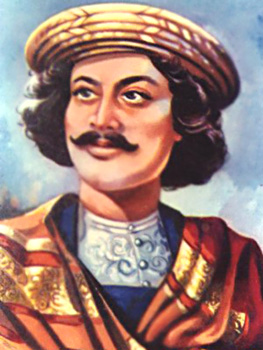
The religious and social reformers like Ram Mohan Roy, Keshab Chandra Sen, Debendranath Tagore, Ishwar Chandra Vidyasagar, Swami Dayanand Saraswati, Ramkrishna Paramhansa, Swami Vivekananda and others inculcated a spirit of confidence, courage, self-respect and pride in the ancient heritage of India. It is contended that political awakening in India began with Raja Ram Mohan Roy.
The intelligentsia played a creative role in the rise of nationalism in the country. It is they who recognised the fact that the establishment of the British power in India marked a break with the past and the beginning of a new historical era. Their initial response to the British rule was positive but with passing time they got disillusioned.
History says that there was lot of discontentment in the country on account of many reasons. There was the economic exploitation of the people. The revenue charged by the government was more than what the people could afford to pay. The demands of the government continued to increase unmindful of the condition of the people and their capacity to pay.
The nationalist movement which rose in the minds of the people made them realise that they had no hope any fair play on the part of the Englishmen because a lot of self interests of the English people were involved in it.