
The Sakya tribe acquired great importance in Indian history because of the fact that Lord Buddha was born among them. Before the birth of the founder of Buddhism, the Sakyas were comparatively less known; yet in the rugged fastnesses of the lower Himalayas, they had already built up a remarkable though not a very powerful group. The Sakyas of Kapilavastu claimed to be Kshatriyas. The origin of the Sakyas is traced back to King Okkaka, i.e. Iksvaku. According to some records the Sakya family is traced back to Mahasammata.
The record in Mahavatsu says that that the Sakyas resided in a cave of a hill and the Jataka story relates that they had received the name Koliya because of having resided in the hollow of a Koli or jujube tree. In the Mahavastu the Sakyas are called adityabandhus or `kinsmen of the sun`. This refers to their descent from the solar dynasty to which the Iksvakus belonged. The Mahavastu also speaks of King Suddhodana, father of the Buddha, as born in the Iksvaku family. The Sakyas were Kshatriyas of the Gotama gotra, as is seen from the fact that Lord Buddha had the surname Gotama, while others who also belonged to the same race, bore the Gotra name of Vasistha. It has been said that the gotra of a Kshatriya family was derived from the gotra name of the purohita or family priest; so evidently the Sakyas had adopted the Gotamas as their priests at an early date. Kapilavastu was the capital of the Sakyas. Sometimes it is also known by the name Kapilapura. It is said that Kapilavastu is surrounded by seven walls. Mention is made of several other Sakya towns besides Kapilavastu. They are namely Chatuma, Samagama, Ulumpa, Devadaha, Sakkara, Shavati, and Khomadussa.
It is stated in the Jataka that the Sakyas did not do obeisance to Siddhartha on the ground as he was younger in age, but were afterwards made to do so on seeing` a miracle performed by him. As far as Sakya law is concerned it is said that Sakyas allowed a man only one wife. The Sakyas had a special constitution. They were a small tribe and very proud of their birth. They would not give one of their girls in marriage even to such a powerful prince as Pasenadi of Kosala. Among such a people, marriage was generally confined within the tribe itself, and the number of marriageable girls being limited, many adult males would have to go without a wife if polygamy prevailed. Hence the law had grown up among them limiting the number of wives to one. But the Sakyas had no objection to polygamy on religious grounds.
`The Sakyas were desperate in the matters of birth. When a Sakya child was born, it was carried to the temple of Isvaradeva to be presented to the god. The Sakyas contracted marriages within their own tribe, and even their ruling house did not enter into matrimonial alliance with any of the numerous princely houses in India, unlike the royal houses of Kosala, Magadha and Videha. Historical records say that when the marriage of Prince Siddhartha was decided upon at the council of five hundred Sakya elders, it was mandatory to select a bride for him from among themselves. Thus it can be said that the clannish custom among the Sakyas perhaps gave rise to the idea that they married their sisters.
The learning of one or other of the arts was incumbent upon every Sakya youth, for, as we have seen, no father would give his daughter in marriage to an idler or ignoramus. There was also a school for archery at Kapilavastu, where the Sakyas were trained. The Sakyas being a Kshatriya tribe were devoted to warlike pursuits, and were surrounded on all sides by warlike tribes thus the school of archery was necessarily a flourishing institution in the Sakya kingom.
The minds of the Sakya royal princes and nobles were so enlightened by Lord Buddha that they were able to realise the perfect fruit of righteousness. The administrative and judicial business of the Sakya clan was carried out in their santhagara or Council-Hall at Kapilavastu. Kula or clan sovereignty was predominant among the Sakyas. Kula, which was more extensive than tie family among the Sakyas was the lowest political unit amongst the Sakyas.
Sakya Tribe
Sakya Tribe is well known because Lord Buddha, the founder of Buddhism, was born among them. Sakya Tribe in the early days is also known to be associated with King Iksvaku.
Recently updated articles in Tribes of India
Arakh Tribe
Arakh Tribe is one of the ancient tribes located in several parts of central India. Their origin dates back to the Tughlaq era. Arakh tribe appears to...
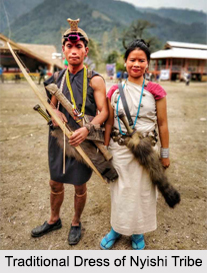
Traditional Dress of Nyishi Tribe
Traditional Dress of Nyishi Tribe is worn during festivals and social gathering. Men wear a cane helmet surmounted with the beak of the great Indian H...
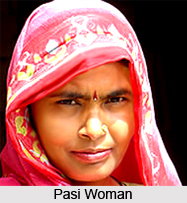
Pasi Community
Pasi is an aboriginal race of India and are mainly distributed over the northern region of the country. The traditional occupation of Pasi is the extr...

Bhojas
Bhojas have been described as a very important tribe in the Aitareya Brahmana. Historical records have said that the Bhojas were settled towards the s...
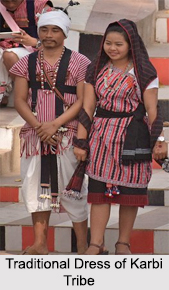
Traditional Dress of Karbi Tribe
Traditional Dress of Karbi Tribe can be easily recognized by the artistic designs inherited from their forefathers. Karbis have their own traditional...
Related articles in Tribes of India

Sentinelese Tribe
Sentinelese tribal community is one of the most isolated and secluded tribes that are found in the whole world.
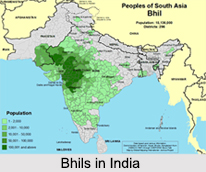
Bhil Tribe
The people of the Bhil tribe are the most widely distributed tribal groups in India.
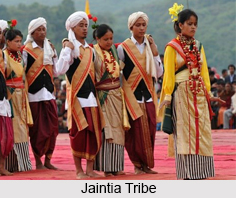
Jaintia Tribe
Jaintia Tribes are located in the Jaintia Hills of Meghalaya. They are also called the Pnars. They are famous for weaving of carpet, making of musical...
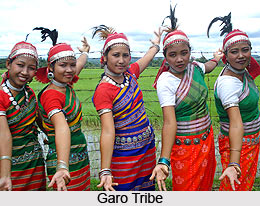
Garo Tribes
Garo Tribes are one of the matrilineal tribes of North-East India who reside in the Garo hills of Meghalaya. Historically, the tribe originated in Tib...
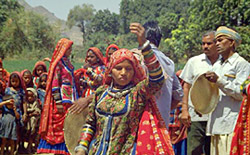
Garasia Tribe
The Garasia tribal community holds a significant position within Indian culture, renowned for their distinctive way of life and rich cultural heritage...