


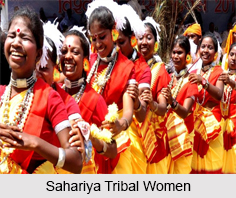
 Sahariya Tribe is an ethnic group of Madhya Pradesh state. Sahariya tribal people are found in Morena, Sheopur, Bhind, Gwalior, Datia, Shivpuri, Vidisha and Guna districts of Madhya Pradesh and Baran District of Rajasthan. The name Sahariya is said to be derived from the Arabian word 'Sehara' or 'wilderness'. Approximately 3.5 lakh Sahariyas are estimated to reside in the Gwalior and Chambal region in north Madhya Pradesh. Sahariya Tribe is an ethnic group of Madhya Pradesh state. Sahariya tribal people are found in Morena, Sheopur, Bhind, Gwalior, Datia, Shivpuri, Vidisha and Guna districts of Madhya Pradesh and Baran District of Rajasthan. The name Sahariya is said to be derived from the Arabian word 'Sehara' or 'wilderness'. Approximately 3.5 lakh Sahariyas are estimated to reside in the Gwalior and Chambal region in north Madhya Pradesh.
History of Sahariya Tribe The Muslim rulers found them residing in the jungle, and gave them their present name 'Sahr' which means 'Jungle'. Accordingly they came to be called 'Sahariya' meaning residents of jungle. Even in the absence of genuine historical accounts it may be stated that the Sahariyas have been one of the earliest settlers in Rajasthan. 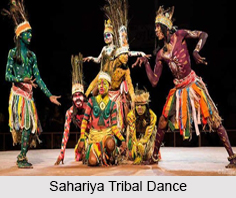 Society of the Sahariya Tribe Society of the Sahariya Tribe
Sahariyas generally reside in separate basti in the village which is called Saharana. They follow Hindu religious practices and speak a dialect influenced by Hadoti. The Sahariyas maintained ecological equilibrium with their environment for ages, despite a low level of technology. Mostly they were engaged as gatherers of minor forest produce and agricultural labourers. The main business is gathering and selling of forest wood, gum, Tendu leaf, honey, fruits and vegetables. Though Sahariyas, in general are primitive, all of them are not so. Some of them are also settled cultivators. Others are landless labourers and forest produce gatherers. They live in small families. The elder sons live separately after marriage and the younger sons bear the responsibilities of the parents and unmarried brothers and sisters. Marriages are performed after attaining the age of 15 years. There are some arranged marriages and ceremonies held in the fairs. Food Habits Sehariya takes seasonal 'Kandmul' fruits and vegetables found in forests. Vegetable like 'Senjna', 'Phang', 'Bichotiya', 'Kanna', 'Bansi', 'Charetha', 'Churangli', 'Barsak', 'Lahaylai', 'Chaurai', 'Totam', 'Chani', 'Bajar', 'Rajan' etc. are usually eaten by Sahariyas. Another form of food, 'Sawa,' is used by the tribal people too. 'Sawa' is the seed of a special grass found in the jungles. Sahariyas make delicious foods from the seeds of these grasses. The seeds of the sawa grass are crushed to flour and chapatis are made. The sawa flour is also used to make 'kheer', 'Rabri' etc. The sawa seed's flour has nutritive value too, and it is also used by the urban people during their fast. Festivals of Sahariya Tribe The tribes follow Hinduism. They worship Goddess 'Tejaji', 'Dhakar Baba', 'Goddess Durga', 'Lord Hanuman', 'Lalbai', 'Bejasan'. They mainly celebrate the festivals like 'Makar Sakranti', 'Savni Amavasya', 'Janmashtmi', 'Raksha Bandhan', 'Diwali', 'Holis' and 'Teja Dashmi'. Education among the Sahariya Tribe Sahariya tribal people are not too well educated. Only 3-4 percent people are literate. Efforts are being consistently being made by the State Governmenttowards their education. |
| |||



Home > Society > Indian Tribals > Indian Tribal People > North Indian Tribes > Tribes of Rajasthan > Sahariya Tribe
Sahariya Tribe
| Sahariya Tribe is an ethnic group of Madhya Pradesh state. Sahariya tribal people are found in several districts of Madhya Pradesh and Rajasthan. The name Sahariya is said to be derived from the Arabian word `Sehara` or `wilderness`. |
| ||||||||||||||||||||||||||||

