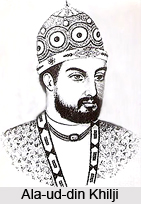
 During the entire period of the Delhi Sultanate, Islam remained the religion of the state. The Sultans performed a religious duty along with his political obligation while administering the state. His duty was to convert the non Muslim territory to a Muslim land. Sultans like Firoz Tughlaq and Sikandar Lodi left no stone unturned to propagate Islam among their subjects. But to rulers like Ala -ud -din Khilji and Muhammad Bin Tughlaq, this was a secondary duty.
All the rulers of the Delhi Sultanate pursued a discriminatory policy between their Muslim and non Muslim subjects the majority of who were Hindus. In matters of land revenue the Muslims had to pay less than the Hindus. Even the Hindu traders paid double trade tax as compared to the Muslim traders. Foreign Muslims alone were entitled high offices of the state while the Hindus and even non-Muslims were not considered for them. The Hindus were unfavourably discriminated in the dispensation of justice. They had to pay the religious tax, Jizya. Restrictions were imposed on the religious pilgrimages of the Hindus. Hindu educational institutions, temples and images were destroyed, mosques were raised in their places and the religion of the Hindus was disrespected during the rule of most of the Sultans. Thus, the Hindus were not only referred to as Zimmis and Kafirs but also were treated as such in practice.
The period of the Delhi Sultanate was the period of struggle between the Hindus and the Muslims and they contested fiercely against each other both in politics and religion. The policy of the Sultans was that of religious intolerance. The religious propaganda adopted by the Sultans was mainly to defend their established empire in India. The Sultans acted according to the spirit of their age and that was natural and practical for them. But no Sultan of the Sultanate could realise that it was impossible to convert all Hindus to Islam or to destroy the strength of Hinduism by sheer physical force. This kept them devoid of loyalty and cooperation of the majority of their subjects. Though the religious administration of the Sultans suffered from certain defects yet it fulfilled the need of the time.