Legend of Sati - Informative & researched article on Legend of Sati
  Indianetzone: Largest Free Encyclopedia of India with thousand of articles Indian Religion


in  
Art & Culture | Entertainment | Health | Reference | Sports | Society | Travel
Forum  | Free E-magazine
Indian Religion : Vastu Shastra l Indian Religions l Indian Myths l Indian Mythology l Gods of India l Goddesses Of India l Religious Thinkers of India l Types of Religion in India l History of Indian Religion l Indian Yogis l Ajivikas l Sacred Scriptures in Indian Religion l Tantrism l Shaivism l Indian Communities l Sacred Animals in India l Roman Impact on South Indian Art and Society l Bhattacharyas l Indian Classical Terms
Home > Society > Indian Religion > Indian Mythology > Legend of Sati
Legend of Sati
Legend of Sati provides description of Sati, the daughter of Daksha and her marriage to Shiva.

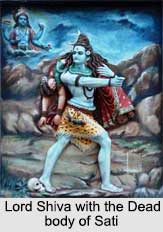
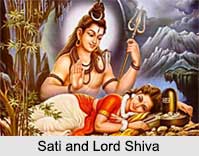
Sati, Daughter of Daksha and wife of Lord ShivaLegend of Sati narrates the tale of the marriage of Sati with Shiva and it also links itself to the chief of gods named Daksha. Long ago, there was a chief of the gods called Daksha. He married Prasuti, the daughter of Manu and she bore him sixteen daughters, of whom the youngest, Sati, became the wife of Shiva. This was an unpleasing according to her father, for he had a grudge against Shiva, not only for his disreputable habits, but because Shiva, upon the occasion of a festival to which he had been invited, did not offer homage to Daksha. For this reason Daksha pronounced a curse upon Shiva, that he should receive no portion of the offerings made to the gods. A Brahman of Shiva`s party, however, pronounced the contrary curse, that Daksha should waste his life in material pleasures and ceremonial observances and should have a face like a goat.

Sati, the daughter of Daksha, grew up and set her heart on Lord Shiva and worshipped him in secret. She became of marriageable age, and her father held a swayamvara, or own-choice, for her, and he invited gods and princes from far and near, except only Shiva. Then Sati was borne into the great assembly, wreath in hand. But Shiva was nowhere to be seen, amongst gods or men. Then in despair she cast her wreath into the air, calling upon Shiva to receive the garland; and Lord Shiva stood in the midst of the court with the wreath about his neck. Daksha had then no choice but to complete the marriage; and Shiva went away with Sati to his home in Kailas. This Kailas was far away beyond the white Himalayas, and there Shiva dwelt in royal state, worshipped by gods and rishis; but more often he spent his time wandering about the hill like a beggar, his body smeared with ashes and with Sati wearing ragged robes; sometimes also was also seen in the cremation grounds, surrounded by dancing imps and taking part in horrid rites.
One day Daksha made arrangements for a great horse sacrifice, and invited all the gods to come and share in the offerings, and did not invite Shiva alone. The chief offerings were to be made to Vishnu. Sati, wife Of Lord Shiva, observed the departure of the gods, as they set out to visit Daksha, and turning to her lord, she asked Shiva where the gods are going being led by Indra. Then Shiva told to Sati that Daksha had prepared for a horse sacrifice and the gods are being invited to attain it. She then enquired about Shiva`s not going to that great ceremony. Thus Shiva replied to Sati that it was planned among the gods that he had no part in any such offerings which are made at sacrifices. Sati became very angry and told to Shiva that; how could the one who lives in all beings, and who is unapproachable in glory and power, be not invited to a ceremony held by Daksha.

She then asked her lord to let her know what she could do for him so that Shiva gets the share of the offering made to gods in the sacrifices. Then Shiva smiled and told to Sati that those sacrificial offerings were of less importance to him and he gets the sacrifices when one chants the hymns of Samaveda. His priests were those who offer the oblation of true wisdom, where no officiating Brahmin was needed. Then Sati told to Shiva that it was very easy to make excuses before women and at last she asks for her permission to visit the horse sacrifice of Daksha. Shiva then enquired if she would visit without invitation and then Sati replied that in order to go to a father`s house no invitations were required. Thus Sati takes leave from Shiva and starts for her father`s home.

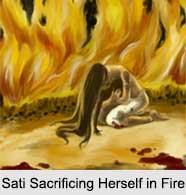
Sati went to her father`s house and there she saw indeed received, but without honour, for she rode on the bull of Shiva and wore a beggar`s dress. She protested against her father`s neglect of Shiva, but Daksha broke into angry curses and derided the `beggar`, the `ash-man`, the `king of goblins` and the `long-haired yogi`. Sati replied to her father that Shiva is everyone`s fried and on one, except Daksha, speak ill of him. She told to Daksha that all the gods know the truth of Shiva and still hear what he was saying. However, as a wife she would not be able to tolerate the insult to her husband in front of her and thus she released the inward consuming fire and fell dead at the feet of Daksha.

(Last Updated on : 22/02/2011)
  More Articles in Indian Mythology
 
Avatara Nagas Naginis
Apsaras Kaparddin, Indian Mythology Kapila, Indian Mythology
Kapila, Mythology Character Krauncha Krikana
Krisasva Kritanjaya, Indian Mythology Sataydhriti, Indian Mythology
Arundhati Kaliya Radha
Position of the Eighth child Yaja Swarga
Syamantaka Mani Srutayus Suchi
Satajit Sarpa Savibhasa
Tridev Sumantu Satadyumna
Sweta Swayambhuva Swamabhak
Swayamprabha Sruta Srinjaya
Sunaka Syala Sweta-Dwipa
Manwantara Swaraj Krodhavasa
Suvira Suvela Suvarna
Suvala Susuma Suchandra
Subhasa Srutanjaya Sudhanwan
Srutadeva Srijavana Sudyumna
Srideva Somasushmapana Somadatta
Pushpavat Pururavas Satanika, King Of Indraprastha
Soma, Hindu Mythology Skambha Shishunaga
Shiksha Sikhandini Sisumara
Siddhis Saryatas Sarama
Sumati Sankha Nikumbha
Evil and Demon Spirits in Hindu Mythology Anaranya Mahajwala
Mahanila Mahendra Mahikas
Mahishmati Mainaka Mayodaya
Mainaka Makara Malaya
Malina Mallas Manas
Manaswini Mandahara Mandehas
Romapada Marttikavatas Marshti and Marshtimat
Marutta Marutwati Maya
Medhavin Mena Menaka
Meru-Savarnis Misrakesi Mitra
Narishyanta Mrigavati Mrigi and Mrigamanda
Mangala Chitraka Mrigasiras
Muda Nalini Naras
Narikavacha Navala Takshaka
Tala Tamrapakshi Tapa-Loka
Nischara Nisitha Nisunda
Nipa Nirmali Niruta
Nirvritti Jyamagha Nirmalas
Dharbaga Dharmanetra Divaratha
Ekachakra Upakosa Upayaja
Urana Urddhabahus Urja
Urjaswati Urjjavaha Urvasi
Usanas Ushas Hidimba
Karna Kuntal Ekapadakas Dhrishtasarman
Dhruyu Dhumrakesa Param
Parameshthin Paras Pariplava
Dhi Krishna, Son Of Havirdhana Dhishana
Niyama Niyati Niyat
Richa Nriga Nyagrodha
Padmavati Paka Paksha
Palita Pancha-Lakshana Panchapsaras
Panchavati Khatwanga Dirghamukha
Dirghatamas Dishta Divaspati
Divya Dhumraswa Dhundu
Ansuman Parna Parshata
Parvathi Pauras Pavitras
Dosha Dravina Dridhasona
Dukha Dyumatsena Dyutimat
Pransu Prasada Prasenajit
Prasraya Prastutas Pratah
Pratikshatra Pratishthana Pradarsanas
Pradosha Pradyota Prajani
Punjakasthali Punyajanas Punyasloka
Purujanu Purumidha Purvachitti
Purvashada Rajni Pushya
Pushya-Shanti Putra Raivata
Rajarshis Rajas Rambha
Ramyaka Ratnavali Ratri
Revali Rina Lokaloka
Ritadhaman Ritu Ritudhaman
Rohini Rohini Rohitaswa
Ruchiradhi Rupavahikas Swahi
Jantu Jhajhara Jimutaketu
Jogi Kachhapa Kaitabha
Kakavarna Kakubha Kala
Kalanara Kalayavana Kalika Purana
Kalmashapada Kampilya Lomapada
Kapali Kapila, Indian Mountain Kapotoroman
Karambhi Kashtha Kaumara Creation
Kavi, Son Of Manu Chakshusha Kavyas Kavyas
Kavya-Darsa Kavya Prakasa Kesini, Mythological Character
Kevala Khandikya Kimpurusha Kingdom
Kirtaratha Kolaria Kotavi
Kotikasya Kratha, Son Of Vidarbha Kratusthala
Krauncha, Mythical Character Krikana Krisasva, Ruler Of Visala
Ketumta Kritaka, Son Of Vasudeva Kritaka, King Of Magadha
Kritanta Kritaratha Krittika
Kritwi Krodhaghara Kshatranjas
Kshema, Son of Dharma Kshema, Queen Of King Bimbisara Kuntibhoja
Kshemadhanwan Kshemaka Kshetrajna
Kuhu Kukkura Kukshi, Mythical Character
Kuru, Son Of King Samvarna Kuruvatsa Kusamba, Son Of Kasu
Kusika Lakshmana Lekhas
Lesa Lingam Sachi
Sadnova Sagarika Sahajanya
Saivy Sakuni, Son of Demon Hiranyaksha Sahya
Sainhikeyas Shishunaga Samaradana
Sakra, Hindu Mythology Salisuka Samaravira
Sambara, Asura, Demon Sambhuta Samika
Sampadvasa Sampati Sandipani
Sanda Sanjna Sankara Acharya
Samudra, Ocean, King Of Rivers Samudra Samvara
Samvatsara Samyati Sandhyansa
Sankalpa Sannyasi Santati
Santosha Sarmishta Savarna, Wife Of Sun
Savarni Saryati Shatadru
Skanda Sata Sankhyas Smaya
Somadatta, King Of Vaisali Sringavera Sravasta
Srigadita Srutavat Sutanu
Garuda Regions of hell Adrisyanti
Agneyastram Agnibahu Agnishtoma
Ahikshetra Aja Ajaka
Ajapashya Ajitas Ajavithi
Aindrajalika Ahavaniya Akasavani
Akshohini Alaka Alankara
Alloo Amaravathi Amavasu
Ambhansi Amogavarsha Amogha Siddha
Anabhitra Anadichitta Parameshti Anegundi
Ananata Anargharaghava Araga
Andakataha Andhra Dipaca Angirasas
Anima Animisha Anjaka
Anjana Ankalamma Anugrahasarga
Anuvatsara Anyadesya Apamurtti
Apana Aparagodana Apaspati
Apastamba Apava Archish
Argha Ahrat Arshabhu
Arugan Aryaka Avantyas
Avarant Avasthanas Ayana
Ayomukha Babhravya Badagas
Badari Balavatsa Banddhas
Bandhayanas Basava Bhajina
Bhalandana Bhanus Bhanumat
Bharatavarsha Bharga Bhat
Bhuri Chandrahasa Danta Vaktra
Chitrabaha Riksha Kshana
Shakuntala Kambala, Indian Mythological Character Katyayana
Kameri Kamya Bharata
Bhurloka Devayani Kalapa
Kalpa, Vedic Time Measurement Manasarovara Lake Himapandura
Emush Rishabha Dappleskin
Legend of Sati Legend of Uma Legend of Shani
Legend of Goddess Manasa Throne of Vikramaditya Ucchaishravas
Raktabija Vritra Legends of Kudin Devi and Langasan Devi
King Yayati Hiranyakashipu  
Recently Updated Articles in Indian Religion
  • Life of the building
    Vastu Shastra provides exhaustive information about the life of a building.
  •  
  • Basement
    Vastu shastra recommends certain tips for the construction of the basement.
  •  
     
  • Tips for Purchasing a Flat
    Tips for Purchasing a Flat, as suggested by Vastu Shastra, an ancient Indian science for construction, will lead to prosperity and pleasure
  •  
  • West-North-West Extended Plot
    The residents of these buildings will experience a steady increase in the wealth.
  •  
  • Upper Floor
    According to this ancient architectural form, the upper floor needs special attention whiles constructing.
  •  
    E-mail this Article | Post a Comment
    RSS Feeds
    Forum
    Forum on Indian Religion

    Free E-magazine
    Subscribe to Free
    E-Magazine on Indian Crafts
     
     
    Legend of Sati - Informative & researched article on Legend of Sati
    Sitemap
    Contact Us   |   RSS Feeds
    Copyright © 2008 Jupiter Infomedia Pvt. Ltd. All rights reserved including the right to reproduce the contents in whole or in part in any form or medium without the express written permission of Jupiter Infomedia Pvt. Ltd.