 Foreign Invasion in India during the medieval period was the outcome of instability and fragility of Indian rulers. It initiated with the weakening of Rajput Empire. Although Rajputs symbolized chivalry and feudalism, their internal conflicts marked their downfall in the medieval period. This laid the foundation for Foreign Invasion and the Arabs and the Turks invaded India in this period. The rise and growth of Islam was an important event in the medieval history of India. Its first converts, the Arabs, made it a powerful force in the politics of Asia. The credit of establishing the Muslim rule in India however went to the Turks. Apart from being interested in India`s wealth, the Turks also wanted to establish their empires and take over other kingdoms.
Earliest Foreign Invasion in India
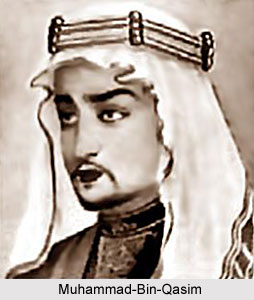
Initially, Hajjaj, the Muslim governor of Iraq sent a powerful army under the command of his nephew and son-in-law Muhammad-Bin-Qasim in 711 A.D. to attack Sindh. The religious fervour of the Arabs, the desire to extend the empire and the allurement of wealth through conquest were the primary reasons of this assault. India, during that time was politically divided into a number of states which constantly fought with one another and were not powerful enough to check Foreign Invasions. Muhammad defeated Raja Dahir and captured Sindh in 712 A.D. In 713 A.D. he captured Multan as well. But very soon Muhammad was called back and punished to death by the Khalifa. The Arabs in Sindh and Multan failed to make further conquests in India after him. The inadequate economic resources of Sindh, its military weakness, sharp social divisions, lack of interest of other Indian rulers towards the fate of Sindh, the superiority of arms and military tactics of the Arabs and the incompetence of Raja Dahir were the main reasons of the success of the Arabs. However, the conquest of Arabs in India remained limited only to Sindh and Multan. They failed to penetrate further in India. The growing weakness of the Khilafa, the division of Sindh and Multan into two separate Arab kingdoms, administrative incapability of the Arabs, and the existence of powerful Rajput states in India which were determined to check further inroads were the primary reasons of the failure of the Arabs in extending their power in India.
 Establishment of Muslim Empire in India
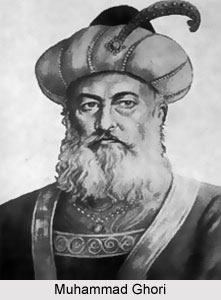
The credit of establishing the Muslim rule in India went to the Turks afterwards. The leadership of Islam was captured from the Arabs first by the Persians and then by the Turks. In the beginning, the Turks were barbaric hordes and their only strength was their power of arms. But, in less than a century, they converted themselves into extremely cultured people and succeeded in preserving the best elements of the Islamic culture even against the onslaughts of the Mongols. Sultan Mahmud of Ghazni was the first to penetrate deep into India. He was successful in breaking up the military strength of the Hindu rulers and plundering the wealth of India. But the credit of establishing the Muslim empire in India goes to Muhammad Ghori, who followed Mahmud of Ghazni after a lapse of one hundred and forty eight years.
The Slave Dynasty (1206-1290)
The initiation of Slave Dynasty was initiated with the defeat of the bravest Rajput warrior and the ruler of Delhi, Prithviraj Chauhan by Muhammad Ghori. Qutub-ud-din Aibak, a military slave from Turkistan, was then made the in-charge and a series of new rulers followed which established the Slave Dynasty. However, later on, internal revolts and aggression led to the fragility and decline of this dynasty. Qutab Minar in Delhi was completed during this period. Slave Dynasty also marked the initiation of the Delhi Sultanate.
Khilji dynasty (1290-1320)
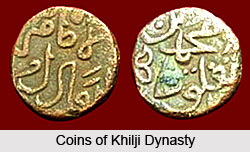
Slave Dynasty was followed by Khilji Dynasty. Muizuddin Qaiqabad who was the last sultan of the Slave Dynasty was killed by Jalal-ud-din Khilji who subsequently established the Khilji Dynasty. Khilji Dynasty is known for its gruesome wars and internal conflicts. In this era, Mongols also attacked India but were smartly defeated by Jalal-ud-din Khilji. Khilji Dynasty bestowed beautiful architectures and building techniques and some of the monuments are its living testaments. Various economic reforms were also introduced during this period which has contributed a lot in the Indian economy.
 Tughlaq Dynasty (1320-1413)
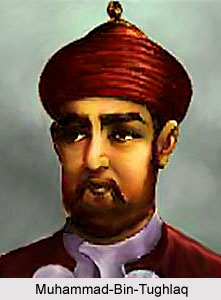
After the fall of Khilji Dynasty, Tughlaq Dynasty came into force under the rule of Ghiyas-ud-din Tughlaq who was followed again by a series of rulers. Muhammad Bin Tughlaq, son of Ghiyasuddin Tughlaq, during his reign expanded the Delhi Sultanate to its farthest limits. The Tughlaq Dynasty extended from Peshawar in north to Madurai in South and Sindh in west to Assam in the east.
Sayyid Dynasty (1414-51)
Khizr Khan was the founder of Sayyid Dynasty. Khizr Khan successfully suppressed the revolts of the provinces that had just started, for the declaration of their independence. Muhammad-Bin-Farid was the last ruler of this dynasty whose reign depicted aggressive revolts and confusions. Sayyid Dynasty came to an end with the death of Muhammad-bin-Farid.
Lodhi Dynasty (1451-1526)
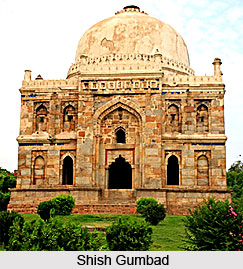
After Sayyid Dynasty, came Lodhi Dynasty in India. Behlol Lodhi, an Afgan, was the founder of this dynasty who was also in service during the rule of Khizr Khan. His son Sikandar Lodi was a capable and powerful ruler who restored the lost prestige of Sultan. Apart from maintaining amicable relationships with the neighbouring regions, he also brought Bihar and Gwalior under his rule. Trade and education had greatly flourished during this era. After Sikandar Lodhi, Ibrahim Lodi came to throne and the decline of this dynasty began with his worsening relations with the Afgan Nobles. The discontent among the Afgan Nobles resulted in the First Battle of Panipat in 1526. With the death of Ibrahim Lodhi in the battle, not only the Lodhi Dynasty, but the Delhi Sultanate also came to an end.
Mughal Dynasty
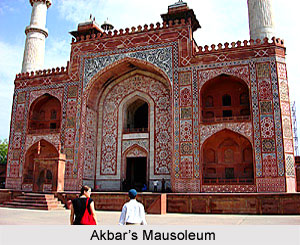
Mughal Dynasty emerged with the rule of Babur, the ruler of Kabul, who defeated Ibrahim Lodhi in the First Battle of Panipat. Being one of the most powerful empires of Indian history, Mughal ruled over India for a long period of time. A series of rulers came to the throne during Mughal Dynasty. Mughal Empire enriched the country with art and architecture and strongly influenced the culture and traditions of India. Mughal dynasty came to an end with the rise of Sikhs and the great Maratha power and also with the arrival of the British East India Company.
Medieval history of India is full of foreign invasions. Apart from Islamic culture, the medieval India also witnessed the rise of Sikh and Sufi cultures. The style of architecture in that period was an amalgamation of Hindu and Muslim styles.