


 Culture of Tinsukia District speaks about the lively and colorful traditions of the people residing in this district. The tribal communities dwelling in this district of Assamhave their indigenous cultures and heritages. Culture of Tinsukia District comprises several fairs and festivals that are celebrated with high enthusiasm and splendour. The traditional dresses, dance forms and music of the local people have their own charm. Shapawang Yawng Manau Poi, Bihu, Ali-Aye-Ligang, Tuluni and Saghi festival, etc. are some of the significant festivals observed in Tinsukia District. Culture of Tinsukia District speaks about the lively and colorful traditions of the people residing in this district. The tribal communities dwelling in this district of Assamhave their indigenous cultures and heritages. Culture of Tinsukia District comprises several fairs and festivals that are celebrated with high enthusiasm and splendour. The traditional dresses, dance forms and music of the local people have their own charm. Shapawang Yawng Manau Poi, Bihu, Ali-Aye-Ligang, Tuluni and Saghi festival, etc. are some of the significant festivals observed in Tinsukia District.
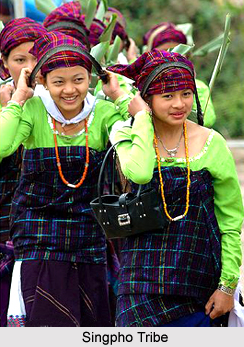
Shapawang Yawng Manau Poi is the most important folk dance festival of the Singpho Tribe. This festival is celebrated on the 14th of February every year. According to the customs of Singphos, they are the descendents of 'Shapawng Yawng'. Tingli Yawang, son of Shapwng Yawng, in order to get blessings of his father Shapawng Yawng and the creator of the world 'Mathum Matha' celebrated 'Manau Poi'. It was considered as a gesture of praising Gods. Later, the festival came to be known as "Shapawang Yawng Manau Poi" in the memory of their ancestor "Shapawng Tawng'. The celebrations of Shapawang Yawng Manau Poi begin by putting up 'Shadung' which is regarded as the symbol of this festival. It is followed by the performance of several dance forms to proclaim praise, unity and prosperity. At the end of the unity dance, 'Padeng Manau' the war winning dance, 'Shut Manau' the celebration dance and "Kumran Manau', the farewell dance are performed by the people. 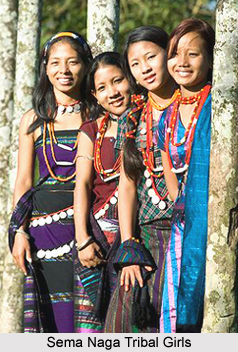 Tuluni festival is an important part of the culture of Tinsukia District. It is the most important festival of the Sema Naga tribe. Tuluni is celebrated on 8th of July every year. This festival is observed for healthy growth of the crop. On the main festive day, all the people of the village enjoy sumptuous meals.
Saghi is also one of the famous festivals of the Sema Naga tribes, like the Tuluni festival. Saghi signifies the abundant harvest of crops. It is generally celebrated in the month of August when the paddy seeds are ripe and farmers begin to reap the harvest. For the celebrations of Saghi festival, people start the preparations beforehand. The villagers would organize in groups and work in the fields to earn wages, so that they could celebrate the festival in a befitting manner. Community feast is also arranged on the occasion where animals are slaughtered for meat. After the feast is over people enjoy folk songs and dances. Another popular occasion observed by the people of Tinsukia District is Ali-Aye-Ligang. It is celebrated by the Mishing Tribe generally at the end of February. This festival is celebrated for welcoming the Lord Indra,rain God before starting cultivation. People sing, dance and makes merry with immense joy and enthusiasm. People also go for community fishing and hunting in the beginning. Bihu festival of Sadiya, a small town of this district, is quite different from the Bihu celebrations in other places of Assam. The celebration of Bohag Bihu gets underway only after the puja by the Deori-Chutiyas in Buraburi Temple generally on 1st Wednesday of Bohag month. Bihu Urua is a traditional way of bidding farewell to the grandeur Bihu celebrations. On last Thursday of the Bohag month people gathers at Kukurmora field and observe Bihu Urua with huge fervor. With burning of effigies the entire Bihu celebration comes to an end in Sadiya. Thus, it is true that diverse forms of cultures and traditions can be found in Tinsukia District. |
| |||



Home > Travel > States of India > Assam > Districts of Assam > Tinsukia District > Culture of Tinsukia District
Culture of Tinsukia District
| Culture of Tinsukia District gets reflected through the various festivals, dance forms, music and inherited traditions of the local people. Different tribal groups residing in Tinsukia District have different indigenous cultures and customs. |
| ||||||||||||||||||||||||||||

