Introduction
History of Kerala states that this state was the melting pot of many civilisations and cultures and hence contains a rich heritage. A very famous mythological legend is there which speaks of the land`s origin - the own country of the God. According to the legend, Parasurama, incarnation of Vishnu, took his position over a lofty cliff and asked the violent sea to move back by throwing his axe in the sea and accordingly the sea responded to the command and the land came out as the sea receded to form Kerala. As per the Archaeologists; the early inhabitants of the state included the food gatherers and hunters of Negrito tribe. After them, came the Austric people. These Austric people were then followed by people who came from the Mediterranean region and called the Dravidians. These Dravidian people moved away to the south but were able to leave a mark of their cultural impact on the Aryans who brought Jainism, Buddhism and Hinduism with them.
Ancient History of Kerala
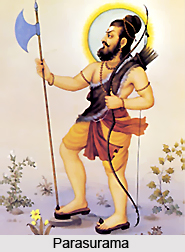 Ancient history of Kerala is not clear among the historians since very less is available in written form about it. Much of it is in the form of conjectures and myths and one among them is the Legend of Parasurama. Parasurama was a warrior-sage and considered to be the sixth avatar or incarnation of Lord Vishnu. After wiping out the Kshatriyas for twenty one times, he took the counsel of learned men and as per their advice, gifted the land he won in warfare, to the Brahmins in the form of a penance for his misdeeds and sat to do penance at Gokarnam. There he got a boon from Varuna and moved to Kanyakumari from where he threw his battle axe towards the north across the waters. Then the waters subsided to leave the land of Parasurama, which is known as Kerala today.
As the geologists pointed out the elevation of the land of Kerala from the sea as a result of seismic activity, either gradual or sudden, there is also another theory. The Kerala Rivers emptying waters into the Arabian Sea bring with them huge quantities of silt brought from the hills. The current of ocean draws sand towards ashore. The coastal areas could be formed by the accumulation of silt over a period of thousand years.
Apart from the legends, the first to arrive in the land of Kerala can be identified today only with regard to the burial practices followed by them. Even if there are no records, sensible assumption is that those people spoke an archaic form of Tamil and erected strange burial monuments of granite, pottery and literate, most of then are very much similar to that of the megalithic monuments of Asia and West Europe.
These burials are however much younger than those in rest of Asia. The historians have assumed a time bracket in between the tenth century BC and fifth century AD for these people. It is evident from the grave relics, which includes daggers and iron tridents that these megalithic builders had emerged out of the Stone Age to the Iron Age without moving through the Bronze Age. There is, however very minute evidence of the old and the new stone ages in the state of Kerala.
The Mauryan invaders, who reached the borders of Mysore in their southwards conquest, came across the megalith making tribes living in hill forts and safeguarding the surrounding countryside. Luckily, a complete corpus of Tamil literature of the ancient age, famous as Sangam literature among scholars, has been preserved. It is considered that at the time of Asoka, the southernmost tribes were just rising from their tribal status in the civilization. Links with more modern Mauryan world could have quickened the pace of social and political movement amidst the Cheras and the small chieftains of Kerala.
The ancient era of Kerala was known well in the commercial world. The teak available in the Ur ruins must certainly have been brought from the Malabar Coast, which suggests that trade flourished around three thousand BC. Cotton of this area was a favored one in Egypt; the Phoenicians traveled the Malabar Coast at the same time in order to trade in ivory, spices and sandalwood. It is believed that, King Solomon sent his commercial fleet to Ophir, somewhere in Southern Kerala. Muziris or Cranganore or Kodungalloor was famous as the ancient eras` well-known trading centre in the East due to the highly prized ownerships of ginger, cinnamon, pepper, cardamom and other spices. Trade prospered by ships, which were aided by monsoon winds from Africa to Arabia. From there the terrestrial caravan chose the prized particulars to the Mediterranean port markets.
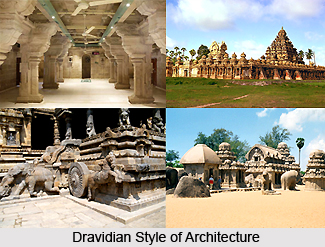
The historians believed that the earliest denizens of Kerala were the Pulayas, Vetas and Kuravas. The migratory population from north came much late, who repressed them and finally enslaved them. With the starting of the Christian era, there was a significant increase in the influence of the dynasty of Cheras across the Western Ghats and into the cultural and political life of ancient Kerala. The Chera kings and their conquests lead into the political history of ancient Kerala, a subject which belongs to the next doms, and the next stage in the ethnic history of Kerala is the Arrival of the Dravidians, generally regarded as the descendants of the dark Mediterranean people who once ruled all North India and who established the Indus Valley civilization, with its centers at Mohenjo Daro and Harappa, round about two thousand and five hundred B.C. A thousand years or more lately the Indo-Aryans, with their Vedic religion and their modernized military tactics based on the war chariot, reached riding over the Hindu Kush and destroyed the ancient cities of the Indus. By one thousand B.C. their dominion over the Punjab and the great plain of the Ganga River and the Yamuna River was complete. Those of the Dravidians who did not remain to become serfs to the conquerors retreated east into Bengal, where eventually they lost their language but retained their physical characteristics, or south beyond the Vindhya mountains into the part of India which forms the modern states of Andhra Pradesh, Mysore, Chennai and Kerala.
The fourth and fifth centuries saw the fall of the Roman empire of the west. A withering of sea trade of the Roman followed, resulted in the decline of the harbour towns including Muziris and Tyndis. Further, political penetrations from the north into Tamilakam occurred. The traditions of Nambudiri Brahmins of Kerala registered in the Keralolpatti chronicle relates to Mayurvarman, the Kadamba king, as their patron in the period after Parasurama. A Kadamba record belonging to the fifth century at the Edakkal cave in Wayanad possesses evidence of the presence of Kadamba in Kerala.
The last part of Sangam Age concurred with a silent revolution which was fermenting within the Keralite social system. In the eight century, about thirty two Brahmin settlements came up, which ultimately facilitated the cultural, social and political separation of the state of Kerala from the Tamil country.
In the Kaladi village of central Kerala, Shri Sankara was born who was an intellectual giant belonging to the ninth century. He rescued the orthodoxy of Hindus through the deductive reasoning of cults and who can be compared with St. Thomas of Acquinas with regard to his understanding and the clarity of thought. He belonged to the post Sangam era, the new settlements of Aryans in Kerala, who were very much removed from the cradle - the land of Indo-Gangetic civilization.
Entire Kerala got covered by a web of temple centered Brahmin colonies. The settlements possessed extended land, numerous tenants and entailing privileges under their control. With sophisticated techniques of cultivation, a strong sense of solidarity and socio-political organization, the Brahmins slowly became the elite group in the society. They then raised a feudal fighting class and gave orders to the caste system having several graduations of intermediate, upper and lower classes. Gradually, the integration of these colonies and the institutions of their ascendancy slowly resulted in the evolution of a new Malayae language and culture, the distinct Keralite identity was in the making.
The ninth century brought a new epoch in the history of Kerala. Pandyas captured Vanchi, the ancient capital. The crushed rulers established a new capital close to the old harbour city of Muciri or Muziri, now called Kodungalloor. The name of the new capital became Makotai or Mahodayapura and was constructed at Tiruvanchikulam around the great Siva temple. Today, there is no evidence of the palace at Makotai. The one who wrote Kokasandesa found the palace in ruins in the sixteenth century.
The starting phase of the twelfth century marked a patch of troubled times for Kerala. The attack by the joint forces of the Pandyas and the Cholas and various internal conflicts in the Chera dynasty forced the Perumal, Rama Kulasekhara to abandon the country along with some Arab Muslims. There is a belief that the king converted to Islam and died at Sapher in Arabia. This event is referred as the partition of the state of Kerala.
With no central power to control, the divided Chera kingdom gradually became principalities under different chieftains. The event was crucial since it shaped the destiny of the state for many centuries. In this period, Kerala became a group of agricultural villages. Society possessed a feudal complexion having a graded hierarchy, hereditary occupations and well organized responsibilities and duties for each and every class of people.  Land proprietorship was intimately related to administration and political power.
A specialty of the Kerala social system exposed in the literary records and epigraphic of this age is the inheritance of matrilineal form. Despite the largely agrarian nature of society, trade and commerce prospered. The Western Ghats` hill products were transported by many rivers to the natural harbours on the Arabian Sea, which secured a booming market in Europe and West Asia. A number of Christian and Jewish traders utilized this situation by getting assistance from the monsoon winds. The native chieftains neglected the difference in race and faith and provided them social equality and religious tolerance. However, these merchants were not in a mood to or able to disturb the established order. Even, the Jewish leaders and Syrian Christians like Joseph Rabban and Mar Sapir Iso came to help the Chera kings during wars and thus was able to earn their full gratitude.
Medieval History of Kerala
Medieval history of Kerala was shaped with the decline of the Chera dynasty and the rise of several independent states, including Kozhikode, Kolathunadu and Venad Kochi. In the medieval age, (16th century onwards) Calicut came out as a prominent sea port and attracted British, Dutch and Portuguese traders to found their posts here. However, the first to have control over the trade of spice in Kerala were the Arabians. The fight between Cochin and Calicut helped the Dutch to form their trade settlements in Kerala and they lastly forced out the Roman Catholic Portuguese from the land. However, the Dutch were unable to continue in the state ahead of the 18th century due to the dispute within the Mysore rulers. Then the British arrived, who proved to be very much successful and cemented the colonial rule in India. Tipu Sultan had some disputes with the British, and four Anglo-Mysore wars took place across southern India in the later parts of the 18th century. The British ceased their treaties of auxiliary alliance with the rulers of Cochin in 1791 and with the Travancore rulers in 1795, and therefore the two states became the princely states of British India, preserving local autonomy and in return used to give a fixed annual tribute to the British Raj. South Kanara district and Malabar district became the parts of the Madras Presidency of British India.
Modern History of Kerala
Modern history of Kerala kicks off with the evolutionary phase from a spread out situation of medieval politics to a more centralized and powerful monarchical rule. The coming up of a substantial monarchical power which held immense wealth and power of the landlords and foiled the attempts of foreign domination which became the turning point in the modern history of Kerala. One of the kingdoms was Travancore which laid the founding stones of a firm centralised administration by severe punishments and good administration. After the independence of India in the year 1947, the princely states of Kochi and Travancore were incorporated to constitute the province of Travancore-Cochin on 1st July, 1949. The Madras Presidency became the Madras State of India.
The modern history of Kerala incorporates the prelude to India`s independence, the path to Communism and the development of the modern state of Kerala in India. The state of Kerala was constituted by three political units; the kingdom of Travancore, which was formed in the eighteenth century, the princely state of Cochin, which is linked with the middle ages and the district of Malabar, which served as the former Kingdom of the Zamorin of Kolikod (Calicut). Among the modern line of traders - the Dutch, French, Portuguese and the English - it was the English traders which presided over the fate of Kerala from the year 1791, and it continued till the end of the rule of the British in India in the year 1947. In the first eighty years of the rule of the British, things changed very little. The matrilineal joint family structure and the orthodox caste system went on in the three units which were to become the state of Kerala. Towards the last parts of the eighteenth century, coffee and tea plantations developed. There was an industrial revolution which began in the 1850s. Modern education system was founded. The inflow of missionaries bestowed western education in the state. Several democratic institutions were founded in the year 1888.
The last decades of the 19th century saw the emergence of nationalism in India. The Indian National Congress was established in 1885 and it soon became the spearhead of the Indian Nationalist Movement. These developments did not go unnoticed in Kerala. A conference was held at Kozhikode in 1904 under the auspices of the Congress and in 1908, a district congress committee was formed in Malabar. Beyond this, there was no political activity worth the name in Malabar. Several political activities escalated in the 1920s when the Indian National Congress led to the national independence movement. The period marked the gathering of momentum of the communist movement especially in Malabar. In the wake of the Civil Disobedience Movement, a parallel movement for responsible Government had begun in Travancore and Kochi. The second phase of civil disobedience movement, started by Mahatma Gandhi with his famous Salt March in March 1930, found enthusiastic response from all parts of Kerala. In several places, particularly at Payyannur and Kozhikode, salt laws were broken and hundreds of agitators courted arrest.
The end of the Quit India Movement saw Malabar returning to elections and a constitutional government. Administratively Malabar was a district of Madras Province at the time of independence. The movement for a united Kerala gathered momentum with the attainment of independence. The first concrete step in this direction was taken on 1st of July, 1949. Following the national policy of integration, the state of Kochi and Travancore were merged into Travancore-Kochi State under a Rajpramukh. The next step came with the reorganisation of States on a linguistic basis in the light of the report of the States Reorganization Commission. Kerala was formed on 1st of November, 1956 when the district of Malabar of Madras Presidency, Kasargod taluk of the district of South Kanara and Tranvancore-Cochin were united to constitute the new state of Kerala and Kanyakumari from Travancore was merged with the state of Tamil Nadu as per the recommendations of the State Reorganisation Commission which was established by the Government of India.