


 Medieval history of Kerala was shaped with the decline of the Chera Empire and the rise of a number of independent states, including Kozhikode, Venad, Kochi and Kolathunad empires. In the medieval age, (sixteenth century onwards) Calicut came out as a prominent sea port and attracted Dutch, Portuguese and British traders to set up their posts here. However, the Arabians were the first to have control over the trade of spice in Kerala. It was the explorer, Vasco da Gama who reached Kerala in the year 1498 to interrupt the determination of the control of the Arabs over the spice trade in the state of Kerala and founded in Cochin, the first Portuguese fortress by availing the advantage of the differences between the royal families of Cochin and Calicut. The fight between Cochin and Calicut facilitated the Dutch to set up their settlements for trade in Kerala and they ultimately kicked out from the land, the Roman Catholic Portuguese. Medieval history of Kerala was shaped with the decline of the Chera Empire and the rise of a number of independent states, including Kozhikode, Venad, Kochi and Kolathunad empires. In the medieval age, (sixteenth century onwards) Calicut came out as a prominent sea port and attracted Dutch, Portuguese and British traders to set up their posts here. However, the Arabians were the first to have control over the trade of spice in Kerala. It was the explorer, Vasco da Gama who reached Kerala in the year 1498 to interrupt the determination of the control of the Arabs over the spice trade in the state of Kerala and founded in Cochin, the first Portuguese fortress by availing the advantage of the differences between the royal families of Cochin and Calicut. The fight between Cochin and Calicut facilitated the Dutch to set up their settlements for trade in Kerala and they ultimately kicked out from the land, the Roman Catholic Portuguese.
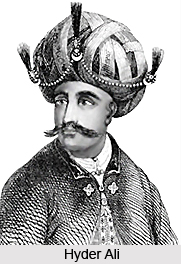
The Dutch were however not able to carry on in the state beyond the eighteenth century because of the fight in between the Mysore rulers. After them, came the British, who were the most successful ones and established their colonial power in India. Hyder Ali's successor, Tipu Sultan, had some difference with the British, and four Anglo-Mysore wars took place across southern India during the later half of the eighteenth century. Tipu Sultan gave up the district of Malabar to the British in the year 1792, and South Kannara, which includes today's district of Kasargod, in the year 1799. 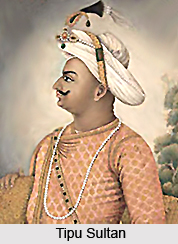 The British terminated their treaties of auxiliary alliance with the Cochin rulers in the year 1791 and with the rulers of Travancore in the year 1795, and thus these two states became British India's princely states, upholding local autonomy and in return used to give a fixed tribute annual to the British Raj. South Kannara and Malabar districts became the parts of the Madras Presidency of British India.
The springing up of the freedom struggle of India was also witnessed in the state of Kerala in the medieval period. The Satyagraha and Non Co-operation movements were helpful in about all the parts of the South Indian state. A number of mass protests were held in various parts of the state to get rid of several social evils including caste feelings and untouchability. After the independence of India in the year 1947, the south Indian state of Kerala was formed on the 1st November, 1956 when the district of Malabar was mixed with Tranvancore-Cochin state and Kasargod taluk of the district of South Kanara to create the Kerala state, established on the recommendations of the State Reorganization Commission established by the Government of India. In the medieval period, the settlements in Kerala depended on agricultural production. Apart from the agricultural labourers, there were blacksmiths who used to make metal tools, carpenters, masons, etc. Some of the people like astrologers were also present at that time, which used to fix the suitable period for a list of new ventures, apothecaries and men who executed the rituals linked with the household and agricultural activities and this formed the primary unit of a society. Another major feature of the medieval society of Kerala was that the area of settlement used to possess a temple complex where the Brahmin caste used to enjoy a prominent status. They rely chiefly on agricultural production. In the primary units, people were there who helped the priests as well. In the cores of royal power and in the hearts of trade the traders and the royal servants constituted part of the primary unit of society. Different professional classes afterwards evolved into castes. Along with the change in the society, there were significant changes in the entire set up of the castes also. Until the medieval era, such castes as Ezhava and Nayar had no concrete differentiation. With the increase in number of the Naduvazhis and with the increasing importance of militarism, a prominent section of the soldiers became Nayars. Several professional groups including Kammalas, Ambalavasis, etc became Nayars as they joined the troops. |
| |||



Medieval History of Kerala
| Medieval History of Kerala begins approximately from the sixteenth century and the medieval period ends with the formation of a separate state of Kerala under the Indian Republic in 1st November 1956. |
| ||||||||||||||||||||||||||||

