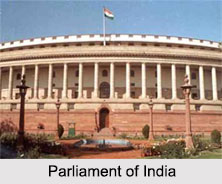
 Indian Union Executive is known to be a body, which is responsible for the implementation of laws. It is important to note that all the executive powers have to be exercised in accordance with the Constitution of India. Parliamentary form of government exists both at the Union and State levels in India. At the head of the Union is the President. He is the chief executive. It has been stated in Article 53 (1) of the Constitution of India that "The executive power of the Union shall be vested in the President and shall be exercised by him directly or through officers subordinate to him in accordance with the constitution." This implies that the President is the head of the Government. Article 74 (1) states that "There shall be a Council of Ministers with the Prime Minister at the head to aid and advise the President in the exercise of his functions." Thus, there is a Union Council of Ministers to aid and advice the President. Indian Union Executive consists of the President, the Vice-President and the Council of Ministers, with the Prime Minister as the head to aid and advice the President. It is important to note that the President is known to be the nominal executive, and the Prime Minister is the real executive.
President of India
Executive power of the Union is vested in the President and is exercised by him either directly or through officers subordinates to him, in accordance with the Constitution of India. The President is also the supreme commander of defense forces of the Indian Union. The President summons, prorogues, addresses and sends messages to the Parliament, dissolves the Lok Sabha, promulgates Ordinances at any time (except when both the Houses of Parliament are in session), makes recommendations for introducing financial and money bills and gives assent to bills, grants pardons, reprieves or reduces punishment and remits or commutes sentences in certain cases.
Vice President of India
Vice President of India ranks second in terms of executive authority. He is also elected both by the members of the Lok Sabha and Rajya Sabha. The system of election that is followed in the election of Vice President is that of proportional representation through the means of a single transferable vote. He is also elected for a term of 5 years. Vice-President of India also serves as the Chairman of the Rajya Sabha. In the absence of the President, it is the duty of the Vice President to carry out his functions. Acting as the ambassador of the country is also one of the functions of the Vice President of India.
Council of Ministers
Council of Ministers forms an important organ of the Indian Union Executive. The Council of Ministers is headed by the Prime Minister. It is the prime duty of the Council of Ministers to advise the President in exercise of his functions. The Prime Minister is appointed by the President, who also appoints other ministers on the advice of the Prime Minister. The Council is collectively liable to the Lok Sabha. It is the duty of the Prime Minister to communicate to the President all decisions of the Council of Ministers relating to administrative affairs of the Union, proposals for legislation and information relating to them. The Council of Ministers comprises Ministers who are members of Cabinet, Ministers of State (independent charge) and Deputy Ministers.