


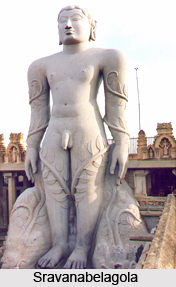
 Hassan district is a picturesque place located in the heart of Malnad. It is situated in the state of Karnataka, about 180 Kms from Bengaluru, the capital city. Blessed with a pleasant climate, the district is well known for the legendary Hoysala dynasty, which brought world wide acclaim to the district through their unique style of temple architecture. The temples at Belur, Halebid and Shravanabelagola are the most famous tourist attractions of the place which are visited by thousands of people. It is surrounded by 6 districts, namely Chikmagalur district, Mangalore, Madikeri, Mysore, Mandya and Tumkur district.
Hassan district lies between 12 degrees 13 minutes and 13 degrees 33 minutes North latitude and 75 degrees 33 minutes and 76 degrees 38 minutes East longitude. It has a total area of 6826.15 Sq. Kms. The greatest length of the district from North to South is about 129 Kms, and its greatest breadth from East to west is about 116 Kms. History of Hassan District Hassan District was a part of the Maurya Empire in the 3rd century BC. It later came under the reign of the Kadamba dynasty, the Chalukya dynasty, Ganga dynasty, Hoysala dynasty and was also part of the Vijaynagar Empire. The Hoysalas brought world wide acclaim to the district through their unique style of temple architecture. 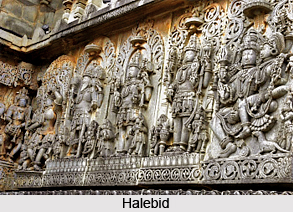 Geography of Hassan District
The total geographical area of the district is 6845 Sq. Kilometres. By considering the physical aspects, climate, rainfall, etc. the district may be divided into three regions, viz., (1) Southern Malnad, (2) Semi-Malnad and (3) southern Malnad. Hassan district lies partly in the Malnad tract and partly in the Southern maidan tract. Western and north-eastern portions of the Belur taluk, western and central parts of Alur taluk and the whole of Sakaleshapura taluk constitute the "southern malnad" region, the central parts of the Arkalgud taluk, the western portion of the Hassan taluk, the eastern portion of the Alur taluk, the central and eastern parts of the Belur taluk and the western parts of the Arasikere taluk form the "semi-malnad" region. The southern maidan region includes the whole of the Holenarasipura and Channarayapatna taluks, eastern parts of the Arasikere and Hassan taluks and the south-eastern portions of the Arkalgud taluk. The southern malnad is a forest-clad hilly region with a heavy rainfall. The district is mainly an agricultural district, and the major agricultural crops grown here are coffee, black pepper, potato, paddy and sugarcane. Demography of Hassan District According to the Population Census in the year 2011, Hassan District had population of 1,776,221 of which male and female were 885,807 and 890,414 respectively. The population of Hassan District constituted 2.91 percent of total population of Karnataka. The average literacy rate of Hassan in 2011 was 75.89 compared to 68.63 of 2001. If things are looked out at gender wise, male and female literacy were 83.55 and 68.30 respectively. For 2001 census, same figures stood at 78.37 and 59.00 in Hassan District. The total literates in Hassan District were 1,229,941 of which male and female were 673,922 and 556,019 respectively. In 2001, Hassan District had 1,044,584 in its district. Tourism in Hassan District The mere mention of Hassan resonates with the names of Belur-Halebeed and Sravanabelagola. The temples at Belur and Halebeed are a mute testimony to the highest peak of Sculpting skills that man has ever achieved. Hassan district is a well known district in Karnataka state. It is famous for the legacy of Hoysala architecture found here and is a must visit when on a trip to Karnataka. |
| |||



Home > Travel > States of India > Karnataka - Indian State > Districts of Karnataka > Hassan District
Hassan District
| Hassan district is well known for the magnificent Hoysala architecture found here; it is located in the heart of Malnad in Karnataka state. |
| ||||||||||||||||||||||||||||

