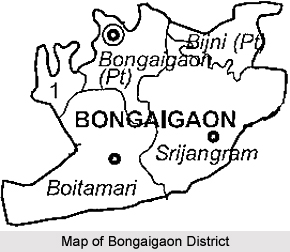
 Bongaigaon District is the administrative district of Assam. The headquarters of this district is located at Bongaigaon. Bongaigaon district occupies an area of 2510 sq. km. The main languages spoken in Bongaigaon district are Assamese language, Bengali language, Hindi language and Bodo language.The administration of Bongaigaon District has been framed after the formation of this district. The district`s administrative set up comprises various departments like Revenue Administration, Law and Order, Planning and Development and Local Administration.
History of Bongaigaon District
Bongaigaon district was formed in the year 1989 by curving out parts of the former Goalpara and Kokrajhar districts. The district headquarters located at Bongaigaon. This place was selected for better administration. It has three subdivisions; Bongaigaon, Bijni and North Salmara. The main reason behind the decision was essentially the political and administrative demands from the people. The people of Bongaigaon and the adjoining areas were demanding the creation of a new Sub-Division.
Geography of Bongaigaon District
 Bongaigaon district occupies an area of 2510 sq. km. This district of the North Eastern Himalayan sub-region of the country is located at a longitude of 89 degrees east to 90 degrees 96 minutes east and latitude range of 26 degrees 28 minutes north to 26 degrees 54 minutes north. Bongaigaon district is surrounded by Barpeta District in the east, by Brahmaputra River in the south and by Kokrajhar in north and west corner.
Demography of Bongaigaon District
According to the Population Census in 2011, Bongaigaon had population of 732,639 of which male and female were 373,590 and 359,049 respectively. Bongaigaon District population constituted 2.35 percent of total population of Assam. The average literacy rate of Bongaigaon in 2011 was 70.44 percent. The male and female literacy rate were 75.48 percent and 65.18 percent respectively. The total literates in Bongaigaon District were 435,922 of which male and female were 238,308 and 197,614 respectively.
Culture of Bongaigaon District
Culture of this district is generally traced from the region`s deep historical backdrop. This region was once ruled by the Kings or Feudal Lords and they hailed from the Koch-Rajbonshies, who belonged to the Indo-Mongoloid ethnic block of people. Thus, their culture bears a hint of the past. It is a common fact that every region has its own peculiarities and particularities and all these lead to the inherent identity. Some of the striking factors of Bongaigaon district like its Hilly Caves and architecturally relevant stone carvings clearly demonstrate the continuation of Buddhist culture in the region. Moreover, worshipping of gods and goddess is a common tradition of the people residing here. People of this region have their common beliefs and customs.
Tourism in Bongaigaon District
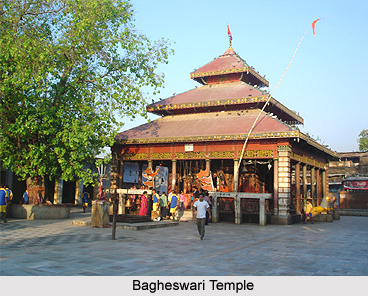
Tourism in this district of Assam generally consists of exploring of a number of historical as well as sightseeing options. This place attracts the travelers from different parts of the world through its charm and magnificence. Tourism in this district particularly means a pleasurable experience. In Bongaigaon district, there are a number of places of interest and some of them are Bagheswari Temple, Kakaijana Proposed Wildlife Sanctuary, Lalmati-Duramari Ganesh Temple, Rock Cut Caves, etc.
Bongaigaon District of Assam also has proper educational system. There are many schools and colleges here. The people here are mainly engaged in agricultural and other small scale cottage industries.