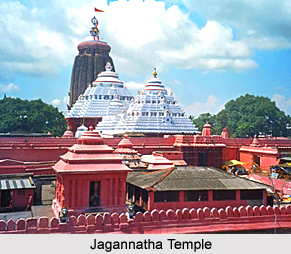
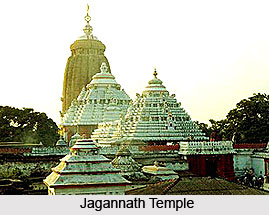
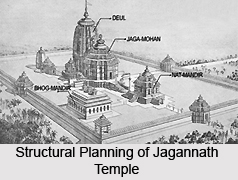
 Jagannath Temple of Puri was built during the classical period. The architecture of the temple follows a classical structure like many other temples in Orissa. Structurally the temple consists of four chambers. The four chambers are Bhogmandir, Natmandir, Jagmohana and finally the innermost sanctorum of the temple in which the prime deity of the temple is placed. The temple compound is surrounded by a wall, on each side of which is a gopura or gate, over which rises a pyramid-shaped roof. The main shikhara or tower of the temple rises above the inner sanctorium in which the deity of the lord resides. The other shikharas of the temple raises above the ante halls.
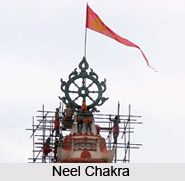
The temple is built on an elevated ground and is enclosed by two rectangular walls. The outer wall is called the Meghanada Prachira and the inner enclosure is known by the name of Kurmabedha. The top of the temple has a wheel made of an alloy of eight metals or asta-dhatu. The wheel is called the Nila Chakra or the Blue Wheel. It is a custom in the temple that everyday a different flag is tied to the mast which is attached to the Nila Chakra. The temple has four gates namely the eastern Singhadwara or the Lion Gate, the southern Ashwadwara or the Horse Gate, the western Vyaghradwara or the Tiger Gate and finally the northern Hastidwara or the Elephant Gate. Each of these animals is carved on the entrance of each of this gate. Besides the temple of Jagannath there are other smaller temples in the area which add to the aura of the place.
The Jagannath Temple of Puri has two scenes of Nataraja dancing on a bull on the outer walls of Bhogamandap.
 Carved in granite the scenes present the sandhya Tandava of Lord Shiva. As described in the Katha Sarit Sagara and other classics. Considerably large, an image of dancing Lord Ganesha is also seen on the right side of the audience hall of the Vimala Temple. The image has been carved in black granite. On the left side of Bhoga Mandapa there is a beautiful scene of dance where the king is seated on a cushion and in front of him a female dancer is giving an acrobatic stance to her dance.
Along with the innumerable Nayikas in various dancing attitudes, the images of Lord Krishna are met with profuse illustrations in different modes of dancing. The Lord is seen dancing on Kaliya serpent, with a drum, with a flute and with a cymbal etc.
All these dance figures which have been sculpted on the walls of Jagannath Temple bear eloquent testimony of a particular school of dancing that had developed throughout the centuries. In fact from the presence of Nataraja images it can be deciphered that Vaishnavism had accepted the Shaiva art tradition and there was a synthesis of both the traditions in the various art forms of Orissa.
Finally it can be concluded saying that the architecture of the Jagannath Temple is a wonder of art till date and is a witness to the fact that the art and architecture of Orissa was largely developed from very early times.