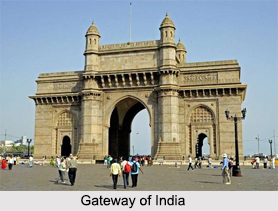
 Mumbai, in the state of Maharashtra that holds a history of magnificent and ancient monuments that includes the Gateway of India, Chatrapati Shivaji Terminus, Ellora Caves and so on. The monuments present here are famous worldwide. Different kinds of architecture and art can be spotted in the monuments of Mumbai as it witnessed different dynasties of various eras. The Gateway of India happens to be the most popular monument of Maharashtra. It is also known as the starting point for tourists who visit Mumbai.
Maharasthra holds a greater significance of the historic monuments mostly since the era of British rule and Maratha Emperors. As Emperor Shivaji stands as a synonym of Maharashtra history, many forts are associated with him. Some are built by him and some are conquered in battle. There are also places in Mumbai that are associated with the struggle of independence which are remarkable.
Siddhivinayak Temple
The Siddhivinayak Temple is a hindu temple of Lord Ganesha. It is situated at Prabhadevi in Mumbai. It is one of the richest Indian temple. The temple has evolved from a tiny place of worship to this grand what it is at present. The temple has one small mandap with the shrine of Lord Ganesha also known as Siddhi Vinayak. The doors of the sanctum are made of wood and carved with images of the eight manifestations of Lord Ganesha also known as Ashtavinayaka. Inner roof of the sanctum has been plated with gold and the statue of Lord Ganesha is at the center. In the periphery, there is also a Hanuman Temple.
Gateway of India
The Gateway of India is the most famous monument of Mumbai. It is situated on the waterfront in Apollo Bunder area in South Mumbai. It is a major destination for tourists and happens to be a popular gathering spot for street vendors, photographers and locals. The Taj Hotel is situated just opposite to the monument.
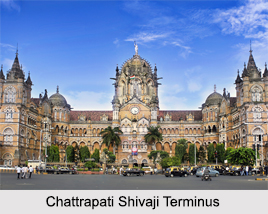 Chhatrapati Shivaji Terminus
The Chhatrapati Shivaji Terminus is a historic destination that has received recognition of the UNESCO heritage site. It is one of the busiest railway stations of India. It is also one of the 32nd Indian world heritage sites and most famous historical monuments of the country.
Taj Mahal Palace
The Taj-Mahal Palace hotel happens to a historic five-star luxury hotel. It was built during the Saracenic Revival style and located in the Colaba region of Mumbai. It is known as “The Taj†historically. The hotel is made up of two buildings. One is called the Taj Mahal Palace and the other is called the Taj Tower. The hotel has 560 rooms and 44 suites. It employs near about 1600 staff. Many guests and presidents have stayed here that makes the hotel historically distinguishable.
Rajabai Clock Tower
The Rajabai Clock Tower is located in South Mumbai. It is inside the confines of Fort campus of University of Mumbai. The height of the tower is 85 m. it is part of the Victorian and Art Deco Ensemble of Mumbai that got added to the list of world heritage site in the year 2018.
Mumbai High Court
The Mumbai High Court happens to be one of the oldest courts in India. The jurisdiction of Mumbai high court covers states of Goa, Maharashtra and the union territories of Dadra, Nagar Haveli and Daman and Diu.
Haji Ali Dargah
The Haji Ali Dargah is a mosque and tomb of the Pir Haji Ali Shah Bukhari situated on an islet off the Worli coast in southern part of Mumbai. The dargah is one of the most recognizable landmarks of Mumbai. It is an exquisite example of the Indo-Islamic Architecture which is associated with the legends of doom lovers. The dargah has tomb of Haji Ali Shah Bukhari.
Mount Mary Church
The Mount Mary Church, also known as the Basilica of Our Lady of the Mount happens to be a Roman Catholic Basillica situated at Bandra in Mumbai. The feast of Blessed Virgin Mary is celebrated on the first Sunday after 8th September which is the birthday of Virgin Mary. The feast is continued with a week-long celebration known as the Bandra Fair.
Asiatic Society Library
The Asiatic Society of Mumbai happens to be learned society which deals with the Asian studies. It was founded by Sir James Mackintosh with an intention of promoting knowledge that is useful.
Global Vipassana Pagoda
The Global Vipassana Pagoda happens to be a Meditation Dome Hall. It has the capacity to fit around 8000 meditators. It was inaugurated by Pratibha Patel, the then President. It is created on a donated land over a peninsula amongst the Arabian Sea and Gorai creek. The Pagoda is built with a purpose to serve harmony and peace.
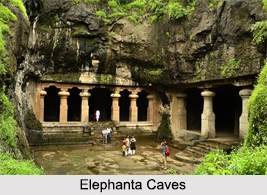 Elephanta caves
The Elephant Caves is another UNESCO world heritage site in Mumbai. It is a collection of Cave temples dedicated to Lord Shiva. They are located on the Elephant Island in Mumbai Harbour. It consists of few Buddhist stupas, five hindu caves and two Buddhist caves with water tanks.