


 Karbi language is an Indian tribal language, which is principally spoken by the people of Karbi community residing in the state of Assam. Karbi language belongs to the Tibeto-Burman language family. This language is also popularly known as Mikir language or Arleng. Karbi language is an Indian tribal language, which is principally spoken by the people of Karbi community residing in the state of Assam. Karbi language belongs to the Tibeto-Burman language family. This language is also popularly known as Mikir language or Arleng.
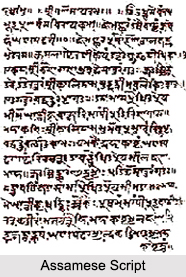
Classification of Karbi Language Some recent classifications have put this language of the Tibeto Burman set of languages into a different Mikir group that is further sub divided into Karbi and Amri. Moreover, Tibeto-Burmanists like Shafer (1974) and Bradley (1997) have categorized it as unusually 'Kukish'. In Karbi language there is a little dialect diversity, however, the case is different for Amri dialect as it is separate enough and is considered as a distinct Karbi language. History of Karbi Language Just like most of the other languages of the tribal communities of hill regions of North Eastern Indian states, Karbi language does not have its own script. Karbi language is usually written by using the Roman alphabet and it is occasionally written in Assamese script. Christian missionaries, especially the Catholic Church and the American Baptist Mission produced some of the earliest written texts in this language. These Christian missionaries also brought out a newspaper in Karbi language that was titled Birta in the year 1903. The oral tradition of the Karbis is very rich. Like for instance, the Mosera (meaning 'recalling the past'), which is a lengthy folk narrative describes the origin and movement ordeal of the people of Karbi community. Diversity of Karbi Language The Karbi language exhibits minimal dialect diversity, with the exception of the Dumurali/ Kamrup Karbi dialect, which possesses distinct characteristics warranting its classification as a separate language within the Karbi linguistic spectrum. The Karbi language primarily manifests in two variations. One is the Hills Karbi which is predominantly represented by the Rongkhang or Ronghang dialect. This variation is spoken in the Karbi Anglong district of Assam, specifically in the western region. Another variation is the Plains Karbi or Dumra Karbi which is predominantly spoken in the Kamrup and Morigaon districts of Assam, as well as in the Ri-Bhoi district of Meghalaya. Influence of Karbi Language There are several other examples of the rich oral tradition of the people of Karbi community. For example, the Sabin Alun is another traditional narrative that relates the legend of Prince Rama (Ram in Karbi), Princess Sita (Sinta Kungri) and Lakshmana (Lokhon or Khon) in the conventional Karbi and rural setting where it is described that Sinta Kungri is proficient in weaving clothes and also helps her father Bamonpo (Janaka) in the Jhum fields. Due to these reasons, Sabin Alun is not an extensively accepted tradition. It also seems to be of current origin. In fact, many of the people of Karbi community themselves argue that Sabin Alun is possibly an alteration from the Ramayana. It was composed when few Karbi people were transformed into Hinduism. The Karbi language is spoken across several regions in Northeast India. In Assam, it is spoken in various districts including Darrang, Dima Hasao, East Kamrup, Hojai, Kamrup Metropolitan, Karbi Anglong, Lakhimpur, Marigaon, Nagaon, Sonitpur, Biswanath, Lakhimpur, South Kamrup, and West Karbi Anglong. Additionally, in Arunachal Pradesh, it is spoken in the Papum Pare district, particularly in the Balijan circle. In Meghalaya, the language is prevalent in the East Khasi Hills, Jaintia Hills, Ri-Bhoi, and West Khasi Hills districts. In Nagaland, Karbi is spoken in the foothills surrounding Dimapur. |
| |||



Karbi language
| Karbi language is one of the popular languages of India and it belongs to the Tibeto Burman language family. This language is mostly spoken in the state of Assam by the people of Karbi community. |
| ||||||||||||||||||||||||||||

