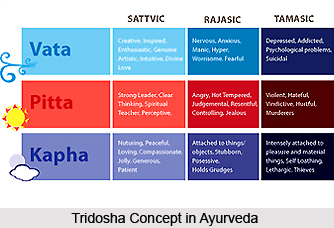
 Administration of vamana usually takes place early in the morning, the time when jala bhuta dominates the external environment and kapha dosha dominates the body`s internal environment. Normally, the doshic activities cause maximum watery and mucous secretions for accumulating in the kapha zone. Ayurveda states that this is the perfect time for bringing kaphic toxins out of the dhatus and into the hollow spaces of the stomach. Early morning is the best time, at this time when the greatest amount of kaphic aama is available for elimination offering the optimum time for the vamana process.
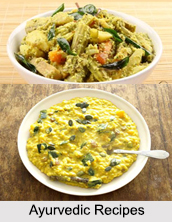
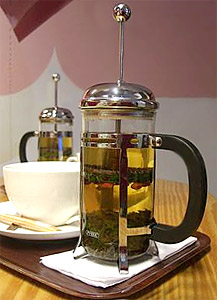
Vamana therapy is administered by giving the patient a sweet tasting porridge. This is given as it promotes watery secretions in the body and helps in reducing the anxiety of the patient. After that the patient is given an emesis stimulating herb that contains a strong influence of vayu bhuta and agni. Such types of herbs have astringent that helps in drawing moisture and impurities into the stomach from the surrounding tissues. In order to assure the emesis is as effortless and comfortable as possible the patient also receives a large quantity of warm licorice tea that is prepared as a cold infusion one night before. This particular herb also helps in stimulating secretions without being absorbed into the tissues. It moves through the body, collecting substances that do not belong to the dhatus and then it is exerted. Sugarcane juice or a saline solution is given as an alternative if the patient is averse to licorice.
During the therapy, the patient is asked to drink as much licorice tea as possible in order to fill the stomach completely. It helps in liquefying the contents that enhances the removal process. Just within a few minutes, the patient feels hot and feels the urge to vomit. Salivary secretions fill his mouth and he spontaneously begins vomiting. The patient is constantly encouraged to allow his stomach to empty without resisting. Within an hour, the entire procedure gets completed. The substances that are used to induce vomiting work for more thirty minutes and eventually their effect subsides. The patient should continue vomiting until there is a bitter or burning taste in the mouth. It shows that the stomach is completely empty and the contents of the small intestine are now being removed. At this stage, the urge to vomit stops automatically. The patient is told that it is not exceptional to have two or three loose bowel movements during the next 12 hours.
After the therapy is over and when the vomiting stops, the patient is advised to take rest and avoid any type of stress and physical activities. He should not even eat for the next four to five years. Vamana temporarily exhausts the digestive agni and for this reason the patient is advised to take food that are easily digestible.
Vamana is considered as an effective therapy if administered properly in the body. Thus, this natural therapy when administered properly helps in eliminating kapha related impurities from the body.