 Hernia is the protrusion of any internal organ through an abnormal or weak opening of the peritoneum covering. For instance, due to weak abdominal wall the intestinal part protrudes. It is found in both men and women. A person suffering from hernia generally complaints of pain and heaviness in the abdominal area. The patient is unable to stand, sit, walk or sleep comfortably when the hernia gets obstructed and becomes restless when projectile vomiting starts. To treat hernia, yoga can be quite useful. Hernia can be of different types including, Inguinal hernia. It is very common in men than women. About 70% of the hernia patients are suffering from inguinal hernia. It occurs when a part of abdominal viscera pushes into inguinal canal. Inguinal hernia usually results from non-closure of the peritoneal fold entering into scrotum. Secondly, Femoral Hernia is found in 17 % of the patients of hernia. It usually occurs in women.
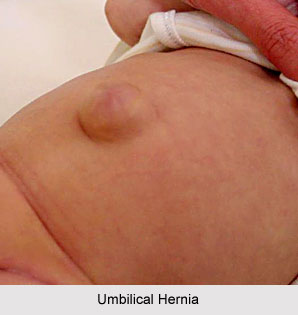
Besides these, another type of hernia is the Umbilical hernia. In this kind of hernia the hernial sac bulges out at the umbilicus (navel) where abdominal muscles are weak. It occurs at birth, infancy, in obese and middle aged people having weak abdominal muscles. Umbilical hernia can be further divided into Reducible Hernia where the protruded sac can be pushed back inside the abdomen, it reduces itself when the person lies down, but re-emerges on standing; and Irreducible Hernia. It is a dangerous, life-threatening situation and needs surgical treatment. This occurs when protruded abdominal contents cannot be pushed back into its normal position. Obstructed loops of intestine may lead to gangrene and if the surgical intervention is not performed in time may lead to death of the individual.
Congenital absence of the anterior abdominal wall leads to protrusion of all abdominal contents, which is known as exomphalus major. This usually ends fatally. It may occur due to sudden jerky movements while lifting the heavy weight from the ground. Increased intra abdominal pressure resulting from long lasting cough, straining during defecation or passing urine also contributes to hernia specially when prostate enlargement is present. Constipation, flabbiness, lack of exercise and sedentary life style are also some of the causes.
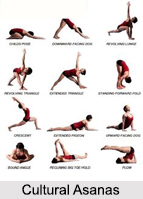
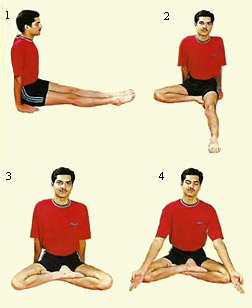
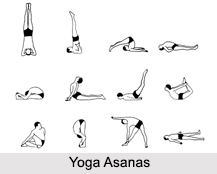
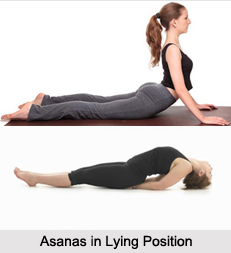
Commonly hernia is dealt with the surgery or mechanical support with belt. The treatment of hernia usually depends on the nature and severity of the disease. Yoga Asanas are of some help before the weakness of the abdominal wall becomes marked. Abdominal problems, like, constipation, obstruction in passing urine and chronic cough are to be dealt with before surgical treatment of hernia is carried out. Yogic poses, such as, Bhadrasana, Ardha-halasana, Viparitakarani, Pavana muktasana, Yogamudra asana, Naukasana (in supine position), Setubandhasana, and Shavasana (for 20 minutes) are advised for the people suffering from hernia. However, asanas leading to abdominal pressure on natural opening of the peritoneum should be avoided. Other yogic practices useful for treating hernia are Uddiyana bandha and Agnisara (mild and in supine position), Anuloma-viloma, Pranayama and recitation of Om.
There are certain precautions that should be taken by hernia patients. Constipation, indigestion, and gas formation should be avoided. Regular exercises must be performed to strengthen the abdominal muscles.
DISCLAIMER - The Yoga asanas prescribed above should be strictly performed under the supervision of an experienced Yoga teacher.