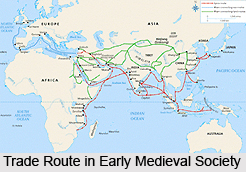
 Trade and commerce in the early medieval society appear to have been linked in a relationship of dependence with contemporary power-structures. Political fragmentation adversely affected inter-regional traffic in goods; excessive levies exacted through customs houses in assigned areas inhibited mercantile initiative. In some areas, as in the south, some of the functions of the guilds were possibly taken over by village assemblies. Consequently social values also changed considerably: for at least some sections of the society territorial mobility was constrained by the concept of kalivarjyas.
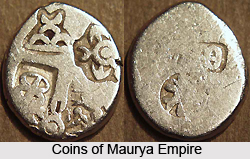
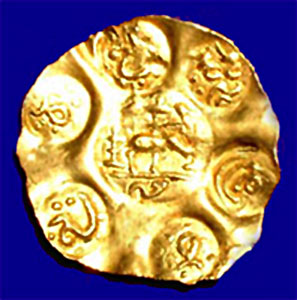
Such changes are also reflected adequately in the material remains of the period. Gold coins which had become obsolete after the Guptas came to be revived, in a heavily debased form, only from the early eleventh century in north India, and perhaps a little earlier in the south. Seals of merchant guilds practically disappear from after the Gupta period. Archaeological remains of townships of the post-Gupta period are as yet insignificant.
Several factors, however, facilitated the revival of commerce, particularly in areas which emerged as well-knit regional political units. Thus in Rajasthan, Gujarat and the littoral regions of the south, trade came to be organized under various guilds of manufacturers and traders. It was mostly in these areas again that contacts were re-established with trading countries of the outside world. If the early historical period has produced evidence of Yavana settlements in the peninsula, early medieval references to India`s foreign trade are more varicolored. The source material lie scattered in the writings of many foreign travellers, Arabic and European, and the trading settlements in India in this period were populated by such diverse groups as the Tajikas, the Jews, the Christians and also possible the Parsls. This spurt in trade in turn boosted manufacturing activities.
In the early medieval period, a trader is bound to sell an article at the price to be fixed for it by the king from day to day, whereas his profit should consist in purchasing the same at a lower or wholesale price. A trader should charge his profit at the rate of five per cent, on all goods of indigenous manufacture, while his dues on foreign goods should be allowed at the rate often per cent. A trader should add to the price of the goods to be vended, the cost incurred under all other heads in connection therewith, and then settle its price with the purchaser or the seller, and ask him the profit he would allow on such a gross outlay. A trader by not delivering goods to a purchaser bought by him for value, should be liable with his progeny, to refund the same even with the profits allowed on foreign goods, if made in that particular case. A purchaser buying any goods and not taking delivery of the same, shall be liable to make good to the trader the difference of price, if any, brought through his being obliged to sell it for a second time, and at an under rate. Goods destroyed or anyway damaged through a disturbance of government, or through any physical phenomena as well as a loss sustained through not delivering the goods when asked for, should be laid against the account of the seller or the consignee. A trader shall be made to refund to the purchaser, the double of the price, charged for damaged or apparently damaged articles sold by his agent or employee.
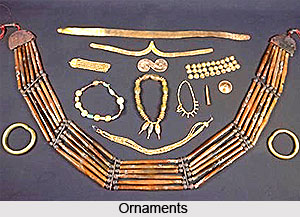
During this period, the kings used to purchase horses. Moreover, several merchants of different sorts came in the Bazaar at Kandiyur from Paradesa and Malaysia including Ponvaniyar (gold merchants), nira cettikal (wholesale merchants), marikkar (boatmen), vekatacammar, Pandi tattar (goldsmiths from the Pandya country), rarisar, kannar, caliyar (weavers), etc. There were Ariyar (Ariyar-Brahmanas), Kannadar (people from Kanara), Malavar (people from Malwa), Kunjarar (people from Gurjara), Tulingar(people from Talugu), Kalirigar (people from Kalihga), Barbarar (people from Barbara ), Coliyar (people from Cola), Pandikal (people from Pandya), Ottiyar (people from Orissa), Konkanar (people from Konkan), Conakar (Yavana), Clnar (people from China), Turikkar (people from Turkey) and many others there. They used to come to the market to buy and sell products by giving and taking kasu, pon, panam, tiramam, silver kasu, navaratna, ornaments, accu, turikka kasu, mummuri, vellappanam, Coliyar kasu, tokens, gilt, gold dust and silver pieces.